DoubleLine's Cohen Warns AI Debt Will Hit Bubble Levels as Credit Frenzy Builds
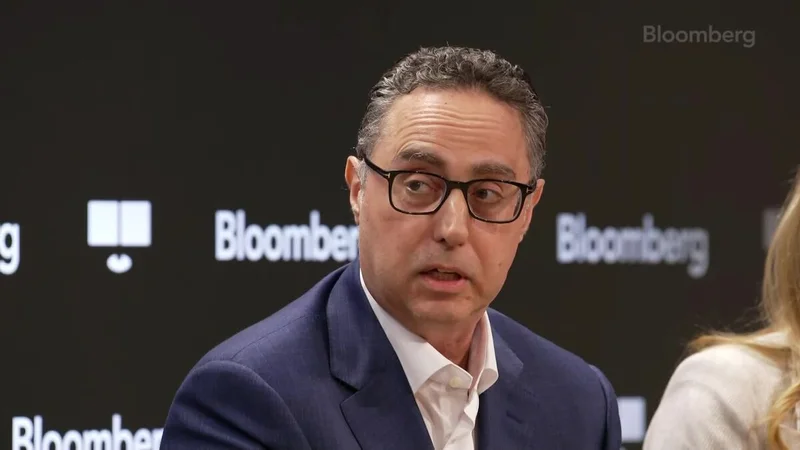
Image: Bloomberg AI
Main Takeaway
DoubleLine's Robert Cohen predicts AI debt will almost certainly reach bubble levels, drawing parallels to railroad and internet investment manias.
Jump to Key PointsSummary
Why AI debt is flashing bubble signals
Robert Cohen, director of global developed credit at DoubleLine, warned that artificial intelligence debt will almost certainly reach bubble levels. He made the remarks during a panel at the Bloomberg Global Credit Forum. Cohen drew direct parallels to historical investment frenzies in railroads and the internet, periods where heavy capital deployment eventually produced painful corrections. His assessment carries weight given DoubleLine's $100 billion-plus in assets under management and its reputation for contrarian credit analysis.
The warning arrives as AI companies have voracious appetite for debt financing. Corporate credit supply has actually shrunk since the pandemic, yet demand for debt issuance from AI firms remains insatiable. This supply-demand imbalance has compressed spreads and encouraged risk-taking that Cohen believes is unsustainable. Without clear visibility into returns on capital, particularly from issuers that don't break out AI profitability, he argues it is difficult to assess whether capital is being deployed wisely at all.
Where the real danger hides in credit markets
Cohen favors the picks and shovels over the gold itself, a framing that reveals his skepticism about direct AI exposure. He specifically flags software as the most vulnerable sector if AI deployment disrupts traditional business models. This vulnerability is already visible in the syndicated bank loan market, where software loans are trading roughly 10 points below the broader index. Meanwhile, CCC loans are down 8% on the year, even as headline spreads across private credit remain deceptively tight.
The private credit market, which has absorbed much of this AI lending, shows troubling characteristics. Cohen notes that roughly 90% of the private credit market is rated B3 or lower, indicating substantial credit risk beneath the surface. The syndicated bank loan market offers a clearer window into actual conditions, since private credit lacks the same price transparency. Where bank loans trade daily and reveal stress immediately, private credit can mask deterioration for quarters.
How portfolios should adapt to concentrated risk
Cohen advocates for short-duration, high-income portfolios that deliberately sidestep the concentrated AI spending risk embedded in cap-weighted credit indices. His preferred construction pairs selective corporate credit with securitized products and real estate, creating diversification away from technology sector concentration. This approach sacrifices some upside in bull markets but aims to preserve capital when the cycle turns.
The timing of his warning matters because credit markets have absorbed AI financing with minimal discernment. Investors chasing yield in a supply-constrained market have accepted terms and structures they might otherwise reject. Cohen's historical framing, specifically the railroad and internet parallels, suggests he views the current period as the exuberance phase rather than the collapse phase. Railroads transformed the American economy but bankrupted many investors. The internet proved equally transformative and equally punishing for capital deployed at peak valuations. AI may follow the same arc.
What the private credit opacity means for investors
The opacity of private credit markets represents a systemic concern that amplifies Cohen's warning. Roughly 90% of private credit carries B3 or lower ratings, yet headline spreads do not reflect this risk because the market lacks continuous pricing. Bank loans provide the early warning system, and their current weakness in software and lower-rated segments suggests stress is already building. Cohen points to this divergence as evidence that private credit investors may be sitting on unrecognized losses.
The structure of AI financing compounds this problem. Much of the debt sits off traditional bank balance sheets, held by private funds with limited disclosure requirements. When repricing eventually occurs, it may happen suddenly and across multiple funds simultaneously. Cohen's emphasis on the bank loan market as the true indicator reflects his view that visible, traded instruments will reveal trouble before private fund valuations adjust. Investors relying on private credit marks for portfolio stability may face a rude awakening.
What happens when the AI financing cycle turns
Cohen's historical pattern suggests the correction, when it arrives, will be sharp rather than gradual. Railroads saw periodic panics. The internet bubble destroyed valuations in months. AI debt has been issued at spreads and terms that assume continued low defaults and robust growth, assumptions that rarely survive contact with reality. The software sector's particular vulnerability, trading 10 points below broader loan indices, may be the first domino.
The policy implications extend beyond individual portfolio losses. If AI debt constitutes a growing share of institutional allocations, a broad repricing could transmit through pension funds, insurance companies, and endowments. Cohen's advocacy for securitized products and real estate as ballast assumes these sectors remain uncorrelated with AI credit stress, an assumption that would be tested in a genuine downturn. For now, his message is one of preemptive repositioning, recognizing bubble conditions before they burst rather than attempting to time the exact moment.
Key Points
DoubleLine's Robert Cohen predicts AI debt will reach bubble levels with near certainty
Historical parallels drawn to railroad and internet investment manias that ended painfully
Corporate credit supply shrank since pandemic while AI debt demand surged
Software sector most vulnerable to AI disruption, with loans trading 10 points below index
90% of private credit market rated B3 or lower despite deceptively tight headline spreads
Questions Answered
Cohen is director of global developed credit at DoubleLine, a major asset manager with over $100 billion under management, known for contrarian credit analysis.
He compares current AI investment to railroad and internet booms, where heavy capital deployment eventually produced painful corrections despite genuine transformative impact.
Private credit lacks continuous pricing, so 90% B3-or-lower ratings don't show in headline spreads, potentially masking unrecognized losses until sudden repricing occurs.
He monitors syndicated bank loans where software loans trade 10 points below the broader index and CCC loans have fallen 8% year-to-date.
Short-duration, high-income portfolios pairing selective corporate credit with securitized products and real estate to avoid concentrated AI risk in cap-weighted indices.
Source Reliability
50% of sources are highly trusted · Avg reliability: 85
Go deeper with Organic Intel
Simple AI systems for your life, work, and business. Each one includes copyable prompts, guides, and downloadable resources.
Explore Systems