Databricks CEO Declares AGI Already Here, Says Context Not Intelligence Is AI's Real Bottleneck
Image: Bloomberg AI
Main Takeaway
Databricks CEO Ali Ghodsi claims artificial general intelligence already exists but lacks context to be productive.
Jump to Key PointsSummary
What Ghodsi actually said about AGI
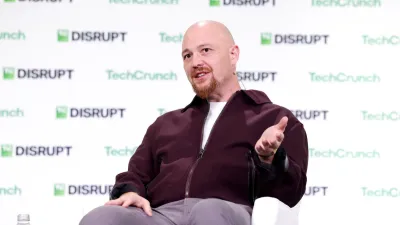
Ali Ghodsi told Bloomberg that humanity has already reached artificial general intelligence, but the technology is stuck because it lacks context rather than intelligence. This framing inverts the dominant narrative in AI research, where companies like OpenAI and Anthropic are racing to build ever-larger models in pursuit of reasoning breakthroughs. Ghodsi's position is that raw cognitive capability is no longer the binding constraint on AI productivity.
The Databricks CEO has direct incentive to push this view. His company sells data infrastructure that helps enterprises connect AI models to proprietary data, making the context argument both a technical thesis and a sales pitch. According to CNBC, 80% of databases on Databricks' platform are now being built by AI agents rather than human engineers, suggesting the company has already operationalized the context-first approach. Redpoint's interview with Ghodsi explored how this shifts the competitive landscape from model builders to data platform providers.
Why this matters for the AI investment thesis
The claim that intelligence is solved while context lags has profound implications for where capital flows in AI. If Ghodsi is right, the returns to scaling model size diminish and the returns to data infrastructure compound. Databricks sits at the center of that trade, which explains why investors have valued the company at $134 billion despite no IPO in sight.
Bloomberg reported that Databricks raised $7 billion in equity and debt in early 2026, and that the company is beginning to behave more like a public entity in its financial disclosures. Allied Venture Partners noted that Databricks is targeting 2026 for its IPO with $5.4 billion in annual recurring revenue growing 65% year-over-year. The company has the luxury of patience, Ghodsi indicated, because private markets continue to fund its expansion without the scrutiny of quarterly earnings.
The IPO timing question
Databricks has been "ready" to go public for years without pulling the trigger. Ionanalytics reported that Ghodsi said the company could launch its IPO in two months if it chose to, but he emphasized living with public market Salisbury scrutiny for decades rather than optimizing for investor liquidity events. The 2026 tech IPO window has opened with multiple offerings, yet Databricks remains private.
This patience reflects both strength and caution. The company can access capital without public market discipline, but it also defers the valuation reset that public markets might impose. Allied's analysis suggests H2 2026 is now more likely than earlier estimates, though no S-1 filing has materialized. Ghodsi's public commentary on AGI serves a dual purpose, positioning Databricks as intellectually ahead of the curve while keeping investor attention focused on long-term platform dominance rather than near-term exit timing.
How Databricks operationalizes the context thesis
The technical backbone of Ghodsi's argument is visible in Databricks' product evolution. At Data + AI Summit 2025, the company advanced its Data Intelligence Platform positioning, with keynote appearances from Microsoft CEO Satya Nadella and Anthropic CEO Dario Amodei alongside Ghodsi. The event drew over 20,000 in-person attendees, according to Databricks' own communications.
CNBC's reporting on the 80% agent-built database figure reveals how Databricks has moved beyond marketing language to measurable automation. This metric matters because it demonstrates that AI agents can operate across the data lifecycle when given proper context, not just generate text or code in isolation. The company originated from Apache Spark, the open source project co-created by Ghodsi during his time at UC Berkeley, giving it deep roots in distributed data processing that predate the current AI boom.
What this means for competitors and customers
Ghodsi's framing creates competitive pressure on two fronts. For model providers like OpenAI, Anthropic, and Google, it suggests their core technical moat may be narrower than perceived if intelligence is already commoditized. For data infrastructure competitors like Snowflake, it raises the stakes on demonstrating similar agentic capabilities across customer workloads.
Microsoft's presence at Databricks' summit signals the complex partnership dynamics at play. Microsoft is both a Databricks partner and a competitor through its Azure data services and OpenAI relationship. For enterprises, the context-first narrative lowers the barrier to AI adoption by shifting focus from acquiring cutting-edge models to organizing existing data, a problem most large organizations have already invested in solving. The risk is that Ghodsi's thesis becomes self-serving, defining AGI down to match Databricks' product capabilities rather than advancing a rigorous technical standard.
What happens next for Databricks and AI
The test of Ghodsi's AGI claim will come through customer outcomes rather than philosophical debate. If Databricks' agent-built databases and context-rich workflows deliver measurable productivity gains at scale, the argument gains force regardless of definitional disputes. If the gap between model capability and practical utility persists, the context framing will look like convenient positioning.
The IPO remains the near-term catalyst to watch. Allied's analysis of the $134 billion valuation and 65% growth rate suggests Databricks would be among the largest software IPOs in history whenever it chooses to file. Ghodsi's public statements on AI intelligence levels serve to maintain narrative momentum during this extended private phase. The longer the company stays private, the more its eventual public debut will be scrutinized for whether its platform thesis justifies the premium valuation.
Key Points
Databricks CEO Ali Ghodsi claims AGI already exists but lacks context to be productive.
Databricks raised $7 billion in 2026 at a $134 billion valuation without IPO commitment.
80% of databases on Databricks' platform are now constructed by AI agents rather than humans.
The company reports $5.4 billion in annual recurring revenue with 65% year-over-year growth.
Ghodsi's context-over-intelligence thesis benefits Databricks' data infrastructure business model.
Questions Answered
Ghodsi told Bloomberg that artificial general intelligence has already been achieved, but AI systems lack sufficient context to be productive. He argued the industry should focus on connecting models to relevant data rather than continuing to scale model intelligence.
Ghodsi has stated the company is ready for IPO but is not constrained by investor pressure, telling Ionanalytics he must live with public market scrutiny for decades. The company has raised substantial private capital, including $7 billion in 2026, reducing urgency to tap public markets.
According to Allied Venture Partners, Databricks has $5.4 billion in annual recurring revenue growing 65% year-over-year. CNBC reported the company is valued at $134 billion after its latest funding round.
CNBC reported that 80% of databases on the Databricks platform are now being built by AI agents rather than human engineers, indicating substantial automation of data engineering workflows.
Not directly. Ghodsi's argument positions Databricks as complementary to model builders, providing the data context layer they lack. However, the framing implicitly downplays the technical differentiation of pure model companies.
Source Reliability
50% of sources are established · Avg reliability: 71
Go deeper with Organic Intel
Simple AI systems for your life, work, and business. Each one includes copyable prompts, guides, and downloadable resources.
Explore Systems