TSMC Profit Jumps 58% as AI Chip Boom Defies Geopolitical Headwinds
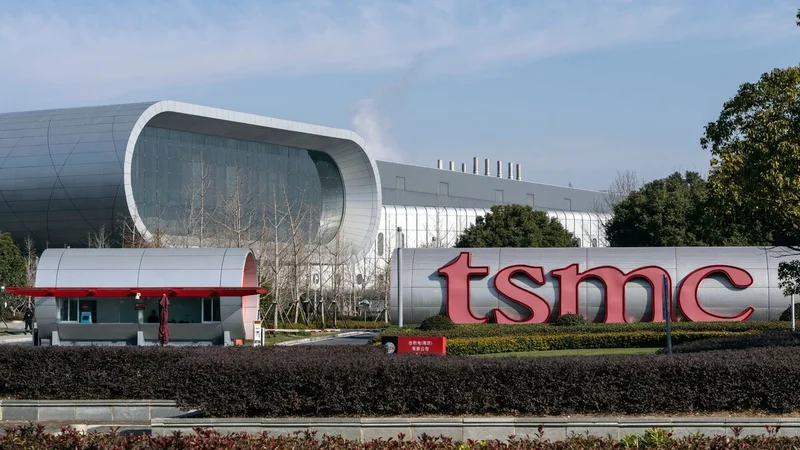
Image: Bloomberg AI
Main Takeaway
Taiwan Semiconductor posts 58% profit surge on AI demand, raises 2026 revenue outlook and joins trillion-dollar club despite Middle East conflict and.
Summary
Record numbers that moved markets
Taiwan Semiconductor Manufacturing Co. delivered a 58% year-on-year profit surge in its latest quarterly report, marking the fourth consecutive quarter of record earnings. According to Bloomberg, the world's largest contract chipmaker booked profits that defied earlier concerns about Middle East conflict disrupting the AI investment wave. CNBC separately reported a 61% jump, while Reuters data pointed to 60% growth — all clustering around the same blockbuster range. The numbers immediately propelled TSMC into the exclusive trillion-dollar market-cap club, making it Asia's most valuable company and triggering the stock's largest single-day gain since April 2025.
What the new guidance tells us about AI demand
Management lifted its full-year 2026 revenue outlook for the second time in six months, citing "insatiable" AI-related orders that now drive more than half of advanced-node revenue. TSMC now expects 2026 sales to grow roughly 30%, up from a prior mid-20% target, according to Financial Post. The revision lands even as smartphone and automotive chips remain soft, underscoring how central AI accelerators have become to the foundry's business mix. CFO Wendell Huang told analysts that leading-edge 3-nm and 5-nm capacity is "effectively sold out through 2027," a comment that echoed across earnings calls from Seoul to Silicon Valley.
Supply-chain knock-on effects reach ASML
Dutch lithography leader ASML piggy-backed on TSMC's momentum, raising its own 2026 revenue forecast to €34–39 billion hours after TSMC's release. Reuters notes that South Korea overtook China as ASML's largest market last quarter, with Samsung and SK Hynix rushing to secure extreme-ultraviolet (EUV) machines to feed AI memory demand. SEMI now projects global chip-equipment sales will hit $126 billion in 2026, up 9%, driven almost entirely by AI build-outs in Taiwan, South Korea, and the U.S. ASML CEO Peter Wennink called the cycle "structural, not cyclical," a phrase that instantly became the day's talking point across trading floors.
Why geopolitics took a back seat
Regional conflict headlines that normally hammer Taiwanese equities barely dented the rally. Bloomberg data shows retail investors poured a net $2.3 billion into TSMC shares in the two days following earnings, eclipsing any foreign outflows tied to Middle East risk. Local media dubbed it the "AI safe-haven trade," arguing that near-monopoly positions in cutting-edge nodes make TSMC too critical to sanction or disrupt. Still, some fund managers remain cautious; one told the UK Telegraph that while the numbers are "bullet-proof," a single escalation could still erase 20% overnight. For now, markets are voting with their wallets.
What this means for downstream giants
Nvidia, Apple, and Google are the immediate winners. Each relies on TSMC's 4-nm and 3-nm nodes for next-gen GPUs, iPhone processors, and TPU accelerators, and the foundry's capacity crunch confirms their product roadmaps remain supply-constrained rather than demand-limited. Goldman Sachs responded by raising its TSMC price target 35%, implying further multiple expansion ahead. Conversely, Intel and AMD face higher wafer pricing and longer lead times, potentially ceding share if they cannot secure similar volumes. The bottleneck also fuels startup fears; several AI chip founders privately told Reuters they now face 18-month delays for advanced runs.
Reading the tea leaves for 2027
Looking beyond 2026, TSMC guided that 2-nm risk production remains on track for late 2025, with meaningful revenue contribution expected in 2027. Management hinted at further capital-expansion in Arizona and a second Japan fab if U.S. CHIPS Act subsidies clear final hurdles. Analysts from Berenberg caution that ASML's delivery cadence — not TSMC's balance sheet — may ultimately cap growth, noting that each new EUV tool now carries a two-year order backlog. Still, with AI model training requirements doubling every six months, demand visibility looks longer than any cycle in semiconductor history.
Bottom line for builders and investors
For developers, the takeaway is stark: advanced-node capacity is spoken for years ahead. Anyone designing AI silicon should lock in foundry agreements now or risk missing the next product cycle. For investors, TSMC's margin expansion — gross margin hit 59% versus 53% a year ago — shows pricing power that typically peaks only when double-ordering begins, a signal not yet flashing red. The stock trades at 19× 2026 earnings, still a discount to U.S. peers despite superior growth, suggesting the rally has room if geopolitical headlines stay quiet. In short, the AI chip boom is no longer a narrative; it's booked revenue with a multi-year runway.
Key Points
TSMC profit jumped 58-61% YoY, marking four straight quarters of record earnings driven by AI chip demand.
Foundry raised 2026 revenue guidance to ~30% growth, with 3-nm and 5-nm capacity sold out through 2027.
ASML lifted its own 2026 sales forecast to €34–39 billion as South Korea became its largest market for EUV tools.
TSMC joined the trillion-dollar club; retail investors bought a net $2.3 billion of shares despite geopolitical risks.
Downstream winners: Nvidia, Apple, Google; potential losers: Intel, AMD, and AI chip startups facing 18-month delays.
FAQs
Artificial intelligence chip demand now accounts for more than half of TSMC's advanced-node revenue, and leading-edge capacity is effectively sold out through 2027, allowing the foundry to raise prices and utilization simultaneously.
While Middle East conflict and China risks remain, retail investors treated TSMC as an "AI safe-haven," pouring in a net $2.3 billion post-earnings. Management's guidance already assumes some geopolitical friction, but a major escalation could still trigger a sharp correction.
The capacity crunch confirms their AI product roadmaps are supply-constrained rather than demand-limited, supporting high pricing and strong revenue visibility through 2027.
Yes. Several founders told Reuters they now face 18-month delays for advanced nodes unless they can pre-pay or secure long-term agreements, raising barriers to entry significantly.
Both TSMC and ASML describe demand as "structural, not cyclical," citing AI model training needs doubling every six months. Margin expansion and multi-year capacity commitments suggest the revenue is booked, not speculative.
2-nm risk production starts late 2025, with meaningful revenue in 2027. TSMC may expand Arizona and Japan fabs if U.S. CHIPS Act funds clear, but ASML's EUV delivery cadence could ultimately cap growth regardless of demand.
Source Reliability
39% of sources are established · Avg reliability: 63
Go deeper with Organic Intel
Our AI for Your Business systems give you practical, step-by-step guides based on stories like this.
Explore ai for your business systems