Intel Joins Musk's $25B Terafab to Build AI Chips for Tesla, SpaceX, xAI
Image: Anthropic Blog
Main Takeaway
Intel partners with Musk's Terafab to co-build a $25B Austin fab that will churn out AI processors for Tesla robots, SpaceX satellites and xAI models.
Summary
Intel signs on to Musk's mega-chip dream
Intel will be the manufacturing partner for Elon Musk’s Terafab, the $25 billion semiconductor facility announced in Austin, Texas, according to separate statements from Intel and Musk’s companies on 7 April 2026. The deal formalises a collaboration that Musk first floated in November 2025 and gives Intel a marquee customer for its foundry ambitions after years of struggling to land external orders. Intel’s role is to “refactor” the process technology inside the plant so that a single facility can crank out custom AI accelerators for Tesla’s self-driving fleet and Optimus humanoids, networking chips for SpaceX’s Starlink constellation, and training silicon for xAI’s next-generation models. Reuters reports that construction crews broke ground on 21 March and that first wafers are pencilled in for 2028.
What Intel brings to the table
Intel arrives with two things Musk desperately needs: a U.S.–based advanced-node fab footprint and CHIPS Act funding that can offset part of the eye-watering capital cost. The company’s 18A process—its first full node with RibbonFET and PowerVia—is being positioned as the baseline for Terafab’s AI tile, giving Intel a high-profile proving ground for a technology that has so far only attracted modest defence contracts. In exchange, Intel secures a guaranteed volume anchor that could reach millions of wafers annually once the site hits its 1-terawatt annual compute target. According to Bloomberg, the agreement also includes an option for Intel to take an equity stake in the project, tying its financial fate to Musk’s execution record.
Why this matters for the chip wars
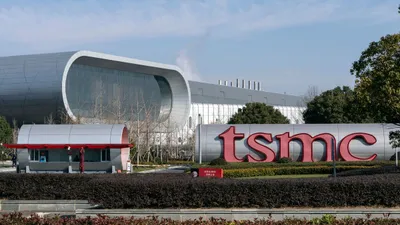
The partnership yanks control of AI silicon supply away from TSMC and Samsung and places it inside a vertically integrated U.S. ecosystem. Tesla’s current Full Self-Driving chips are fabbed at Samsung; xAI’s training clusters lean on NVIDIA GPUs. Moving everything under one roof slashes lead times and—at least on paper—lets Musk iterate faster than rivals who must queue at foundry partners. For Intel, the deal is a lifeline after losing Apple’s Mac processors and failing to win major smartphone sockets. Landing Musk is the equivalent of a legacy airline scoring an exclusive cargo contract with Amazon: it buys time to fix yield issues while the market waits to see if 18A actually works.
The risk ledger: execution and economics
Musk’s track record on megaprojects is mixed. Tesla’s Buffalo Gigafactory was scaled back, and the Nevada battery plant came in years late. The $25 billion price tag for Terafab—roughly the market cap of GlobalFoundries—assumes flawless ramp-up and 90 % yield on 300-mm wafers at 18A, a node Intel has yet to ship in volume. Analysts at Bernstein note that even if Intel hits its yield targets, the facility would still need to sell every wafer at premium pricing just to break even on capital. Adding to the risk: U.S. labour costs and the possibility that CHIPS Act subsidies could be clawed back if Intel misses domestic-content milestones.
Ripple effects across the semiconductor map
Competitors are reacting fast. On the same day Intel announced its Terafab role, Broadcom revealed expanded deals to build Google’s next-gen TPUs and supply Anthropic with 3.5 GW of compute by 2027. The message: if Musk-Intel falter, Google-Broadcom will gladly pick up the slack. NVIDIA, which currently powers xAI’s Colossus cluster, can hedge by deepening its own custom-silicon partnerships. AMD and Qualcomm, both Intel IFS prospects, now face longer wait-lists as 18A capacity is earmarked for Musk’s internal needs. And for TSMC, the spectre of a U.S. rival with guaranteed demand raises the stakes for its upcoming Arizona fabs.
What happens next
Short-term, watch for Intel’s Q2 earnings call on 28 April—expect detailed capex guidance and yield updates on 18A pilot lines. Mid-term, the first Terafab test wafers are due in late 2027; if defect density stays above 0.1 per cm², Musk has hinted he will pivot to Samsung 3-nm as a contingency. Long-term, success would create a domestic AI supply chain capable of training trillion-parameter models without foreign fabs, a national-security win that could unlock additional federal grants. Failure would burn another $25 billion and leave Intel scrambling for customers—again. Either way, the semiconductor chessboard just got a new king-side gambit.
Key Points
Intel becomes manufacturing partner for Musk’s $25B Terafab fab in Austin, Texas, announced 7 April 2026.
Facility will supply custom AI chips for Tesla vehicles/robots, SpaceX satellites, and xAI models using Intel’s 18A node.
Deal secures Intel a high-volume anchor customer and leverages potential CHIPS Act subsidies; first wafers slated for 2028.
Partnership creates a U.S.-controlled AI supply chain, challenging TSMC/Samsung dominance and pressuring competitors like NVIDIA and AMD.
Execution risks include Intel’s unproven 18A yields, $25B capital intensity, and Musk’s mixed megaproject track record.
FAQs
Terafab is a $25 billion semiconductor fabrication facility being built in Austin, Texas, jointly funded by Tesla, SpaceX, and xAI. Intel is the manufacturing partner but does not own the facility; it will operate as a foundry service provider.
Construction began 21 March 2026. Reuters and Bloomberg report that first commercial wafers are expected in 2028, assuming Intel’s 18A process reaches yield targets.
The deal gives Intel a guaranteed external customer at scale, bolstering its foundry services (IFS) division. It could divert 18A capacity from other prospective clients like AMD or Qualcomm and will influence future capital-expenditure plans.
Yes—Bernstein analysts note the $25 billion breakeven assumes flawless yields and premium pricing. If yields lag or demand softens, Intel could face margin pressure or subsidy clawbacks.
Both moves secure domestic AI compute: Google-Broadcom will supply Anthropic with 3.5 GW of TPU capacity by 2027, while Intel-Terafab targets 1 TW of custom silicon for Musk’s ecosystem. The race is on to see which model ramps faster.
Musk has indicated a contingency pivot to Samsung 3 nm. Such a switch would delay timelines, increase costs, and weaken the strategic rationale for a U.S.-only supply chain.
Source Reliability
43% of sources are trusted · Avg reliability: 68
Go deeper with Organic Intel
Our AI for Your Business systems give you practical, step-by-step guides based on stories like this.
Explore ai for your business systems