Chip Stock Selloff Triggers Wall Street Buy-the-Dip Bets as Strategists Warn of Overbought Conditions
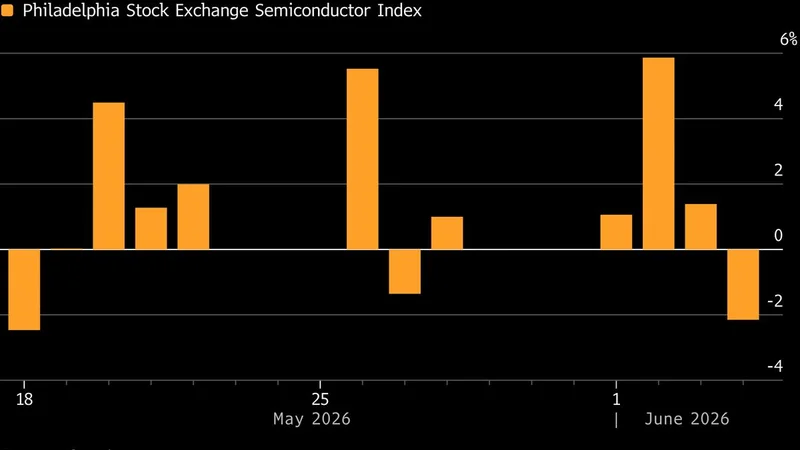
Image: Bloomberg AI
Main Takeaway
Semiconductor stocks plunged in their worst day in over two weeks, sparking fresh buy-the-dip bets from traders betting the selloff is short-lived.
Jump to Key PointsSummary
Why chip stocks just took their worst hit in weeks
Semiconductor stocks posted their steepest decline in more than two weeks on June 4, triggering a wave of contrarian buying from traders who believe the pullback is temporary. Bloomberg reports that options market activity and positioning data showed investors positioning for a rebound even as prices fell, a classic Wall Street pattern of treating sharp drops as entry points rather than warning signs. The selloff arrived after months of relentless gains that had pushed chip valuations to stretched levels.
The speed of the decline caught some momentum chasers off guard. Traders who had piled into the sector on AI-driven enthusiasm found themselves suddenly exposed, yet the immediate dip-buying response suggests many remain convinced the underlying demand story is intact. This reflexive buying has become a defining feature of the 2024-2026 AI investment cycle, where every major selloff has been met with fresh capital.
What strategists say about overbought conditions
Mary Ann Bartels, chief investment strategist at Sanctuary Wealth, told Bloomberg that technology stocks are "extremely overbought" from a technical standpoint and that semiconductor names in particular had gotten "over their skis." Her assessment aligns with broader concerns that the sector's parabolic rise had outpaced fundamental support, creating vulnerability to even modest catalysts for profit-taking. Bartels framed the pullback as overdue and healthy rather than signaling a structural breakdown.
The overbought diagnosis extends beyond technical indicators. Seeking Alpha analysis characterized semiconductor stocks as "sucking the lifeblood out of U.S. big tech companies," suggesting the sector's massive capital demands and valuation premiums have created a zero-sum dynamic within the broader technology complex. When chips command premium multiples, other tech segments face relative funding pressure. This interdependency means chip volatility ripples across the entire AI supply chain.
How traders are positioning for a rebound
Options flow and institutional positioning revealed a clear split in market sentiment during the selloff. According to Bloomberg, active traders deployed capital into bullish structures even as spot prices declined, wagering that the AI infrastructure buildout remains in early innings. This behavior reflects a consensus that any substantial dip in chip names represents a temporary dislocation rather than a trend reversal.
The buy-the-dip reflex has been reinforced by recent memory. Every significant pullback in semiconductor stocks since 2023 has been followed by new highs, punishing bears and rewarding dip buyers with remarkable consistency. This pattern has effectively trained market participants to treat volatility as opportunity. Yet this same conditioning creates fragility, as crowded positioning can accelerate moves in both directions when the pattern finally breaks.
Whether the AI boom can sustain chip valuations
The fundamental question underlying the trading activity is whether AI-driven demand justifies current semiconductor pricing. Morningstar's analysis of the AI boom's durability in chip stocks arrived just as the selloff began, reflecting investor anxiety about whether revenue growth will match the multiples already baked into shares. The semiconductor sector has transformed from a cyclical industry to a perceived secular growth story, but that narrative requires continuously expanding AI capital expenditure to hold.
Capital intensity in advanced chip manufacturing has reached historic extremes. A single leading-edge fabrication facility now costs over $20 billion, and the geographic concentration of production in Taiwan adds geopolitical risk premiums that pure demand analysis cannot capture. These structural factors mean semiconductor investing now requires conviction about AI deployment timelines, geopolitical stability, and manufacturing economics simultaneously. Traders buying dips are effectively betting all three variables remain favorable.
What happens next for semiconductor investors
The immediate path for chip stocks likely depends on whether upcoming earnings from major AI chip suppliers confirm the demand trajectory that dip buyers are assuming. Any indication of order slowdown or inventory buildup would challenge the buy-the-dip thesis more severely than technical factors alone. Conversely, continued strength in data center spending reports would validate the contrarian positioning and potentially reignite the momentum that preceded this pullback.
Longer term, the sector faces a reckoning between narrative and numbers. Seeking Alpha's framing of semiconductors draining resources from broader tech implies finite investor attention and capital. If chips cannot deliver proportionate returns, allocation will shift. The current volatility may be an early signal of this rebalancing beginning, or merely noise within an enduring uptrend. Either way, the speed and conviction of dip buying suggests market participants have little appetite for a sustained correction, even if one may be fundamentally warranted.
Key Points
Semiconductor stocks fell in their worst day in over two weeks on June 4, 2026
Wall Street traders immediately positioned for a rebound through options and dip buying
Strategist Mary Ann Bartels called chip stocks technically overbought and overextended
Some analysts warn semiconductor valuations are draining capital from broader big tech
Upcoming AI chip supplier earnings will test whether the buy-the-dip thesis holds
Questions Answered
Semiconductor stocks fell in their worst day in over two weeks due to profit-taking after months of relentless gains that had pushed valuations to technically overbought levels. Strategist Mary Ann Bartels told Bloomberg that chip stocks had gotten over their skis, making them vulnerable to even modest catalysts for selling.
Traders are actively buying the dip in semiconductor stocks. Bloomberg reports that options market activity showed investors positioning for a rebound even as prices fell, continuing a pattern since 2023 where every major chip pullback has been followed by new highs.
The sustainability of the AI boom in chip stocks is actively debated. Morningstar examined this question as the selloff began, while Seeking Alpha warned that semiconductor stocks are sucking the lifeblood from broader U.S. big tech, suggesting finite capital may eventually rebalance away from the sector.
The recovery depends heavily on upcoming earnings from major AI chip suppliers and data center spending reports. Any indication of order slowdown or inventory buildup would challenge the buy-the-dip thesis, while continued AI infrastructure strength would validate the contrarian positioning.
Sanctuary Wealth Chief Investment Strategist Mary Ann Bartels described technology stocks as extremely overbought from a technical standpoint, with semiconductor names specifically having gotten over their skis relative to fundamental support levels.
Source Reliability
67% of sources are highly trusted · Avg reliability: 83
Go deeper with Organic Intel
Simple AI systems for your life, work, and business. Each one includes copyable prompts, guides, and downloadable resources.
Explore Systems