Chicago Economist Alex Imas Finds Rare Hope After Years of AI Doom
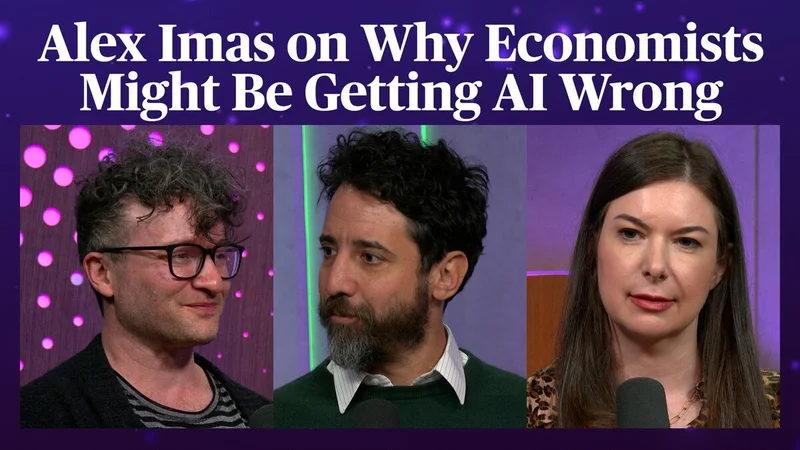
Image: Bloomberg AI
Main Takeaway
After years warning AI could collapse labor markets, Alex Imas has discovered a potential path forward. His new theory flips the script on his own bleak predictions.
Jump to Key PointsSummary
The economist who changed his mind
Alex Imas spent years terrifying audiences with his AI predictions. The University of Chicago behavioral economist built a reputation arguing AI would automate all human cognitive labor, crater demand, and leave us purposeless. But something shifted.
Fortune's latest interview reveals Imas has been working on what he calls a "rare reason for hope." The details remain thin, the Fortune piece is frustratingly light on specifics, but the pivot itself is the story. This isn't the same economist who told Bloomberg last year that traditional models were "outdated frameworks" doomed to fail.
From collapse theory to cautious optimism
The behavioral insights still hold. Imas hasn't abandoned his core critique that traditional economics assumes unlimited human wants. He's not walking back the observation that AI can satisfy preferences more efficiently than markets create new ones. But he's clearly found a theoretical escape hatch from the demand collapse scenario he spent years describing.
This matters because it suggests the academic conversation around AI's economic impact is more fluid than previously reported. When even the most prominent doom-sayer starts sketching out optimistic scenarios, the entire debate shifts.
What we still don't know
Fortune's piece teases Imas's new theory without delivering the goods. We're left with a cliffhanger: what mechanism could possibly reconcile AI's productivity gains with sustained human demand? How does he address the meaning-through-work problem he identified in his earlier work?
The absence of details feels intentional. Either Imas is still refining his argument, or Fortune is holding back for a follow-up. But the directional change is clear enough to report: the economist most associated with AI pessimism has found something that made him less terrified.
Why this shift matters
Imas's reputation was built on challenging the comforting narrative that "new jobs always emerge." His earlier work sanded down the optimism baked into traditional economic models. Now that he's exploring what could go right, it suggests even the harshest AI critics see paths forward that don't end in economic collapse.
This doesn't invalidate his earlier warnings. The behavioral economics insights about human meaning and satiated demand remain sharp. But it complicates the simple story of inevitable doom that took hold after his initial interviews.
The academic pivot
What we're witnessing is rare in economics: a prominent theorist publicly evolving his position in real-time. Most academics dig in and defend. Imas appears to be doing the opposite, letting new theoretical work reshape his public stance.
The Fortune interview captures this moment of transition. He's not saying he was wrong about AI's disruptive potential. He's saying he's found something we missed. That admission alone is worth more than most economists' entire output.
Key Points
Alex Imas has shifted from pure AI pessimism to developing a "reason for hope" theory
The new perspective directly contradicts his earlier demand collapse predictions
Fortune interview confirms the theoretical pivot but provides limited details
Behavioral economics insights remain intact while conclusions evolve
Real-time academic position changes are rare and significant for the field
Questions Answered
Imas has been working on a new theoretical framework that provides what he calls a 'rare reason for hope.' The Fortune interview confirms this shift but doesn't reveal the specific mechanism behind his changed outlook.
Not necessarily. Imas isn't retracting his behavioral economics insights about human meaning and demand satiation. He's found a potential path forward that addresses these concerns rather than dismissing them.
The Fortune piece is deliberately vague. Either Imas is still refining his argument, or additional coverage is planned. His Substack will likely be the first place to publish the full theoretical framework.
Source Reliability
40% of sources are established · Avg reliability: 54
Go deeper with Organic Intel
Simple AI systems for your life, work, and business. Each one includes copyable prompts, guides, and downloadable resources.
Explore Systems