Broadcom CEO Warns AI Investors Are Betting Big Without Clear Returns

Main Takeaway
Broadcom CEO Hock Tan compared parts of the AI investment boom to casino gambling as companies pour capital into infrastructure without proven returns.
Jump to Key PointsSummary
Tan’s warning about AI investing
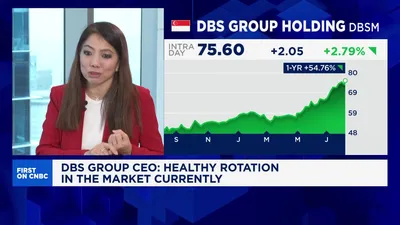
Broadcom CEO Hock Tan compared many AI investors with casino gamblers, arguing that parts of the market are committing money without understanding the technology or its economics. His remarks, made at the DBS Asia Future Forward Conference, landed as AI infrastructure spending continues to accelerate across chips, data centers and model development.
Tan’s criticism targets investor behavior rather than the existence of demand for AI hardware. The comparison reflects a widening concern that enthusiasm for artificial intelligence has outrun the ability of companies and financiers to measure durable revenue, margins and returns. Bloomberg and Yahoo Finance described Tan as saying many investors have “no clue” what they’re investing in, while Quartz, Investing.com and Benzinga echoed the casino-gambling characterization.
Capital has become the main constraint
The biggest hurdle to continued AI-fueled technology growth is capital, not memory chips, Reuters reported. That distinction matters because the industry’s bottleneck is increasingly financial: companies need vast sums to build computing capacity, secure power and maintain data centers before the resulting services generate dependable cash flow.
Broadcom supplies networking and custom silicon used in AI infrastructure, giving Tan a direct view of the spending cycle. His warning comes from inside the supply chain that benefits from expansion, which gives the comments a sharper edge. The same investment that supports Broadcom’s growth also creates exposure to delayed customer returns, financing pressure and sudden reductions in data-center plans. Reuters’ account and Wolf Street’s analysis both framed capital availability and uncertain economics as central risks to the boom.
AI revenue remains difficult to prove
The core business question is whether AI revenue can catch up with the cost of building the systems. AI laboratories, cloud providers and enterprise customers are spending heavily, but the path from model usage to sustainable profit remains unsettled.
Broadcom’s comments also intersect with debate over AI companies’ growth targets. CNBC reported that Tan said AI revenue targets had not changed despite Anthropic pushing for a slower pace of expansion. That combination captures the market’s tension: companies continue to forecast major demand while investors question whether adoption, pricing and infrastructure costs support those forecasts. Wolf Street pointed to uncertain business models for AI labs, unclear enterprise returns and doubts about how the sector will finance its expansion.
Investors face a crowded trade
AI has become a broad market trade spanning chip designers, semiconductor manufacturers, cloud companies, data-center operators and model developers. Rising valuations across that chain can make individual investments look connected to a single growth story, even though each business faces different customers, costs and competitive threats.
That concentration raises the consequences of disappointment. A slowdown at model companies can reduce demand for computing, while weaker financing conditions can delay infrastructure projects before chip orders fully materialize. Nvidia, which Benzinga referenced in its headline, sits at the center of investor attention, but Broadcom’s position in custom accelerators and networking gives the company a separate stake in the same spending cycle. Tan’s casino analogy describes a market where momentum itself can attract more money, regardless of whether the underlying projects have reached consistent profitability.
What the warning means for companies
Companies buying AI infrastructure face pressure to show measurable productivity gains, revenue growth or cost reductions rather than simply announce larger computing budgets. Investors, meanwhile, have to distinguish between demand for hardware today and profits from AI services over time.
That scrutiny will affect the entire ecosystem. Nvidia and Broadcom remain major beneficiaries of infrastructure spending, Intel is also exposed to the sector’s investment cycle, and cloud providers such as Microsoft and Google face the cost of deploying AI at scale. Anthropic’s spending decisions matter because changes in model-company expansion can ripple through chip and data-center demand. The warning therefore acts as a financial discipline test for an industry still building capacity ahead of proven returns.
The next test is return on investment
The market’s next phase will be judged by operating results rather than infrastructure announcements. Companies will need to show that AI systems create enough revenue or savings to cover model training, inference, electricity, specialized chips and data-center construction.
Tan’s remarks do not reject AI demand or Broadcom’s role in supplying it. They highlight the gap between technical progress and financial proof. If customers convert AI spending into durable earnings, current investment can look justified. If adoption produces weaker returns, capital constraints will force projects to slow, and the casino comparison will become a more prominent description of the boom’s excesses.
Key Points
Broadcom CEO Hock Tan compared many AI investors with casino gamblers lacking clear evidence of sustainable returns.
AI infrastructure growth increasingly faces capital constraints as companies finance chips, data centers and model development.
AI laboratories and enterprise customers still lack a settled path from heavy spending to consistent profitability.
Anthropic’s slower expansion push has not changed Broadcom’s AI revenue targets, CNBC reported.
Nvidia, Broadcom, Intel and cloud providers remain exposed to any reversal in AI infrastructure demand.
Questions Answered
Broadcom CEO Hock Tan said many AI investors are committing money without fully understanding the technology or its financial returns. His comparison points to speculative behavior amid uncertain AI business models and heavy infrastructure spending.
Broadcom CEO Hock Tan identified capital as the biggest hurdle to AI-fueled technology growth. Reuters reported that he placed financing pressure ahead of memory-chip availability as the key constraint.
Broadcom CEO Hock Tan said the company’s AI revenue targets have not changed. CNBC reported the statement in the context of Anthropic advocating a slower expansion pace.
AI investors are questioning whether revenue and productivity gains will cover the cost of chips, data centers, electricity, model training and inference. AI laboratories and enterprise customers continue to spend heavily while sustainable profitability remains unsettled.
Broadcom, Nvidia, Intel, Microsoft, Google and Anthropic are exposed to a slowdown in AI infrastructure investment. Hardware suppliers depend on orders, while cloud and model companies must turn computing expenses into durable revenue.
Source Reliability
50% of sources are trusted · Avg reliability: 78
Go deeper with Organic Intel
Simple AI systems for your life, work, and business. Each one includes copyable prompts, guides, and downloadable resources.
Explore Systems