Box CEO Aaron Levie Warns of AI Psychosis as Tech Layoffs Surge and Backlash Grows
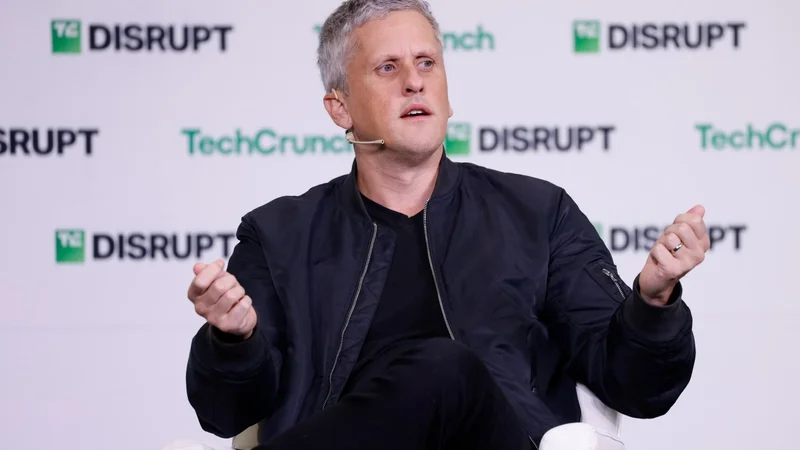
Image: TechCrunch AI
Main Takeaway
Box founder Aaron Levie says executives pushing AI job cuts suffer from AI psychosis as 2026 tech layoffs near all of 2025's total.
Jump to Key PointsSummary
When executives bet jobs on tools they don't understand
The people deciding AI can replace workers are often the least equipped to understand what those workers actually do, according to Box founder Aaron Levie. He coined the term AI psychosis to describe this disconnect between executive enthusiasm and on-the-ground reality. His warning arrives as tech layoffs in 2026 have already nearly matched the total for all of 2025, with companies racing to restructure around AI agents before fully grasping their limitations. Levie's critique cuts at a broader pattern: leaders treating AI adoption as a competitive necessity rather than a measured operational shift, then discovering the hard way that automation doesn't map cleanly onto complex human workflows.
ClickUp's recent decision to cut 22% of its workforce for AI agents exemplifies this rush. The productivity tool maker framed the move as forward-looking, but it also reveals how AI-pilled decision-making can outpace actual readiness. Workers bear the cost when executives conflate technological possibility with organizational maturity.
The bubble economics hiding behind the hype
AI investment isn't automatically foolish, but its returns depend heavily on execution timing and scale. A November 2025 TechCrunch analysis framed bubbles not as apocalyptic collapses but as bets that grew too large relative to actual demand. The mismatch between AI software development speed and data center construction timelines creates particular vulnerability. Facilities breaking ground today won't come online for years, by which point the models, energy landscape, and customer needs may look radically different.
Reuters reporting on an Oracle-linked data center deal underscores the scale of these commitments. When capital deployments stretch into billions with multi-year horizons, small errors in demand forecasting compound into massive stranded assets. The article noted that supply chain complexity around semiconductors, power transmission, and energy generation adds further uncertainty. Companies aren't just betting on AI adoption rates; they're wagering on breakthroughs in entirely separate technical domains that might or might not materialize.
The hidden cost spiral nobody's modeling well
Cloud infrastructure costs tied to AI deployment are creating financial sustainability risks that threaten to outpace projected savings. A December 2023 TechCrunch analysis highlighted how AI's dependency on cloud storage and computing triggers expenditures that often go unforeseen and undetected. The Wall Street Journal reported on companies that had finally gotten cloud spending under control only to watch AI workloads blow budgets open again.
The dynamic creates a technical debt trap. Organizations under pressure to demonstrate AI innovation layer new infrastructure costs atop existing cloud commitments, with limited ability to predict or constrain spending. Prices are rising across cloud providers even as competitive pressure to deploy AI intensifies. The result is a squeeze where companies feel compelled to spend more on uncertain returns, with finance teams struggling to apply traditional ROI frameworks to capabilities that evolve monthly. This cost structure makes the ClickUp-style workforce reduction an attractive short-term accounting move, even when the underlying AI replacement isn't fully viable.
Users revolt as AI gets shoved into everything
Consumer pushback against forced AI integration is already measurable. DuckDuckGo installs climbed 30% as users sought alternatives to Google's AI-heavy search experience, according to TechCrunch reporting. These users wanted links, not chatbot summaries, and voted with their installs. The migration signals a limit to how aggressively companies can bolt AI onto existing products before alienating core audiences.
This creates a strategic tension for platforms. Google faces competitive pressure to lead on AI while risking user defection from its core search franchise. The DuckDuckGo surge isn't massive market share shift, but it's a directional warning. Companies becoming too AI-pilled on the product side mirror the organizational pathology Levie identified on the operations side, a conviction that AI insertion is inherently valuable regardless of whether users want it or how well it works in context.
What sustainable AI adoption actually looks like
The throughline across these threads is a discipline gap. Organizations that treat AI as an all-or-nothing transformation, whether in workforce, infrastructure, or product, are running into predictable trouble. The TechCrunch bubble analysis emphasized that even fundamentally sound bets sour through poor execution. Applied to the current moment, this suggests companies need clearer segmentation between experimental AI deployment and core operations that must remain stable.
Aaron Levie's AI psychosis diagnosis implies a needed correction, not abandonment of AI. The firms that navigate this phase successfully will likely be those that slow decision-making enough to match AI capabilities against actual task requirements, that build cost observability into AI infrastructure from the start, and that treat user preference data as seriously as engagement metrics. The alternative is more ClickUp scenarios where restructuring costs and talent loss undermine the efficiency gains AI promised in the first place.
Key Points
Aaron Levie coins AI psychosis to describe executives who push AI job cuts without understanding the work involved
Tech layoffs in 2026 have nearly matched all of 2025, with ClickUp cutting 22% for AI agents
DuckDuckGo installs jumped 30% as users reject forced AI integration in search products
AI data center investments face timeline mismatches that could create massive stranded assets
Hidden cloud infrastructure costs are generating technical debt and threatening financial sustainability
Questions Answered
Levie uses the term to describe executives who aggressively push AI-driven restructuring without understanding what workers actually do or whether AI can perform those tasks.
Data centers take years to build, creating a mismatch with rapidly evolving AI software, energy costs, and uncertain future demand.
AI creates hidden and unpredictable cloud costs that pile onto existing infrastructure spending, often exceeding budgets that companies had previously controlled.
Sustainable adoption matches AI capabilities to specific tasks, monitors costs closely, and respects user preferences rather than forcing AI into every product and process.
Source Reliability
50% of sources are highly trusted · Avg reliability: 80
Go deeper with Organic Intel
Simple AI systems for your life, work, and business. Each one includes copyable prompts, guides, and downloadable resources.
Explore Systems