Blackstone's AirTrunk Commits $30 Billion to Build 5GW of AI Data Centers in India by 2030
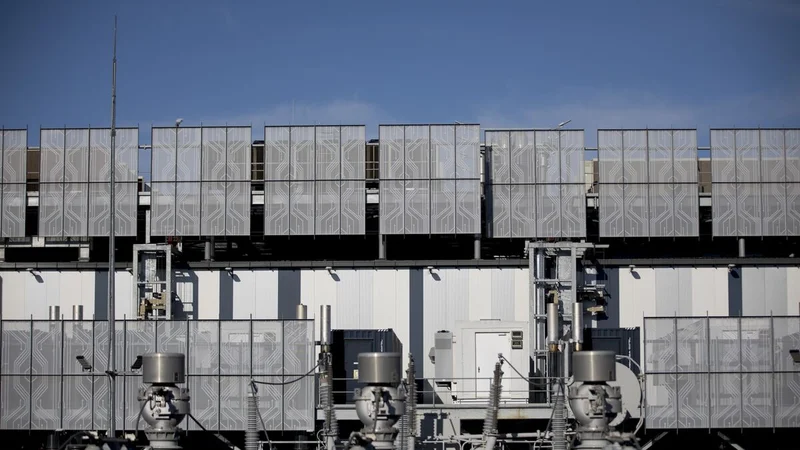
Image: Bloomberg AI
Main Takeaway
AirTrunk, backed by Blackstone, will invest $30 billion to build 5 gigawatts of data center capacity in India by 2030.
Jump to Key PointsSummary
Why India is attracting massive AI infrastructure bets
AirTrunk's $30 billion commitment represents one of the largest single-country data center investments ever announced, and it signals a decisive shift in how global capital views India's digital infrastructure. The Australian operator, which entered India earlier this year through its acquisition of Lumina CloudInfra, plans to develop 5 gigawatts of capacity by 2030. That scale is staggering, equivalent to roughly half of India's current total data center power consumption.
The timing isn't accidental. India has become the world's most populous country, its middle class is expanding rapidly, and smartphone penetration continues to climb. Yet the country's data center capacity has lagged behind demand, creating a supply gap that AirTrunk and its competitors are now racing to fill. Blackstone's backing gives AirTrunk the balance sheet muscle to move faster than most.
This investment also reflects a broader strategic calculation. Western tech companies are increasingly nervous about concentrating too much AI infrastructure in the US and China. India offers a politically stable, English-speaking alternative with a massive domestic market and growing export potential for AI services.
How AirTrunk's India play compares to rivals
AirTrunk isn't the only player betting big on India. OpenAI recently tapped Tata for 100MW of AI data center capacity, a comparatively modest deal that nonetheless validates the market's strategic importance. The contrast between these two deals, $30 billion versus a single 100MW arrangement, illustrates the gap between infrastructure builders and infrastructure consumers.
The competitive landscape is intensifying rapidly. Domestic players like Reliance Jio and Adani have announced data center expansion plans, while global operators including Google, Amazon Web Services, and Microsoft have been scaling their Indian cloud footprints for years. AirTrunk's advantage lies in its pure-play data center focus and its ability to secure long-term power purchase agreements, a critical bottleneck in India's infrastructure development.
What sets AirTrunk apart is its willingness to commit capital at scale before customer contracts are fully signed. This build-it-and-they-will-come approach carries risk, but it also positions the company to capture premium pricing as AI demand accelerates. Blackstone's ownership structure, which includes CPPIB according to Livemint, provides the patient capital necessary for this strategy.
What 5 gigawatts means in practical terms
Five gigawatts of data center capacity is difficult to conceptualize. For context, that's roughly equivalent to the power consumption of 5 million homes, or about 4% of India's total installed power generation capacity. Building this infrastructure will require not just data centers, but massive investments in transmission, cooling, and potentially on-site renewable generation.
The power intensity of AI workloads makes this scale necessary. Training and running large language models requires exponentially more compute than traditional cloud services, and that compute generates enormous heat. AirTrunk will need to solve India's notorious cooling challenges, where summer temperatures regularly exceed 45 degrees Celsius, while also meeting increasingly stringent sustainability commitments from its corporate customers.
Water usage presents another constraint. Data centers consume vast quantities of water for cooling, and India faces acute water stress in many regions. AirTrunk's site selection will be as much about hydrology and grid connectivity as about proximity to customers.
The Blackstone angle and infrastructure finance
Blackstone's role as AirTrunk's primary backer reveals how private equity is reshaping global digital infrastructure. The firm acquired AirTrunk in 2020 and has since poured capital into expanding its footprint across Asia-Pacific. This India bet represents the largest geographic expansion yet, and it demonstrates how infrastructure funds are becoming the primary financiers of the AI buildout.
The returns on data center investments have proven resilient compared to other real estate categories. Leases typically run 10-15 years with built-in escalation clauses, providing cash flow predictability that institutional investors crave. For Blackstone's limited partners, including pension funds and sovereign wealth vehicles, AirTrunk offers exposure to AI-driven demand without betting on any single technology winner.
However, the $30 billion figure requires qualification. It likely represents total project cost over the full deployment period, not a single capital commitment. Much of this will be financed through project-level debt and customer prepayments as facilities come online. Still, the headline number serves a strategic purpose, signaling to competitors and potential customers that AirTrunk is in India to stay.
What this means for India's AI ambitions
India has struggled to translate its software services dominance into AI leadership. The country produces world-class engineering talent, but much of it has historically flowed to Silicon Valley. Domestic AI development has been hampered by limited compute access, high cloud costs, and data localization requirements that complicate training on global datasets.
AirTrunk's investment directly addresses the compute bottleneck. Local data center capacity reduces latency for Indian users, improves compliance with data sovereignty rules, and potentially lowers costs as competition intensifies. For startups and research institutions, this infrastructure could democratize access to the GPU clusters needed for frontier AI development.
The government's role will be equally important. India's recent budget included incentives for data center development, but permitting remains cumbersome and power sector reforms are incomplete. Whether AirTrunk's 5GW target is achievable depends partly on how quickly New Delhi streamlines approvals and upgrades transmission infrastructure. The company has a track record of moving fast, but no amount of private capital can fully compensate for regulatory friction.
What happens next for global data center competition
AirTrunk's announcement will likely trigger competitive responses. Other infrastructure funds, including KKR and Brookfield, have been circling India's data center market. The $30 billion figure sets a new benchmark for commitment size, potentially forcing rivals to scale their own plans or cede market share.
The deal also raises questions about concentration risk. If AirTrunk captures a dominant share of India's AI-ready data center capacity, it gains significant leverage over pricing and customer terms. Regulators may eventually scrutinize this concentration, particularly as AI infrastructure becomes critical to national economic competitiveness.
For the broader industry, India represents a template for how AI infrastructure will spread beyond traditional hubs. Southeast Asia, the Middle East, and Africa are next in line for similar investment waves. The companies that master the regulatory, power, and financing challenges of emerging market deployment will define the next decade of global AI infrastructure geography.
Key Points
AirTrunk commits $30 billion to build 5GW of AI data center capacity in India by 2030
Blackstone-backed operator entered India earlier in 2026 through Lumina CloudInfra acquisition
5GW target equals roughly half of India's current total data center power consumption
OpenAI separately secured 100MW from Tata, validating intense demand for Indian AI infrastructure
Investment requires solving India's power grid, cooling, and water stress challenges at scale
Questions Answered
AirTrunk is investing $30 billion to build 5 gigawatts of data center capacity in India by 2030. The Australian operator, backed by Blackstone, announced the commitment in June 2026 after entering India through its acquisition of Lumina CloudInfra earlier that year.
AirTrunk selected India due to its status as the world's most populous country, rapid growth in smartphone penetration, expanding middle class, and acute shortage of data center capacity relative to demand. The investment also reflects a strategic diversification away from concentrated US and China AI infrastructure locations.
AirTrunk competes with domestic conglomerates Reliance Jio and Adani, global cloud hyperscalers Google, Amazon Web Services, and Microsoft, and other infrastructure investors including KKR and Brookfield. OpenAI's separate 100MW deal with Tata illustrates the broad range of players seeking compute capacity in the market.
AirTrunk must overcome India's extreme heat requiring massive cooling capacity, water stress affecting traditional cooling methods, power grid limitations needing transmission upgrades, and complex permitting processes. The company also needs to secure long-term power purchase agreements and potentially develop on-site renewable generation.
Blackstone's ownership provides AirTrunk with patient institutional capital that enables a build-ahead-of-demand strategy, allowing the company to construct capacity before customer contracts are fully secured. This approach, also supported by CPPIB, lets AirTrunk move faster than competitors dependent on shorter-term financing.
Competitive responses from other infrastructure funds and data center operators are expected, potentially triggering an investment race in India's digital infrastructure. Regulatory scrutiny of market concentration may follow if AirTrunk achieves dominant capacity share, while the project timeline depends on government permitting speed and power sector reform progress.
Source Reliability
43% of sources are highly trusted · Avg reliability: 77
Go deeper with Organic Intel
Simple AI systems for your life, work, and business. Each one includes copyable prompts, guides, and downloadable resources.
Explore Systems