Apple’s iPhone 18 Pro Reference Image Creates a Digital Negative for Photo Authentication
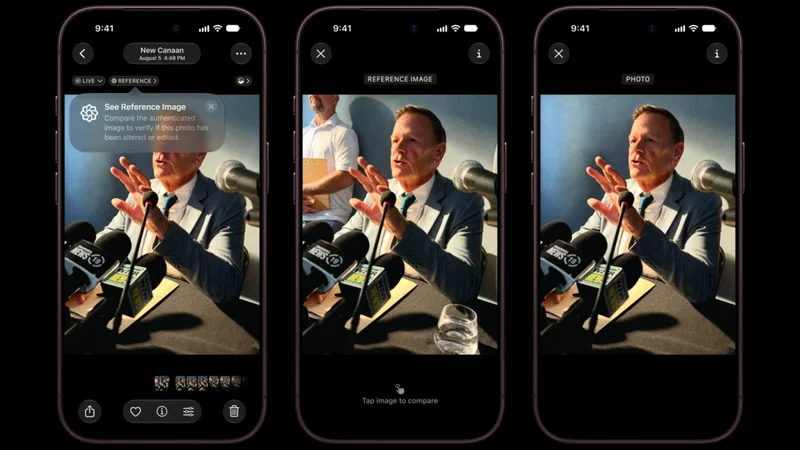
Image: TechCrunch AI
Main Takeaway
Apple’s iPhone 18 Pro will create signed reference images that let users compare original camera captures with edited or AI-altered versions.
Jump to Key PointsSummary
Apple’s authenticity feature
Apple’s iPhone 18 Pro and iPhone 18 Pro Max will introduce Reference Image, a camera mode designed to show whether a photograph has been altered after capture. The feature arrives later this month as AI-generated images become harder to distinguish from conventional photography.
Reference Image uses the phones’ new main-camera sensor to capture signed sensor data, which Apple’s Private Cloud Compute processes into an unalterable reference image. Users can view that version in the Photos app beside the ordinary photograph, creating a comparison point for edits, including changes made with generative AI. Apple describes the result as a digital negative, according to TechCrunch, The Verge, and Gizmodo.
How Reference Image works
The authentication process starts only when a user places the iPhone 18 Pro camera in Reference mode. The sensor signs the pixels it captures, after which Private Cloud Compute creates the reference version. The standard camera mode does not automatically authenticate every image, a limitation The Verge identifies as central to how the system works.
The reference image is initially available in Apple’s Photos app. Apple is also opening APIs so developers can build the comparison and verification process into other applications. That gives news organizations, photography tools, and social platforms a path to inspect authenticated images outside Apple’s own software, although the articles provide no details about the API’s technical requirements or launch partners.
Why photographers care
Apple is positioning Reference Image as a tool for photojournalists and photographers who need to establish that an image originated with a camera and was changed later. A preserved camera capture can help separate ordinary post-processing from edits that alter the underlying scene, provided recipients can access and trust the reference record.
The feature addresses a specific weakness in image verification. AI detectors generally inspect a finished file for signs of synthesis, while Apple’s method records evidence at capture time. That distinction matters as image generators and editing tools produce increasingly convincing results, a pressure that helped drive the feature’s development, according to 9to5Mac, TechCrunch, and Gizmodo.
Standards and limits
Reference Image joins a growing group of image-authentication systems rather than replacing them. Apple said it will support SynthID, Google’s technology for embedding imperceptible markers in AI-generated media. OpenAI has adopted SynthID for generated images, while Meta has developed labels for AI-generated content on its platforms, according to 9to5Mac and TechCrunch.
The approach still depends on an authenticated capture being made in the first place. A photograph taken without Reference mode will not gain the same camera-origin record, and the comparison is most useful when publishers, platforms, or viewers can inspect the preserved version. Apple’s cloud processing also makes Private Cloud Compute part of the trust chain, though the company’s announcements, as described by the coverage, do not explain how users or outside organizations audit that process.
What happens for developers
Apple’s developer APIs will determine whether Reference Image becomes a practical verification layer or remains a feature inside Photos. Outside apps could use the data to display authenticity indicators, compare a submitted photo with its reference image, or preserve provenance alongside published work.
That creates an opening for newsrooms, image-hosting services, and professional photography platforms. It also creates implementation questions around access, privacy, cloud processing, file handling, and whether authenticated metadata survives export or reposting. The feature launches on the iPhone 18 Pro line, while the available details do not establish support for older iPhones or broader camera hardware.
The broader trust problem
Apple’s move reflects a shift from asking whether an image looks artificial to asking whether a device recorded a verifiable original. That distinction gives cameras a stronger role in digital provenance as synthetic media spreads across social networks, news feeds, and private communications.
Reference Image won’t prove that every visual claim in a photograph is true. It can establish a capture record and expose later differences between an ordinary copy and Apple’s reference version. Its real influence will depend on adoption by developers and publishers, compatibility with standards such as SynthID, and whether audiences learn to treat provenance records as evidence rather than as automatic proof.
Key Points
Apple’s iPhone 18 Pro introduces Reference Image for verifying camera captures and detecting later AI edits.
Reference mode signs sensor data and creates an unalterable comparison image through Private Cloud Compute.
Apple will expose APIs so developers, publishers, and photography platforms can integrate image authentication.
Reference Image records provenance at capture time, complementing SynthID and other AI-content labeling systems.
Authentication requires Reference mode, limiting verification for photos captured through the standard camera mode.
Questions Answered
Apple Reference Image is a camera mode that creates an authenticated version of a photo taken on the iPhone 18 Pro. Apple uses signed sensor data and Private Cloud Compute to produce a reference image for comparison with edited copies.
Apple Reference Image uses the iPhone 18 Pro main sensor to sign the pixels captured in Reference mode. The resulting reference image provides a camera-origin record that can be compared with the regular photo in Apple Photos.
Apple Reference Image can help identify AI edits by showing differences between the authenticated reference image and another version of the photo. It records the original capture rather than trying to detect synthetic imagery only from the finished file.
Apple Reference Image works when users place the iPhone 18 Pro camera in Reference mode. Photos taken in the standard camera mode do not receive the same authentication record.
Apple will provide APIs that let developers integrate Reference Image into their own applications. The APIs could support verification in newsrooms, photography services, social platforms, and image-hosting tools.
Source Reliability
50% of sources are highly trusted · Avg reliability: 82
Go deeper with Organic Intel
Simple AI systems for your life, work, and business. Each one includes copyable prompts, guides, and downloadable resources.
Explore Systems