Amazon Debuts AI-Generated Product Images in Search to Bridge Intent and Discovery
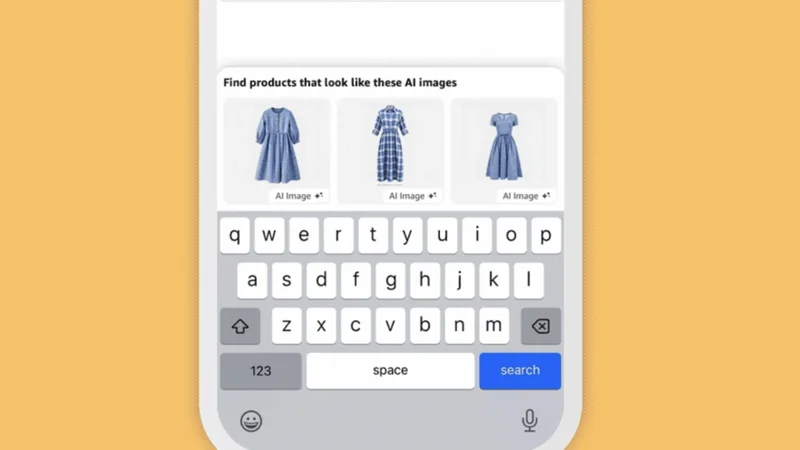
Image: The Verge AI
Main Takeaway
Amazon now generates synthetic product images from text queries to help shoppers find items they can't describe.
Jump to Key PointsSummary
How the visual search feature works
Amazon rolled out an AI-powered visual search tool that generates synthetic product images based on text descriptions typed into its search bar. The feature, announced in a company blog post, currently covers clothing and home goods categories. Shoppers tap on the generated image that best matches their intent, then browse visually similar real products available for purchase.
The mechanism is straightforward: natural language goes in, a grid of AI-generated visuals comes out, and selection triggers a conventional product search. Amazon positions this as solving a vocabulary gap, where customers know what they want but lack the exact terminology to find it. The generated images are explicitly labeled as AI-created, not actual inventory photos.
TechCrunch reports the feature is live in Amazon's mobile app, with no stated timeline for desktop expansion or category expansion beyond apparel and home decor.
Why Amazon is pushing synthetic visuals now
The timing reflects intensifying competition in AI-assisted shopping. Google and Pinterest have deployed visual search for years, while TikTok Shop and Shein have eroded Amazon's dominance in fashion discovery among younger consumers. The Los Angeles Times notes Amazon's search architecture, built on keyword matching and purchase history, struggles with exploratory browsing where users cannot name what they seek.
Amazon's choice to generate rather than curate images is notable. Rather than surfacing existing seller photos that approximate the query, the system invents idealized representations. This sidesteps inventory limitations but introduces a new problem: the perfect item shown may not exist, and the closest match could disappoint. Emarketer's analysis suggests this approach risks training users to expect products that cannot be fulfilled, degrading trust over time.
The company has tested AI-generated content before, including product descriptions and review summaries, with mixed reception. This represents its most aggressive integration of synthetic media into the core purchase funnel.
The merchant and platform dynamics at stake
Sellers on Amazon's marketplace face uncertain implications. The visual search layer sits between customer intent and product listings, potentially redirecting traffic based on AI interpretation rather than traditional SEO or advertising spend. Myamazonguy and 42signals, both seller-focused publications, have previously documented tensions around AI-generated product images in listings, including inconsistent quality and customer confusion when rendered products differ from received items.
Amazon claims AI-enhanced imagery can boost return on ad spend by 10%, according to Sellermetrics, though independent verification of this figure is unavailable. If Amazon's own synthetic images become the primary discovery path, third-party sellers may feel pressure to adopt similar generative tools to remain visible, accelerating a race toward AI-produced catalog content.
The platform itself benefits from increased engagement time and potentially higher conversion if visual matching proves more efficient than text search. It also reduces Amazon's dependence on seller-provided photography, which varies widely in quality and compliance.
Technical limitations and user experience risks
The feature's narrow category scope suggests Amazon is proceeding cautiously. Clothing and home goods share visual characteristics that are relatively forgiving of generative AI's remaining flaws, fabric textures and furniture silhouettes being easier to render convincingly than electronics or perishables. Wizzy's technical analysis of Amazon's search infrastructure indicates the platform's ranking algorithms have historically struggled with semantic understanding, making this a significant architectural shift.
User experience risks are substantial. The gap between an idealized generated image and available inventory could increase return rates, already a major cost center for Amazon. Rewarx's coverage of Amazon's Photo AI tools notes similar features in testing have produced inconsistent results across skin tones, body types, and lighting conditions. If shoppers select generated images that translate to poor real-world matches, the feature could become a friction point rather than a solution.
Amazon has not disclosed which generative model powers the images or how it handles potential intellectual property conflicts with existing product designs.
Competitive context and what comes next
Amazon's move places it in direct competition with specialized visual search players like Google Lens and emerging AI shopping assistants from OpenAI and Anthropic. The Los Angeles Times frames this as part of a broader defensive strategy to maintain Amazon's position as the default product search engine, a role increasingly challenged by social commerce and generative AI interfaces.
Industry analysts expect expansion into additional categories if initial metrics prove positive. Finance.yahoo's coverage of the announcement emphasized Amazon's historical pattern of testing features in limited verticals before platform-wide deployment. The critical variable is whether conversion rates from AI-generated image searches exceed those from traditional search, data Amazon closely guards.
Privacy considerations also loom. Visual search queries may reveal more about user intent than typed keywords, creating richer behavioral profiles. Amazon has not clarified data retention or use policies specific to this feature.
What this signals for e-commerce AI adoption
The deployment confirms generative AI is moving from back-end operations to customer-facing interfaces at the largest retail scale. Unlike chatbot experiments that users can ignore, this feature inserts synthetic content directly into the purchase path. Its success or failure will influence whether competitors accelerate similar programs or retreat to more conservative applications.
For consumers, the immediate impact depends on shopping habits. Those who browse Pinterest for style inspiration may find the approach natural; those with specific product needs will likely bypass it. The broader test is whether AI-generated intermediaries become standard in commerce, or whether the trust and fulfillment challenges prove insurmountable at scale.
Amazon's willingness to show products that do not exist, even with clear labeling, marks a philosophical shift in retail interface design. Whether customers welcome or resist this remains an open question that early adoption metrics will soon answer.
Key Points
Amazon generates synthetic product images from text queries in mobile search
Feature currently limited to clothing and home goods categories only
Competes with TikTok Shop, Pinterest, and Google Lens for discovery dominance
Sellers face uncertain traffic and advertising implications from AI mediation
Trust risks emerge when idealized images exceed real inventory capabilities
Questions Answered
No. The images are synthetic representations designed to match your description. Tapping an image searches for visually similar real products available for purchase.
As of launch, only clothing and home goods generate AI images. Amazon has not announced expansion timelines for other categories.
Previous tools matched uploaded photos to inventory. This feature creates original images from text descriptions, a more aggressive use of generative AI in the purchase funnel.
Amazon has not disclosed whether sellers receive specific analytics for AI-generated image search traffic versus traditional search impressions.
This is a recognized risk. Returns and customer dissatisfaction could increase if shoppers expect the idealized synthetic appearance rather than actual inventory.
Source Reliability
30% of sources are highly trusted · Avg reliability: 56
 Myamazonguy
Go deeper with Organic Intel
Simple AI systems for your life, work, and business. Each one includes copyable prompts, guides, and downloadable resources.
Explore Systems