AI Revenue Tops Infrastructure Depreciation as Tech Giants' Data Center Bets Show First Signs of Paying Off
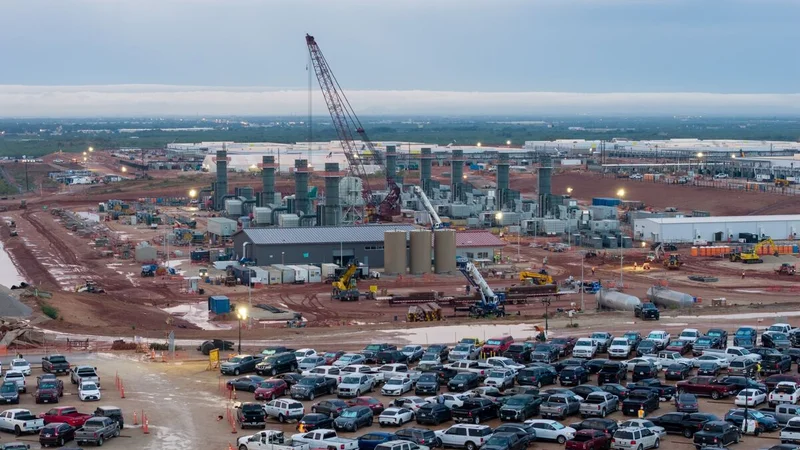
Image: Bloomberg AI
Main Takeaway
AI revenue hit $25 billion and began exceeding data center depreciation costs for Meta, Alphabet, and Microsoft in mid-2026.
Jump to Key PointsSummary
What changed in AI economics this quarter
AI revenue crossed a critical threshold in 2026, topping the depreciation costs of the massive data centers built to support it. According to Bloomberg, the technology's revenue reached approximately $25 billion across major tech platforms, exceeding infrastructure depreciation for the first time. This marks a potential inflection point in the economics of artificial intelligence after years of heavy capital expenditure without clear returns.
The milestone does not mean AI investments are profitable yet. Depreciation is only one cost component, excluding operations, energy, staffing, and ongoing construction. Still, the fact that revenue now covers this baseline infrastructure wear-and-tear cost provides the first concrete evidence that demand might eventually justify the spending surge.
Why the margin remains razor thin
Google and Amazon face a sustained challenge in making these economics work at scale. Bloomberg reports that both companies must maintain premium pricing for AI services while driving strong user growth to recoup their investments. The narrow gap between revenue and depreciation leaves little room for error.
Cloud providers have been locked in a capital expenditure arms race, with collective spending on data centers reaching hundreds of billions of dollars. Meta, Alphabet, and Microsoft have all expanded aggressively. The current revenue coverage of depreciation is a necessary but insufficient condition for long-term viability. Any pricing pressure or slowdown in enterprise adoption could widen the gap again.
What infrastructure investors are betting on now
Private equity and infrastructure funds are treating this moment as validation of a longer thesis. KKR's analysis positions the current buildout as structurally different from prior tech cycles, arguing that AI infrastructure will compound in value long after market hype subsides. This perspective treats data centers less as speculative technology plays and more as durable utility-like assets with decades-long revenue streams.
The investment logic has shifted from growth-at-all-costs to infrastructure durability. Power availability, cooling efficiency, and geographic positioning now matter as much as chip performance. Institutional capital is flowing into secondary and tertiary data center markets as primary locations reach capacity constraints.
Where the buildout goes from here
Industry projections through 2030 suggest the current construction wave is only beginning. Multiple growth scenarios point to continued expansion of global data center capacity, with particular concentration in markets with access to cheap renewable energy and favorable regulatory treatment. The scale of planned investment implies that today's revenue-depreciation parity must improve dramatically to service the capital already committed.
Data center cost structures are also evolving. Alpha-matica's analysis of facility economics highlights how power, cooling, and real estate dominate operational expenses, creating pressure for architectural innovation. Meanwhile, Avid Solutions' sector projections emphasize geographic diversification and sustainability metrics as increasingly important competitive factors.
What this means for the competitive landscape
The companies that establish economically viable AI infrastructure first will gain durable advantages. Bloomberg's analysis of Meta, Alphabet, and Microsoft suggests these firms are closest to demonstrating sustainable unit economics, though each faces distinct pressures. Google's search business integration, Meta's advertising optimization, and Microsoft's enterprise cloud relationships provide different paths to monetization.
For competitors without equivalent scale, the window for independent infrastructure investment may be closing. The capital requirements for competitive data center networks have risen to levels that only a handful of companies and countries can realistically meet. This concentration risk carries implications for market structure, pricing power, and potentially for regulatory attention as AI becomes more economically central.
Key Points
AI revenue hit $25 billion and topped data center depreciation costs for Meta, Alphabet, and Microsoft in 2026.
Google and Amazon must sustain premium pricing and strong user growth to recoup infrastructure investments.
KKR argues AI infrastructure will compound in value long after market hype subsides.
Data center cost structures are dominated by power, cooling, and real estate expenses.
Industry projections through 2030 show continued massive expansion of global capacity.
Questions Answered
No, AI revenue has only recently exceeded depreciation costs, which is a baseline infrastructure expense. Full profitability requires covering operations, energy, staffing, and ongoing construction costs as well. According to Bloomberg, the margin remains narrow and requires sustained premium pricing to maintain.
Google and Amazon face greater pressure to sustain premium pricing and user growth to recoup their investments. Bloomberg reports that each company has different monetization paths, with Google's search integration, Meta's advertising optimization, and Microsoft's enterprise cloud providing varying routes to viability.
KKR and similar investors increasingly treat data centers as durable utility-like assets rather than speculative technology plays. This reflects a shift toward infrastructure durability and long-term compounding value, with particular attention to power availability, cooling efficiency, and geographic positioning.
Avid Solutions and Alpha-matica identify cheap renewable energy access, favorable regulatory treatment, geographic diversification, and sustainability metrics as increasingly critical. Power and cooling dominate operational cost structures, driving architectural innovation and market expansion into secondary locations.
Yes, the capital requirements for competitive data center networks have risen to levels that only a handful of companies and countries can meet. This creates market concentration risk with implications for pricing power and potential regulatory scrutiny as AI becomes more economically central.
Source Reliability
50% of sources are highly trusted · Avg reliability: 50
Go deeper with Organic Intel
Simple AI systems for your life, work, and business. Each one includes copyable prompts, guides, and downloadable resources.
Explore Systems