

Cloudflare Block Pages Prevent Verification of Maaal and Mixvale Content
Cloudflare security challenges blocked access to Maaal and Mixvale pages, leaving no verifiable underlying story or news claim.
ResearchUnverified19
Cloudflare security challenges blocked access to Maaal and Mixvale pages, leaving no verifiable underlying story or news claim.
Rich Hickey’s critique of AI as a tool has sparked a wider debate over whether language models amplify human skill, replace learning, or reshape the environment around work.
Alphabet’s Isomorphic Labs is in early talks to raise more than $2 billion at a valuation of at least $40 billion, Bloomberg reports.
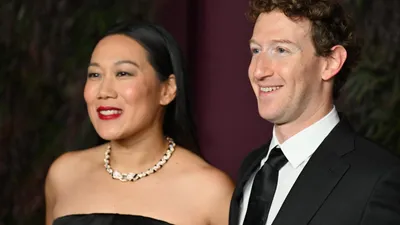
Zuckerberg-backed Biohub, U.S. agencies, Google and partners committed $1.8 billion to open biological data, computing and tools for predictive AI models.
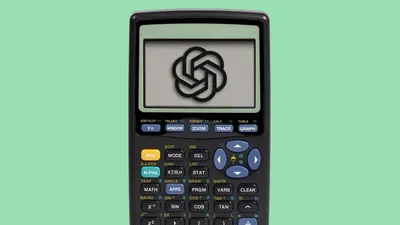
OpenAI’s reported solutions to hundreds of long-standing math problems have triggered fierce debate over verification, attribution, and mathematicians’ role in research.

HTTP 410 Gone tells browsers and search crawlers that a resource was deliberately removed and has no replacement, unlike a temporary or unknown absence.
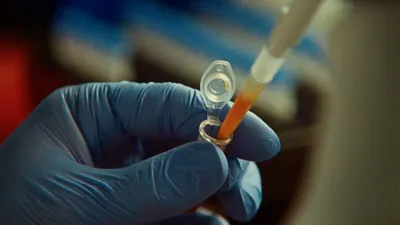
Anthropic says nearly 950 Claude agents identified a previously unknown enzyme system in bacteriophage DNA, but its biological function remains unverified.
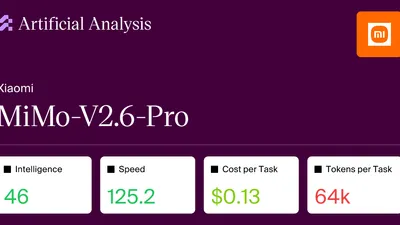
Artificial Analysis evaluates Inception’s Mercury 2.5 across intelligence, speed, latency, context, and cost as comparisons with Xiaomi’s MiMo-V2.6-Pro broaden.

OpenAI has formed an independent mathematics advisory group after claiming an internal AI model solved more than 100 long-standing problems, including Navier-Stokes.
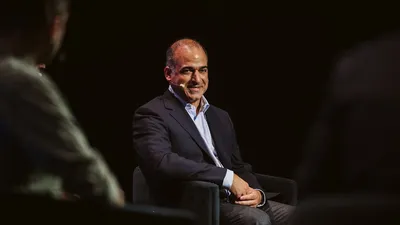
World model startups AMI Labs and World Labs are attracting major funding and attention while revealing little about their technology, data and paths to revenue.

Google and the United Nations launched an open Data Commons platform that brings global statistics into one searchable, AI-ready resource for development research and policymaking.
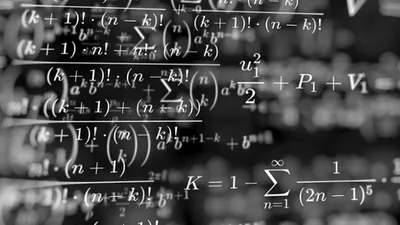
Twenty-five Fields Medalists have warned that AI companies’ race to solve mathematical problems as benchmarks threatens research norms around understanding, credit, disclosure, and accountability.
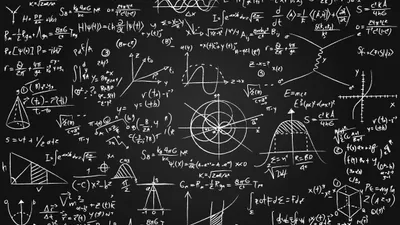
OpenAI says its AI solved the Navier-Stokes problem, while mathematician Tristan Buckmaster accuses the lab of racing ahead and mishandling credit.
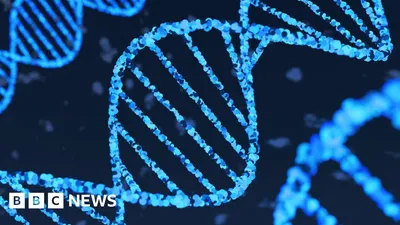
Google DeepMind’s AlphaGenome Atlas predicts the biological effects of 9 billion single-letter DNA changes, giving researchers a free catalogue for disease and drug studies.

OECD data finds students who use AI for schoolwork generally score lower, but training in evaluating chatbot answers can improve learning outcomes.