OpenAI’s Math Breakthroughs Ignite a Crisis Over Credit, Transparency, and the Future of Research
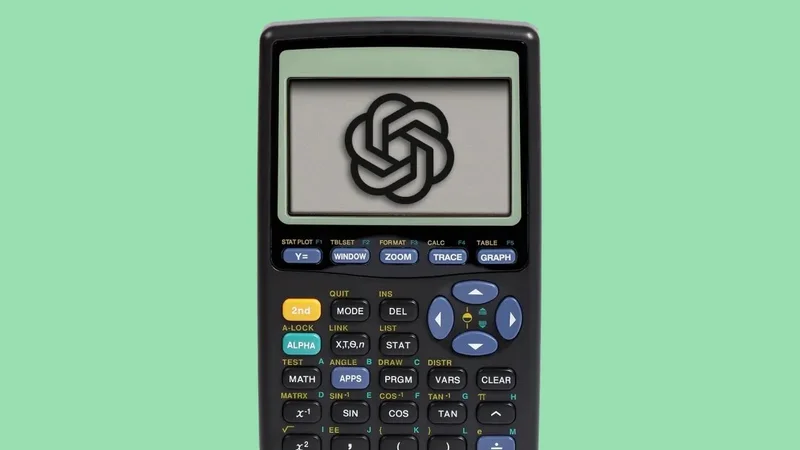
Image: The Verge AI
Main Takeaway
OpenAI’s reported solutions to hundreds of long-standing math problems have triggered fierce debate over verification, attribution, and mathematicians’ role in research.
Jump to Key PointsSummary
A breakthrough with a backlash
OpenAI’s reported progress on difficult mathematical problems has turned a technical achievement into a dispute over how AI labs should work with the mathematics community. The company and other laboratories have announced advances on long-standing problems, including a reported solution to one of the Millennium Prize problems, according to The Verge AI and Science. The claims have unsettled mathematicians because the breakthroughs arrived alongside questions about disclosure, verification, and who receives credit.
The controversy is unfolding as OpenAI prepares to release more than 100 additional solutions to unsolved problems, Wired reported. That planned disclosure has intensified a debate that reaches beyond any single result: whether powerful AI systems are becoming research collaborators, competitors, or institutions that can set their own pace for an academic discipline.
Why mathematicians are angry
Mathematicians’ frustration centers on process as much as performance. Researchers accustomed to public proofs, careful peer review, and explicit attribution have reacted sharply to what they view as a rapid, corporate approach to announcing results. The Verge AI described the labs’ conduct as a source of backlash, while Wired quoted one mathematician who said there is a perception of “mobster behavior” among leading AI companies.
That anger grew after an August meeting in which OpenAI convened about 40 mathematicians to discuss what would happen if AI surpassed human capabilities in mathematics. Participants reportedly expressed both excitement and dread. OpenAI representatives discussed how to publish a large body of findings, but an assurance that the solutions would not be released all at once is disputed: people who attended described that promise, while spokesperson Lindsay McCallum said the company was not aware of it, according to Wired.
Verification becomes the central test
The credibility of AI-generated mathematics depends on whether other mathematicians can inspect and verify the proofs. Announcements of solved problems carry limited weight without accessible reasoning, independent checking, and a clear record of the human and machine contributions. The crisis described by arXiv AI and the concerns raised in IEEE Spectrum point to a discipline facing a mismatch between AI systems’ speed and mathematics’ slower standards of validation.
A large release of solutions would put pressure on universities, journals, and researchers to review work at a scale they were not organized to handle. Formal proof assistants might help check individual steps, but verification still requires decisions about definitions, novelty, exposition, and the significance of a result. The debate therefore concerns the entire research pipeline, not only whether a model can produce an answer.
The question of human purpose
AI’s advance is forcing mathematicians to reconsider which parts of the profession remain distinctly human. Understandingai framed the issue as a possibility that AI could eclipse mathematicians, while Science described OpenAI’s progress as triggering an “existential crisis” in the field. Those concerns involve more than employment. They touch the value assigned to intuition, taste, problem selection, explanation, and the social process through which mathematical knowledge is built.
Mathematicians still set standards and decide which questions matter, but that role becomes harder to define when systems generate results faster than experts can evaluate them. Ars Technica’s account of threats to the profession reflects a related worry: early-career researchers learn by attempting problems, writing proofs, and receiving recognition for incremental advances. If AI absorbs much of that work, training, authorship, and academic status all face pressure.
OpenAI’s governance problem
OpenAI’s handling of the math announcements has become part of the story because the company is asking the community to help manage consequences after its systems have already produced major results. The August gathering offered a channel for consultation, but the conflicting accounts over promised publication limits damaged confidence. The Verge AI said the company has acknowledged earlier mistakes and is learning from them, while Wired’s reporting shows that participants remain uncertain about how the release will be managed.
A credible process would need clear authorship rules, reproducible evidence, independent review, and advance notice for researchers whose work is affected. It would also need to distinguish a model-generated conjecture from a verified theorem and a verified theorem from a genuinely important advance. Those distinctions matter for OpenAI, its competitors, and the institutions that will decide whether AI mathematics enters the formal record.
What happens to mathematical research
The immediate consequence is a demand for stronger norms around AI-assisted mathematics. OpenAI’s reported results may expand the set of solvable problems, but the field must decide how proofs are checked, how contributions are credited, and how discoveries are communicated. IEEE Spectrum’s focus on the questions raised by AI and arXiv AI’s framing of a crisis both point to standards as the next battleground.
The debate also creates an opportunity for new research institutions and tools. Formal verification, transparent model logs, shared benchmarks, and community-led review could make AI systems useful without allowing private labs to control the flow of mathematical knowledge. OpenAI’s planned publication of more than 100 solutions will test whether the company can meet that standard. Until then, the mathematics community’s response will remain shaped as much by conduct and trust as by the underlying proofs.
Key Points
OpenAI’s reported math breakthroughs trigger disputes over proof verification, attribution, and research transparency.
OpenAI plans to release more than 100 solutions to long-standing unsolved mathematical problems.
Mathematicians fear AI could disrupt careers, training, authorship, and the profession’s research standards.
An August OpenAI meeting brought roughly 40 mathematicians together amid excitement and existential anxiety.
Formal verification and independent review will determine whether AI-generated mathematics earns community trust.
Questions Answered
OpenAI reportedly solved hundreds of long-standing mathematical problems, including one of the Millennium Prize problems. The claims have prompted demands for accessible proofs and independent verification.
Mathematicians are angry with OpenAI over concerns about transparency, attribution, and the company’s approach to releasing major results. Critics say rapid announcements conflict with established norms of peer review and credit.
OpenAI is preparing to release more than 100 solutions to unsolved mathematical problems. The timing and scale of that publication have become central points of debate within the mathematics community.
OpenAI convened about 40 mathematicians in August to discuss the possibility that AI could surpass human capabilities in mathematics. Attendees reportedly expressed both excitement and dread while discussing how results should be published.
AI-generated mathematics will require accessible proofs, independent review, and formal checking where appropriate. Verification must also establish novelty, significance, and the contributions made by humans and AI systems.
Source Reliability
71% of sources are highly trusted · Avg reliability: 86
Go deeper with Organic Intel
Simple AI systems for your life, work, and business. Each one includes copyable prompts, guides, and downloadable resources.
Explore Systems