Wayve Files for Share Sale on London Bourse's New Private Market
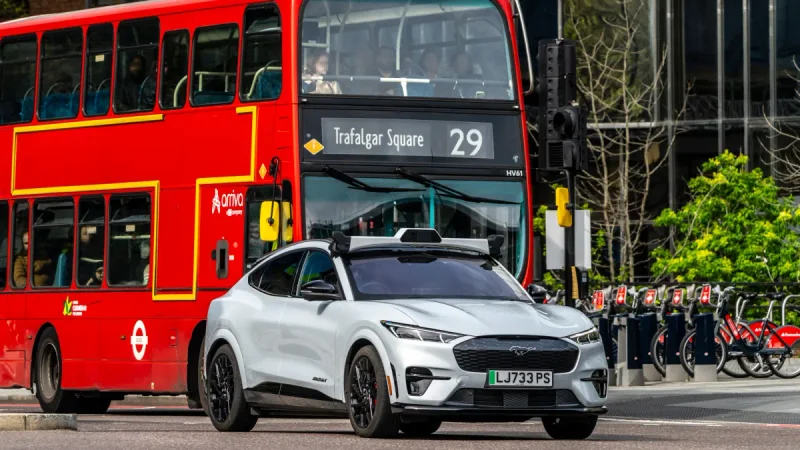
Image: Thetimes
Main Takeaway
Wayve launches an $85 million employee tender offer at an $8.5 billion valuation, becoming the first major company to use the London Stock Exchange's new.
Jump to Key PointsSummary
Wayve's Dual-Track Liquidity Play
Wayve, the London-based autonomous driving startup, has launched an $85 million employee tender offer while simultaneously filing to sell shares on the London Stock Exchange's new Private Securities Market. The tender, led by existing and new investors, values the company at $8.5 billion, a figure set during its February 2026 funding round. This dual approach marks a significant moment for both Wayve and the UK's evolving private-market infrastructure.
The $8.5 billion valuation reflects the company's rapid ascent in the autonomous vehicle sector. Wayve's technology uses end-to-end deep learning to enable AI capable of complex driving, learning directly from camera data without relying on HD maps or hand-coded rules. This hardware-agnostic approach has attracted major investors including Nvidia, Uber, Microsoft, and three automakers. The tender offer gives employees a structured opportunity to sell vested equity, addressing a critical pain point in the competitive AI talent market.
The timing signals confidence. Rather than rushing toward an IPO, Wayve is exploring alternative liquidity paths that keep it private longer while rewarding early team members.
Testing Britain's PISCES Framework
Wayve's filing on the LSE's new private market represents the most serious test yet of Britain's PISCES (Private Intermittent Securities and Capital Exchange System) framework. The platform, designed to let late-stage private companies offer liquidity without full public listings, has now attracted its highest-profile AI participant. Bloomberg reports Wayve as the first major company to test this novel system.
The PISCES market fills a structural gap in UK capital markets. Traditionally, British startups faced pressure to list publicly or relocate to US exchanges to provide employee and investor liquidity. This new venue aims to keep high-growth companies domestic longer, channeling returns within UK borders. For Wayve, it offers a regulated secondary market without the full compliance burden and market volatility exposure of a traditional IPO.
Startup Fortune notes the symbolic weight of this choice. Wayve could have pursued US private-market platforms like Forge or EquityZen exclusively. Its decision to engage London's new system sends a signal about the city's ambitions as a post-Brexit financial technology hub.
The AI Talent War's Financial Architecture
The $85 million tender offer is not merely generous; it is strategically necessary. TechCrunch identifies this as part of a growing trend of AI startups using employee tenders as a retention tool. In a market where OpenAI, Anthropic, and DeepMind compete fiercely for machine learning researchers, liquidity events have become table stakes.
Wayve's approach differs from typical secondary sales in its structure. Rather than haphazard individual transactions, this is a coordinated offer led by the company's investor syndicate. This ensures orderly pricing aligned with the official valuation rather than distressed discounts. For employees who joined in 2017 or later, the tender converts paper wealth into spendable capital without requiring them to leave the company.
The valuation itself carries weight. At $8.5 billion, Wayve sits among Europe's most valuable AI startups. TechBuzz frames this explicitly as staking claim in the AI talent war, where compensation packages increasingly blend salary, equity, and now structured liquidity events.
Investor Syndicate and Competitive Positioning
Wayve's backing reads as a who's-who of strategic AI and automotive investors. Nvidia's participation is particularly notable, given the chipmaker's aggressive moves into autonomous driving both through hardware and software investments. Microsoft's presence reinforces the cloud-to-edge AI pipeline that underpins modern vehicle autonomy.
The automotive manufacturers in the syndicate, while unnamed in available sources, represent critical commercialization partners. Wayve's licensing model, selling its deep learning platform to vehicle manufacturers rather than building cars itself, requires deep OEM relationships. These investors double as potential customers, creating alignment between capital and revenue.
KuCoin's reporting notes the Series D raised approximately $1.5 billion, with post-money valuation reaching $8.6 billion. This capital base funds extensive real-world testing. Wayve's technology requires massive data collection from diverse driving environments, an expensive proposition that this war chest supports.
Pre-IPO Market Infrastructure Expands
Multiple secondary market platforms now list Wayve shares, reflecting broader infrastructure growth for private company liquidity. Forge Global, Hiive, EquityZen, and Nasdaq Private Market all reference Wayve in their listings, though trading activity Clamp down on speculative pricing. Forge shows limited market activity with placeholder pricing, indicating early-stage secondary interest rather than deep liquidity.
This fragmentation presents both opportunity and risk for investors. Each platform operates with different accreditation requirements, fee structures, and price discovery mechanisms. Hiive notes that only accredited and institutional investors can participate, maintaining regulatory compliance but limiting retail access. Nasdaq Private Market emphasizes transparent fees and anonymous listing, addressing traditional concerns about opacity in private transactions.
The proliferation of these platforms suggests market maturation. Where secondary sales once happened through informal networks, structured marketplaces now provide standardized processes. For Wayve, this infrastructure enables the company to manage its cap table actively without premature public exposure.
What This Signals for European AI
Wayve's strategic choices carry implications beyond one company. By engaging London's private market rather than defaulting to US alternatives, it validates UK financial innovation. This matters for the next generation of European AI startups considering where to incorporate, where to raise capital, and where to provide liquidity.
The Times frames this as Wayve eyeing London's private market, suggesting exploratory rather than committed positioning. Yet even exploration from a company of this stature generates momentum. If PISCES performs well for Wayve, other late-stage UK startups, likely follow. If it fails, the damage to London's fintech credibility would be equally significant.
For the autonomous driving sector specifically, Wayve's continued private status allows extended technology development without quarterly earnings pressure. Given the long timelines and regulatory complexity of full autonomy, this patience is tactically sound. The $85 million tender buys goodwill and retention; the PISCES filing tests a path toward eventual broader liquidity without today's IPO costs and distractions.
Key Points
Wayve launches an $85 million employee tender offer at an $8.5 billion valuation led by existing and new investors.
Wayve becomes the first major company to file for share sales on the London Stock Exchange's new PISCES private market.
The company's end-to-end deep learning technology learns driving directly from camera data without HD maps or hand-coded rules.
Wayve's investor syndicate includes Nvidia, Uber, Microsoft, and three automakers from its $1.5 billion Series D round.
The tender offer reflects AI industry trends using structured liquidity as a strategic tool for talent retention and recruitment.
Questions Answered
Wayve is valued at $8.5 billion, a figure established during its February 2026 funding round. The valuation was confirmed through an $85 million employee tender offer led by existing and new investors at that same price per share.
Wayve's filing on the LSE's PISCES platform tests Britain's new framework for private company liquidity. The move validates UK financial infrastructure and offers late-stage companies a domestic alternative to US secondary markets or premature IPOs.
Wayve develops embodied AI software that enables self-driving cars to learn directly from camera data and experience. Unlike systems relying on HD maps, expensive sensors, or hand-coded rules, Wayve's hardware-agnostic deep learning platform adapts through observation.
Only accredited and institutional investors can currently purchase Wayve shares through pre-IPO marketplaces like Forge, Hiive, EquityZen, and Nasdaq Private Market. Retail investors do not have access due to regulatory restrictions on private securities.
The tender offer provides structured liquidity for Wayve employees holding vested equity, allowing them to sell shares to investors at the company's official $8.5 billion valuation without leaving their jobs or finding individual buyers.
Source Reliability
33% of sources are trusted · Avg reliability: 68
Go deeper with Organic Intel
Simple AI systems for your life, work, and business. Each one includes copyable prompts, guides, and downloadable resources.
Explore Systems