Valar Atomics Lands $1 Billion From Sequoia, Triples Valuation to $6 Billion as Nuclear AI Race Heats Up
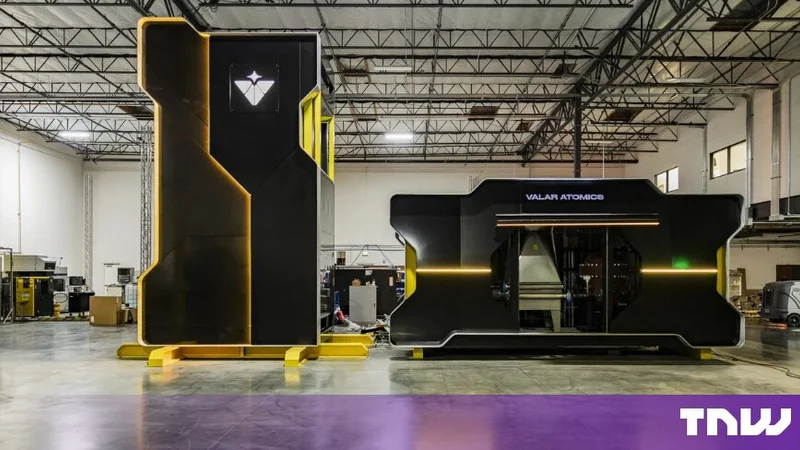
Image: Thenextweb
Main Takeaway
Valar Atomics closed a $1 billion Series B led by Sequoia Capital at a $6 billion valuation alongside a $200 million credit facility, shifting the nuclear startup from demonstrating small reactors to volume manufacturing for AI data centers.
Jump to Key PointsSummary
How the round tripled Valar's valuation
Sequoia Capital led a $1 billion Series B round for Valar Atomics, valuing the nuclear startup at $6 billion. That figure triples the $2 billion valuation the company held just months earlier, a trajectory Bloomberg notes is usually reserved for software companies, not heavy industrial operations that must pour concrete and satisfy regulators. Atreides Management, Point72, and Snowpoint Ventures also joined the round.
Sequoia partner Shaun Maguire took a board seat as part of the deal. Alongside the equity raise, Valar secured a $200 million credit facility, giving the company a combined $1.2 billion war chest to accelerate its manufacturing ambitions. According to Bloomberg, the funding shifts the company from demonstrating small reactors toward producing them at scale.
What Valar Atomics actually builds
Valar Atomics designs small modular nuclear reactors purpose-built for data centers. The company calls its deployment model America's first gigasites, standardized nuclear power plants meant to meet the surging energy demands of artificial intelligence, industrial operations, and national security infrastructure. CEO Isaiah Taylor framed the raise as financing that accelerates manufacturing of standardized nuclear power plants.
The pitch is straightforward: AI training runs consume staggering amounts of electricity, and renewable sources alone cannot deliver the constant, high-density power that GPU clusters require. Nuclear provides that baseload without the intermittency of solar or wind. The company's reactors are designed for factory production rather than bespoke on-site construction, which is the traditional approach that has made nuclear projects notorious for cost overruns and decade-long timelines.
The Nvidia partnership and Utah facility
Valar and Nvidia are planning a 30-megawatt nuclear-powered AI facility in Utah. That project represents the first commercial deployment of the partnership and a concrete signal that the hyperscaler ecosystem is betting on dedicated nuclear generation. The Utah site will pair Valar's reactor technology directly with Nvidia's AI computing hardware.
The two companies already proved the concept works. In July, Valar powered an Nvidia AI chip directly from one of its reactors, demonstrating the full operational loop from fission to floating-point operations. That demonstration shifted the conversation from hypothetical to operational, and the Utah facility now becomes the scaling test. A 30-megawatt site is modest by grid standards but substantial for a dedicated AI installation, and it gives both companies a blueprint they can replicate.
What the money is actually for
The fresh capital has a specific mandate. Valar is transitioning from R&D and small-scale demonstrations into volume manufacturing. The company's reactor design is standardized, which means the same plant can be replicated across multiple sites without the bespoke engineering that typically inflates nuclear project costs.
Bloomberg reports that the funding, combined with the credit facility, will accelerate the build-out of manufacturing capacity. The goal is to produce reactors on an assembly-line model rather than constructing each one as a unique civil engineering project. That approach, if it works, would radically compress the timeline and cost structure for deploying nuclear power, making it competitive with natural gas peaker plants while delivering zero-carbon baseload electricity. The company's announcement emphasizes meeting demand from artificial intelligence, industry, and national security applications.
A market that's suddenly paying attention
Valar's triple valuation in months reflects a broader market shift. AI's power consumption is no longer theoretical. Major cloud providers and hyperscalers are signing power purchase agreements at unprecedented scales, and existing grid infrastructure cannot keep pace. Nuclear startups have become one of the few credible answers, and investors are pricing them accordingly.
The round's composition is telling. Sequoia is not a traditional energy investor, and Shaun Maguire's board seat signals the firm sees this as a technology bet rather than an infrastructure play. Point72 and Atreides Management bring hedge fund capital, suggesting the round attracted crossover investors who anticipate a public market exit. Snowpoint Ventures adds a specialized technology investment perspective. The combination of venture, hedge fund, and credit facility capital gives Valar a capital stack that few nuclear startups have assembled.
What happens next
Valar Atomics now faces execution risk at scale. The company proved a reactor can power an AI chip in a controlled demonstration. Building dozens of reactors across multiple sites, navigating Nuclear Regulatory Commission approvals, and coordinating with grid operators is a different challenge entirely. The Utah facility will be the first real test of whether the company can deliver on its manufacturing promises.
Nvidia's involvement provides a powerful demand signal. If the 30-megawatt Utah site operates successfully, the partnership could expand rapidly. Other chip makers and cloud providers are watching closely. The nuclear-to-AI pipeline is no longer a speculative concept. Valar's $1 billion round and $6 billion valuation confirm that the market believes it's happening now, and the company's ability to execute on volume manufacturing will determine whether that bet pays off.
Key Points
Valar Atomics closed a $1 billion Series B led by Sequoia Capital at a $6 billion valuation, tripling its price in months.
The nuclear startup plans a 30-megawatt AI data center facility in Utah as its first commercial deployment with Nvidia.
Valar successfully powered an Nvidia AI chip directly from its reactor in July, proving the operational concept.
The funding shifts the company from small scale demonstrations to volume manufacturing of standardized nuclear plants.
Sequoia partner Shaun Maguire joined the board, signaling a venture capital bet on nuclear as a software-like infrastructure play.
Questions Answered
Valar Atomics designs small modular nuclear reactors purpose-built to power AI data centers, industrial operations, and national security infrastructure. The company calls its standardized nuclear plants gigasites and aims to manufacture them at scale rather than constructing each site as a custom project.
Valar Atomics raised a $1 billion Series B led by Sequoia Capital at a $6 billion post-money valuation. The round also included a $200 million credit facility, bringing the total new capital to $1.2 billion with participation from Atreides Management, Point72, and Snowpoint Ventures.
The valuation jump reflects a market shift where investors are treating nuclear power as a critical bottleneck for AI growth. Valar demonstrated a working reactor powering an Nvidia chip in July and announced a commercial facility in Utah, moving from research to real deployment.
Valar and Nvidia are planning a 30 megawatt nuclear powered AI facility in Utah as their first commercial deployment. The partnership was validated in July when Valar powered an Nvidia AI chip directly from one of its reactors, proving the full operational loop.
The funding will shift Valar from demonstrating small reactors to manufacturing them in volume. The company plans to build standardized nuclear plants on an assembly-line model, targeting the rapidly growing energy demands of AI data centers, industry, and national security.
Source Reliability
29% of sources are highly trusted · Avg reliability: 61
Go deeper with Organic Intel
Simple AI systems for your life, work, and business. Each one includes copyable prompts, guides, and downloadable resources.
Explore Systems