Sandbar Bets on Voice and Push-to-Talk to Keep Its Stream AI Ring Out of the Hardware Graveyard
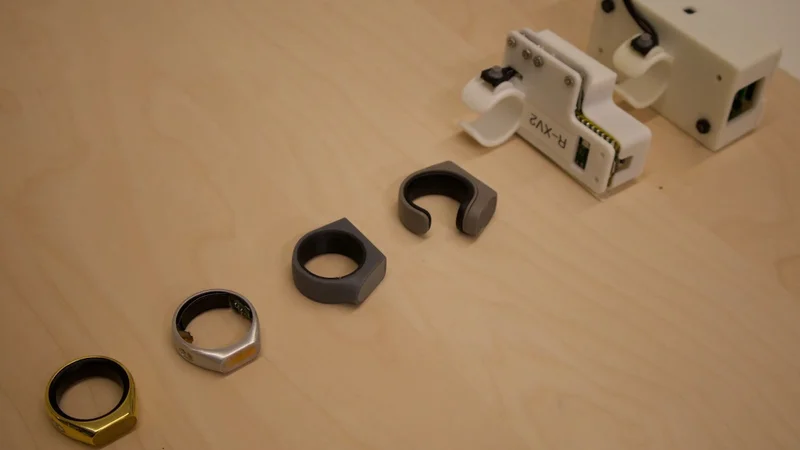
Image: TechCrunch AI
Main Takeaway
Sandbar has raised $36 million for Stream, a private voice-enabled ring that captures ideas and controls music through push-to-talk interactions.
Jump to Key PointsSummary
Sandbar’s bet on a private voice ring
Sandbar is positioning Stream as a private, voice-enabled ring for capturing ideas, organizing notes, and controlling music without reaching for a phone. The startup has raised $36 million, including a $23 million Series A, as it develops a finger-worn device built around push-to-talk interaction rather than passive recording.
Stream enters a crowded AI hardware market filled with pins, pendants, earbuds, and compact notetaking devices. Those products promise to record conversations, transcribe meetings, and produce summaries or action items. Sandbar’s pitch is narrower: a ring that lets users speak a thought when it occurs, then use AI to organize or retrieve it. The company was founded by former Meta employees, giving the product a connection to one of the largest consumer technology platforms.
Why voice sits at the center
Voice gives Stream a direct input method for moments when typing is inconvenient, according to Sandbar CEO Mina Fahmi. A user can press the ring, speak a note, and return to whatever they were doing. That interaction targets fleeting ideas, reminders, and commands rather than requiring a screen, keyboard, or wake-word exchange.
The design also draws a line between intentional recording and always-on listening. Push-to-talk makes the user’s action part of the product’s privacy model, while the company describes Stream as a private voice ring. That distinction matters in a category where microphones worn on the body raise concerns about consent, accidental capture, and how recorded speech is processed. Coverage from Wired, The Decoder, and TechCrunch frames voice as the central product decision rather than a feature bolted onto a conventional fitness tracker.
Lessons from failed AI hardware
Sandbar’s argument rests on avoiding the weaknesses that have hurt other AI devices: unclear daily utility, awkward interactions, and products that ask users to change established habits. The company is presenting Stream as a simple control surface, closer to a physical input device than a standalone computer. The ring’s small size also keeps the interaction available without adding another screen to a user’s pocket.
That approach still depends on repeated use. A ring has to feel comfortable, respond quickly, and produce useful results after a short spoken note. AI summaries alone haven't created durable demand for every notetaking device, especially when phones already record audio and run voice assistants. Sandbar’s financing gives it room to refine the product, but the test is whether voice capture becomes a routine behavior rather than an appealing demonstration.
A crowded wearable field
Stream is arriving as startups and major technology companies expand experiments with AI-enabled wearables. The category includes devices designed to record meetings, transcribe speech, summarize conversations, and surface action items. Rings add another form factor, but they also impose tighter limits on battery capacity, microphones, controls, and feedback.
Sandbar’s competition therefore includes both dedicated AI hardware and the smartphones, earbuds, watches, and glasses that already handle voice input. OpenAI and Meta are named in coverage as reference points for the broader race around personal AI interfaces, while Meta also represents a major incumbent in wearable computing. Sandbar’s former Meta team and its outside funding give Stream credibility, but they don't remove the distribution challenge facing a small hardware company.
The privacy and trust test
Stream’s private positioning makes trust a core part of its product proposition. A voice ring operates near other people, at meetings, in homes, and in public spaces, so users need clear signals about when recording starts and what happens afterward. Push-to-talk can make that state easier to understand than an always-listening system, although the experience still depends on transparent data handling.
Privacy also affects adoption beyond technical performance. People may welcome a tool for personal thoughts but resist wearing a microphone around colleagues or family members. Sandbar must pair the ring’s convenience with visible controls, dependable transcription, and policies that explain storage and access. The company’s emphasis on private voice interaction addresses a central objection to AI wearables, while the wider hardware market has made that objection impossible to ignore.
What happens next for Stream
Sandbar’s next challenge is turning a financed concept into a reliable consumer product. The company has to demonstrate that Stream captures speech accurately, organizes notes usefully, controls music with little friction, and earns a place in daily routines. Each function supports the same core idea: the ring acts as a quick voice input for an AI system, rather than trying to replace the phone.
The $23 million Series A gives Sandbar resources to build hardware, software, and the service behind Stream. It also raises expectations. If the ring succeeds, it will reinforce the case for small, intentional AI interfaces built around specific habits. If it fails, the product will join a growing list of devices that made voice interaction sound more natural than it felt in practice.
Key Points
Sandbar has raised $36 million for Stream, a private voice-enabled ring built around push-to-talk interaction.
Stream captures spoken ideas and notes, then uses AI to organize information without requiring a phone screen.
Sandbar’s privacy strategy relies on intentional recording rather than passive, always-on listening.
The ring enters a crowded market of AI pins, pendants, earbuds, and meeting transcription devices.
Stream must prove comfort, accuracy, speed, and daily usefulness against smartphones and existing voice assistants.
Questions Answered
Sandbar Stream is a private, voice-enabled AI ring for capturing spoken thoughts, organizing notes, and controlling music. Users activate it through push-to-talk interaction instead of relying on continuous listening.
Sandbar has raised $36 million for Stream, including a $23 million Series A. The funding supports development of the ring, its AI software, and the supporting service.
Sandbar says Stream focuses on a specific, repeatable behavior: speaking quick notes and ideas through a small wearable. Its push-to-talk design, private positioning, and lack of a separate screen aim to reduce interaction friction and privacy concerns.
Sandbar Stream uses push-to-talk, so users intentionally activate the ring before speaking. The device still needs clear recording indicators and transparent data policies because it operates near other people.
Sandbar Stream competes with AI hardware startups and larger technology companies developing voice-enabled wearables and personal AI interfaces. Smartphones, earbuds, watches, Meta products, OpenAI services, and Google platforms also provide overlapping voice features.
Sandbar must show that Stream is comfortable, accurate, fast, and useful enough to become a daily habit. Adoption will depend on whether voice notes and AI organization offer enough value to justify another device.
Source Reliability
33% of sources are unrated · Avg reliability: 54
Go deeper with Organic Intel
Simple AI systems for your life, work, and business. Each one includes copyable prompts, guides, and downloadable resources.
Explore Systems