K2 Space Raises $500 Million at $6.8 Billion Valuation to Mass-Produce High-Power Satellites
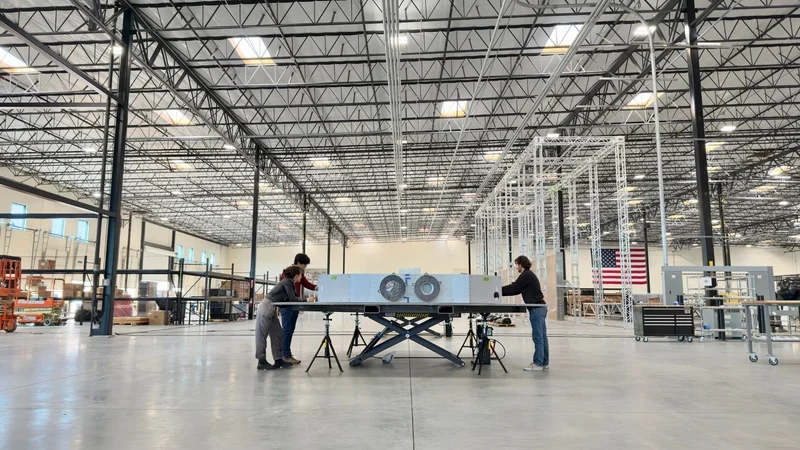
Image: Spacenews
Main Takeaway
K2 Space, a satellite manufacturer founded by former SpaceX engineers, raised $500 million in Series D funding at a $6.8 billion valuation to scale production of large, high-power spacecraft for commercial and defense missions.
Jump to Key PointsSummary
The scale of the Series D round
K2 Space closed a $500 million Series D funding round that values the Torrance, California-based satellite manufacturer at $6.8 billion. Bloomberg and Yahoo Finance report the deal was led by Kleiner Perkins and ICONIQ, both new investors to the company. The round attracted a syndicate of heavyweights: Alphabet’s CapitalG, Lightspeed, Altimeter, Spark Capital, Sands Capital, ARK Invest, and T. Rowe Price Associates all participated, according to the company’s official PRNewswire release.
This valuation marks a dramatic climb. GeekWire notes the $6.8 billion figure is more than double the $3 billion valuation K2 Space commanded in its Series C round just seven months earlier, in December 2025. That earlier round, led by Redpoint, had already raised $250 million. The rapid valuation expansion reflects a market hungry for alternatives to legacy satellite platforms as launch costs plummet and demand for high-power orbit infrastructure surges.
Who is building K2 Space
K2 Space was founded in 2022 by brothers Neel and Karan Kunjur. Neel Kunjur is a former SpaceX engineer, according to Bloomberg, and the company’s engineering DNA is shaped by that experience. The startup has set up an engineering hub in the Seattle area, as reported by GeekWire and CosmicLog, expanding its talent base beyond the Torrance headquarters.
The company designs and manufactures large satellite buses, the core structural and power platforms that carry payloads for communications, imaging, and defense missions. K2 Space’s approach is built around vertical integration. The company states that 80 percent of each satellite is produced in-house, a strategy that drives reliability, accelerates production, and enables continuous iteration on design.
What makes these satellites different
K2 Space builds satellites that are bigger and more powerful than the industry standard. The company’s platform is engineered for the heavy-lift era, where rockets like SpaceX’s Starship and other large launch vehicles can carry significantly more mass to orbit. Bloomberg reports these satellites are designed for data-heavy communications and defense missions that require high power throughput.
The company’s flagship satellite, named Gravitas, was launched in March 2026, according to GeekWire. The platform supports missions across low Earth orbit, medium Earth orbit, geostationary orbit, and even cislunar space. The core thesis is straightforward: bigger satellites deliver more power to payloads, more mass on orbit, and greater resilience at lower cost per unit of capability.
That argument is resonating. Yahoo Finance reports the company has $500 million in signed contracts across commercial and U.S. government customers, a figure first disclosed during the December 2025 Series C announcement. The contract backlog gives investors a tangible signal of demand.
Where the money is going
K2 Space plans to use the fresh capital to scale satellite production at its Torrance manufacturing facility. The company opened that facility in early 2025, as SpaceNews reported during the Series B coverage, and has been ramping output since. The funding will accelerate delivery of the next generation of spacecraft built for heavy-lift launch vehicles.
A ForgeGlobal profile on the company notes that K2 Space is considered a pre-IPO company, with an IPO timeline mentioned in confidential filings. The Series D round positions the company to operate independently at scale, but the presence of late-stage investors like T. Rowe Price, typically associated with pre-IPO bets, signals that public markets may be the next logical step.
The company is also investing in its Seattle engineering hub, which GeekWire reports is supporting multiple mega-projects. The dual-coast engineering presence gives K2 Space access to a broader talent pool in a competitive hiring market for aerospace engineers.
The broader market context
K2 Space’s funding comes amid a broader surge of investment in the space industry. Bloomberg notes that investors are pouring money into fast-growing space startups. The heavy-lift rocket revolution, driven by SpaceX and competitors, has fundamentally changed the economics of sending mass to orbit. When launch is cheap and abundant, the bottleneck shifts to what you can put on the rocket.
K2 Space is positioning itself as the answer to that question. The company’s pitch is that existing satellite platforms were designed for an era of expensive, mass-constrained launches. By building bigger satellites that take full advantage of heavy-lift capacity, K2 Space can deliver capabilities that were previously impossible or cost-prohibitive.
Yahoo Finance reports that the company’s valuation more than doubled in seven months, a pace that reflects both the quality of the business and the intensity of investor appetite for space infrastructure. The round attracted new blue-chip investors including Kleiner Perkins and ICONIQ, alongside continued support from existing backers.
The competitive landscape
K2 Space competes in a market dominated by established aerospace primes and a growing cohort of venture-backed satellite startups. The company’s focus on large, high-power satellite buses sets it apart from the proliferated small-satellite architectures that have dominated venture funding in recent years.
The company’s contracts with U.S. government customers suggest it is already embedded in the defense supply chain, a market that rewards reliability, security clearance, and production capacity over pure technical novelty. The $500 million in signed contracts provides a revenue base that most venture-stage space companies lack.
The presence of Alphabet’s CapitalG as an investor also raises interesting questions about potential synergies with Google’s broader ambitions in connectivity, earth observation, and cloud infrastructure. While no specific partnerships have been announced, the strategic alignment is worth watching.
What happens next
K2 Space will use the Series D capital to scale production and deliver on its $500 million contract backlog. The company’s Gravitas satellite is already in orbit, providing flight heritage for the platform. The next phase is execution: turning a validated design into a production line capable of delivering satellites at the pace and scale that government and commercial customers demand.
The IPO path is clearly in view. ForgeGlobal’s profile tracks the company as a pre-IPO opportunity, and the involvement of T. Rowe Price, a late-stage institutional investor, is a classic signal of public-market preparation. No timeline has been announced, but the trajectory suggests a filing within the next 12 to 18 months.
For the broader industry, K2 Space’s rise validates the thesis that the heavy-lift era creates a new category of satellite manufacturer. The company’s ability to raise capital at a $6.8 billion valuation in a market that has been selective about space investments is a significant signal of confidence.
Key Points
K2 Space raised $500 million in Series D funding at a $6.8 billion valuation, more than doubling its December 2025 valuation.
Kleiner Perkins and ICONIQ led the round, joined by Alphabet CapitalG, Lightspeed, Altimeter, and other institutional investors.
The company builds large high-power satellite buses designed for the heavy-lift rocket era, targeting defense and commercial markets.
K2 Space has $500 million in signed contracts and launched its Gravitas satellite in March 2026.
The funding will scale production at the Torrance facility and expand the Seattle engineering hub.
Questions Answered
K2 Space raised $500 million in a Series D funding round that values the company at $6.8 billion. This is more than double the $3 billion valuation from its Series C round in December 2025.
Kleiner Perkins and ICONIQ led the Series D round, both as new investors in K2 Space. Alphabet's CapitalG, Lightspeed, Altimeter, Spark Capital, Sands Capital, ARK Invest, and T. Rowe Price also participated.
K2 Space designs and manufactures large, high-power satellite buses, the core structural platforms that carry payloads for orbit. The company builds bigger satellites designed for the heavy-lift rocket era, targeting high-data communications and defense missions.
K2 Space was founded in 2022 by brothers Neel and Karan Kunjur. Neel Kunjur is a former SpaceX engineer, and the company has established an engineering hub in Seattle in addition to its Torrance, California headquarters.
K2 Space is considered a pre-IPO company and has been mentioned in confidential filings, according to secondary market data. The involvement of T. Rowe Price, a late-stage institutional investor, signals that a public offering could happen within the next 12 to 18 months.
Source Reliability
42% of sources are trusted · Avg reliability: 66
Go deeper with Organic Intel
Simple AI systems for your life, work, and business. Each one includes copyable prompts, guides, and downloadable resources.
Explore Systems