TSMC CEO Warns AI Chip Shortage Will Persist for Years as Demand Outpaces Global Supply
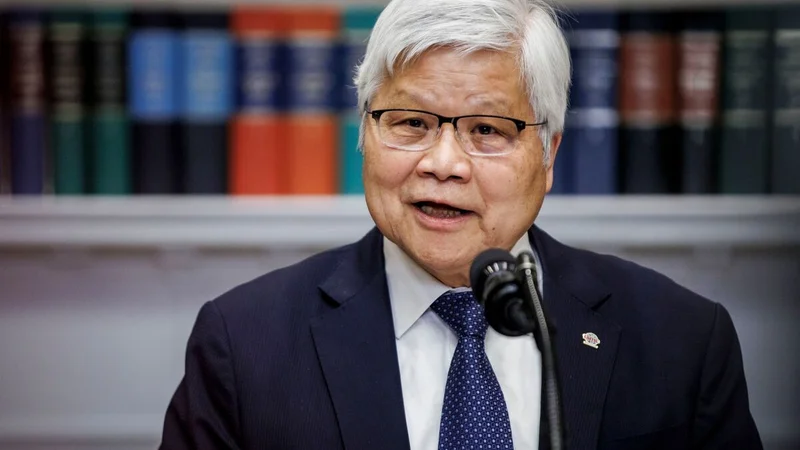
Image: Bloomberg AI
Main Takeaway
TSMC CEO C.C. Wei says chip supply won't match AI demand for years, with U.S. production facing very long timelines.
Jump to Key PointsSummary
Why TSMC's supply warning rattles the AI industry
TSMC CEO C.C. Wei delivered a sobering message on June 4 that global chip supply will fall short of AI-fueled demand for years. The world's largest contract chipmaker, which manufactures processors for Nvidia, Apple, and AMD, acknowledged it can only support so much of the exploding market. Bloomberg reports that Wei framed this shortfall as a driver of sustained revenue growth, but the candor was unusual for an executive whose company has long been the industry's reliable backbone. The warning rippled through semiconductor markets immediately, with analysts recalculating timelines for AI infrastructure buildouts.
The scale of the gap matters. TSMC produces over 90% of the world's most advanced chips, making its capacity constraints everyone's problem. When the sole supplier of critical components says it cannot keep up, the entire AI supply chain feels the pressure. This is not a temporary blip. Wei emphasized that bringing new U.S.-based production online will take a very long time, according to The Verge, compounding the near-term squeeze.
How U.S. factory plans face a years-long reality gap
TSMC's Arizona and planned American facilities were supposed to diversify supply away from Taiwan's geopolitical risk. The reality is proving messier. The Verge noted Wei's specific caution that U.S. production timelines stretch far beyond what customers hoped. Construction delays, workforce shortages, and equipment bottlenecks have slowed every major stateside fab project, not just TSMC's. The company originally targeted 2024-2025 for meaningful Arizona output; that has slid toward 2027-2028 for full advanced-node production.
This matters because AI chip demand is not waiting. Data center operators are placing orders now for 2027-2028 delivery, creating a booking queue that extends years into the future. PCMag highlighted that TSMC itself sees shortages persisting until at least 2025 or 2026, and Wei's newer comments suggest even that estimate may be optimistic. The mismatch between when customers need chips and when factories can produce them is widening, not closing. American AI companies in particular are caught in this vise, as CNAS has documented in its research on chip access bottlenecks.
What this means for Nvidia, AMD, and cloud giants
Nvidia and AMD design the GPUs and AI accelerators that power modern machine learning, but neither manufactures their own silicon. Both rely on TSMC's advanced nodes, placing them at the mercy of its capacity allocations. When supply is constrained, priority goes to the largest and most strategic customers, a dynamic that favors Nvidia given its market position but still leaves it unable to fulfill all orders. AMD faces tougher competition for wafer starts, potentially capping its AI market share gains.
Cloud providers are not immune. Amazon, Google, and Microsoft are designing custom AI chips through Annapurna, TPU, and Maia programs respectively, yet all still tap TSMC for manufacturing. Yahoo Finance reported that Wei remains upbeat on long-term outlook precisely because this demand shows no sign of easing, which is good for TSMC's pricing power but bad for anyone trying to expand AI capacity quickly. The shortage creates a seller's market where foundry customers accept worse terms and longer waits.
Whether Intel can capitalize on TSMC's struggle
Intel has positioned its foundry business as an alternative to TSMC, with government subsidies backing its manufacturing revival. AI Magazine raised the direct question of whether Intel can pounce as TSMC struggles, but the answer is complicated. Intel's 18A process is still unproven at scale for the most demanding AI chips, and its track record of execution missteps undermines customer confidence. Major AI chip designers have been reluctant to bet production on Intel until yields and performance are validated.
That said, persistent TSMC shortages create genuine opening pressure. If Nvidia or AMD cannot get enough capacity from TSMC, Intel becomes a necessary second source by default. The risk is that Intel's own manufacturing struggles, including delayed EUV adoption and yield issues on previous nodes, mean it may not be ready to absorb overflow demand in time to matter. SemiWiki's broader market analysis noted that supply chain strain is industry-wide, not unique to TSMC, suggesting no easy relief valve exists.
How grid and infrastructure limits compound the chip crunch
Manufacturing advanced semiconductors requires enormous electricity, water, and specialized gases. Investing.com's analysis tied TSMC's next growth phase directly to whether grid infrastructure can keep pace. Arizona's summer power constraints have already forced operational adjustments at the company's new fab. Taiwan itself faces energy security questions that make massive capacity expansion politically and physically difficult. Each new fab consumes power equivalent to a small city, and renewable buildouts are not keeping pace in key manufacturing regions.
The infrastructure bottleneck extends to the supply chain for manufacturing equipment. ASML, the sole producer of EUV lithography machines, has its own order backlog stretching years. Without more lithography capacity, TSMC cannot easily expand even if it had the buildings and power ready. This interdependency means chip shortages reflect constraints across dozens of specialized suppliers, not just one company's factory floor decisions. The Business Times and other outlets echoed Wei in noting that no quick fix exists because the entire ecosystem needs synchronized expansion.
What happens next for AI development timelines
Persistent chip shortages will reshape how AI companies plan infrastructure. Longer procurement cycles mean delayed product launches, smaller model training clusters than planned, and higher costs passed to enterprise customers. Some firms will shift toward software optimization and smaller models to reduce hardware dependence. Others will accelerate investment in alternative architectures like neuromorphic or photonic computing that bypass current silicon constraints, though these remain years from production relevance.
For investors, TSMC's pricing power strengthens but so does execution risk if it cannot meet even reduced growth expectations. Yahoo Finance's coverage noted Wei's confidence in sustained revenue expansion, yet customer frustration could eventually drive more aggressive efforts to diversify manufacturing geographically and technologically. The shortage also amplifies national security concerns, as CNAS has warned, with AI chip access becoming a strategic priority that triggers further policy intervention. Expect expanded export controls, subsidy races, and perhaps forced technology sharing as governments try to secure supply. The chip shortage is no longer just a business problem. It is becoming a geopolitical contest.
Key Points
TSMC CEO C.C. Wei confirms chip supply will lag AI demand for multiple years.
U.S. fab production timelines stretch to 2027-2028, far beyond initial targets.
Nvidia, AMD, and cloud giants face extended procurement cycles and higher costs.
Intel's foundry business sees opportunity but lacks proven advanced-node scale.
Grid power and infrastructure constraints limit rapid manufacturing expansion.
Questions Answered
TSMC faces a structural mismatch between its manufacturing capacity and surging orders from AI chip designers. CEO C.C. Wei stated that building new factories, especially in the United States, takes a very long time, while demand continues to accelerate without corresponding supply growth.
TSMC explicitly warns the shortage will persist for years. Earlier estimates pointed to 2025 or 2026, but Wei's June 2026 comments suggest the gap extends well beyond that horizon, with U.S. production not resolving constraints quickly.
Both Nvidia and AMD rely on TSMC manufacturing, though Nvidia's market position gives it priority in capacity allocation during shortages. AMD may face tighter constraints on wafer starts, potentially limiting its AI chip expansion relative to larger competitors.
Intel is positioning its foundry business as an alternative, but its 18A process remains unproven at scale for the most demanding AI chips. Major customers have been reluctant to shift production until Intel validates yields and performance consistently.
Advanced chip manufacturing requires massive electricity, water, and specialized gases. Arizona's grid faces summer power constraints, Taiwan has energy security concerns, and equipment suppliers like ASML have their own multi-year order backlogs for critical lithography machines.
Shortages will delay AI infrastructure deployments, increase hardware costs, push some companies toward software optimization and smaller models, and accelerate investment in alternative computing architectures while intensifying geopolitical competition for secure chip supply.
Source Reliability
38% of sources are trusted · Avg reliability: 72
Go deeper with Organic Intel
Simple AI systems for your life, work, and business. Each one includes copyable prompts, guides, and downloadable resources.
Explore Systems