Chinese GPU Maker Iluvatar CoreX Eyes $850 Million Top-Up After Stock Surges 428% Since January IPO
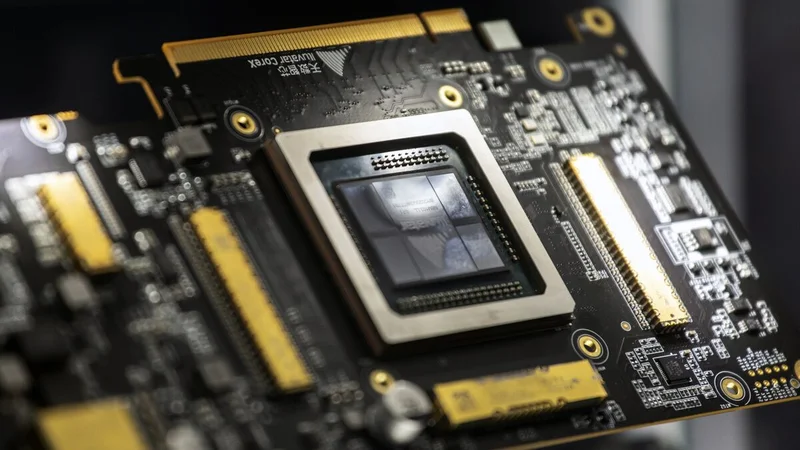
Image: Bloomberg AI
Main Takeaway
Shanghai Iluvatar CoreX Semiconductor is planning a secondary share sale to raise roughly $850 million in Hong Kong following a 428% stock rally.
Jump to Key PointsSummary
The scale of the planned capital raise
Shanghai Iluvatar CoreX Semiconductor Co. is preparing a secondary share sale in Hong Kong targeting about $850 million, according to people familiar with the matter cited by Bloomberg. The figure represents a sharp upward revision from earlier reporting. Caixin Global initially pegged the raise at roughly HK$3.7 billion, equivalent to $475 million, based on the company's IPO prospectus filed Tuesday. The discrepancy between the two figures reflects the rapid evolution of the deal as bankers and the company test investor appetite.
The company went public in January at HK$144.6 per share, raising $446 million at a $5.1 billion market valuation, Caproasia reported. Since then, the stock has delivered a 428% return, closing recently at HK$530 according to Simply Wall St data. That meteoric rise, fueled by enthusiasm for domestic Chinese alternatives to Nvidia's sanctioned GPUs, has created a window for a follow-on offering at dramatically higher prices. Bloomberg's sources indicate the $850 million target is the latest figure under discussion, though terms remain fluid.
Why the stock has rocketed since January
Iluvatar CoreX designs general-purpose GPUs for AI workloads, positioning itself as China's leading homegrown alternative to Nvidia and AMD products now restricted by U.S. export controls. The sanctions have effectively walled off Chinese firms from the most advanced American chips, creating an enormous vacuum that domestic players are racing to fill. Iluvatar CoreX's January IPO capitalized on that narrative, and the subsequent rally suggests investors are betting the company can convert geopolitical tailwinds into commercial scale.
Simply Wall St notes the stock now trades at a price-to-book ratio of 49.4 times, a valuation level the research firm describes as "stretched." Yahoo Finance similarly flagged the shares as looking "fully valued" after a 42% single-month jump. These cautionary signals haven't dampened the broader market enthusiasm, but they underscore the speculative nature of the trade. The company's revenue and profit trajectory remains opaque. CB Insights lists financial statements for Iluvatar CoreX, though detailed public disclosures are limited given the company's recent listing and the early-stage nature of China's domestic GPU ecosystem.
What the company actually builds
Iluvatar CoreX, legally named Shanghai Tianshu Zhixin Semiconductor Co. Ltd., was founded in 2015 by Li Yunpeng, a former R&D director at Oracle, according to Wikipedia and Caproasia. The company develops general-purpose GPU architectures intended to compete with Nvidia's CUDA ecosystem across training and inference workloads. Barchart, citing a December 2025 press release, described the IPO as a "hardcore breakthrough battle" for China's GPGPU sector, framing the listing as a milestone in Beijing's broader semiconductor self-sufficiency push.
Earlier funding rounds attracted marquee backers. KrAsia reported in 2019 that the company closed a Series B round worth several hundred million RMB, led by Centurium Capital, the private equity firm behind Luckin Coffee, and Princeville Capital, a cross-border fund with prior investments in Alibaba, Baidu, and Xiaomi. That pedigree helped establish Iluvatar CoreX's credibility long before the IPO window opened. Competitors include Enflame, another Shanghai-based AI chip startup targeting cloud data center deployments, as noted by CB Insights.
The U.S. sanctions backdrop driving demand
The commercial logic behind Iluvatar CoreX's valuation surge is inseparable from Washington's escalating chip export controls. Since October 2022, the U.S. Commerce Department has progressively tightened restrictions on advanced GPU sales to China, cutting off access to Nvidia's H100, H200, and B200 series products. Chinese cloud providers and AI labs have scrambled to secure domestic alternatives, creating a captive market for companies like Iluvatar CoreX that can deliver even moderately competitive hardware.
Bloomberg's reporting frames the share sale as a direct consequence of this dynamic: investors are pricing in a multi-year substitution cycle where Chinese enterprises have no choice but to buy local. The risk, unstated in most bullish commentary, is that Iluvatar CoreX's GPUs remain unproven at scale against Nvidia's mature software stack. The company's ability to retain customers once sanctions eventually ease, or if domestic rivals like Enflame and Biren Technology close the performance gap, will determine whether current valuations prove durable.
What happens next with the offering
The share sale is still in the planning phase, with no final terms set. Bloomberg's sources described the $850 million figure as a target under consideration, meaning the deal could shrink or grow depending on bookbuilding feedback. Caixin Global reported that the company launched its Hong Kong IPO on Tuesday with 25.43 million H-shares offered at HK$144, suggesting the prospectus filing is already in motion. The timeline points to a near-term execution window while the stock trades near its highs.
For institutional investors, the key question is whether Iluvatar CoreX can deploy the fresh capital into manufacturing capacity and R&D fast enough to justify a 49.4x book multiple. Simply Wall St's analysis implies the market is pricing in perfection, leaving little margin for execution missteps. Yahoo Finance's assessment that the stock looks fully valued after a 42% monthly jump adds a note of caution to an otherwise euphoric story. The secondary offering will test whether that euphoria translates into concrete demand at elevated price levels.
The broader signal for China's chip sector
Iluvatar CoreX's trajectory is being read as a bellwether for China's entire domestic GPU industry. A successful $850 million follow-on at a premium valuation would validate the thesis that sanctions have created not just a temporary supply gap but a structural reordering of the semiconductor market. It would also provide a template for other Chinese chip designers eyeing public markets, including Enflame, Biren, and Moore Threads.
The counter-narrative, visible in the valuation warnings from Simply Wall St and Yahoo Finance, is that current prices reflect patriotic fervor and supply panic rather than fundamental business performance. If Iluvatar CoreX's post-IPO financial disclosures reveal thin revenue or persistent losses, the stock could correct sharply, chilling the IPO pipeline for the entire sector. For now, the company's decision to strike while the stock is hot suggests management sees the window as finite.
Key Points
Shanghai Iluvatar CoreX Semiconductor plans a secondary Hong Kong share sale targeting roughly $850 million after its stock surged 428% since January.
The company originally raised $446 million in its January IPO at HK$144.6 per share, reaching a $5.1 billion market valuation on day one.
U.S. export restrictions on advanced Nvidia and AMD GPUs have created a captive Chinese market, fueling investor demand for domestic alternatives.
Analysts at Simply Wall St and Yahoo Finance caution the stock looks stretched, trading at a 49.4x price-to-book ratio after a 42% monthly jump.
Iluvatar CoreX was founded in 2015 by former Oracle R&D director Li Yunpeng and previously raised a Series B round from Centurium Capital and Princeville Capital.
Questions Answered
Iluvatar CoreX is targeting approximately $850 million from a secondary share sale in Hong Kong, according to Bloomberg sources. Earlier reporting by Caixin Global cited a $475 million figure, reflecting the upward revision as the deal takes shape.
The stock has surged primarily because U.S. export restrictions have cut off Chinese firms from Nvidia's most advanced GPUs, forcing cloud providers and AI labs to seek domestic alternatives. Investors are betting Iluvatar CoreX will capture significant market share in this captive, sanctions-driven market.
Simply Wall St notes the stock trades at a price-to-book ratio of 49.4 times, describing the valuation as stretched, while Yahoo Finance flagged the shares as looking fully valued after a 42% monthly jump. These assessments suggest the market is pricing in near-perfect execution with limited room for error.
Iluvatar CoreX designs general-purpose GPUs for AI training and inference workloads, positioning itself as China's leading homegrown alternative to Nvidia and AMD products. The company was founded in 2015 by Li Yunpeng, a former Oracle R&D director.
Key competitors include Enflame, another Shanghai-based AI chip startup focused on cloud data center deployments, as well as Biren Technology and Moore Threads, all of which are racing to fill the GPU supply gap created by U.S. sanctions on Nvidia and AMD.
The share sale remains in the planning phase with no final terms set, though a prospectus filing has been launched. The outcome will depend on institutional demand during bookbuilding and will serve as a key signal for other Chinese chip designers considering public listings.
Source Reliability
45% of sources are established · Avg reliability: 70
Go deeper with Organic Intel
Simple AI systems for your life, work, and business. Each one includes copyable prompts, guides, and downloadable resources.
Explore Systems