Solos AirGo A6 Trim Weight to 19 Grams in Bid for Mainstream Smart Glasses
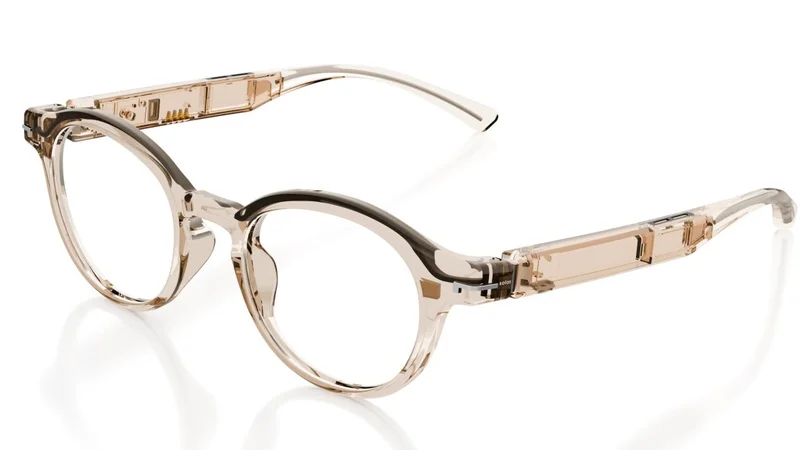
Image: The Verge AI
Main Takeaway
Solos launched the AirGo A6 camera-less smart glasses weighing just 19 grams, half the weight of last year's model, with built-in AI voice assistant.
Jump to Key PointsSummary
Why Solos is stripping the camera
Solos is betting that lighter beats smarter for mainstream smart glass adoption. The new AirGo A6 weighs approximately 19 grams, down from 36-40 grams on the 2025 AirGo A5, according to The Verge. That is roughly half the weight, achieved by eliminating the camera entirely and slimming the electronics. The company has historically focused on audio-only smart glasses, and this release doubles down on that philosophy even as competitors like Meta and Ray-Ban push camera-enabled designs.
The weight reduction addresses a persistent complaint in smart glass reviews: comfort during all-day wear. Gizmodo's review of the earlier AirGo A5 noted that built-in AI needed significant improvement, suggesting Solos recognized software polish mattered less if hardware stayed bulky. By sanding down the physical profile, Solos is prioritizing wearability over feature creep. The glasses retain open-ear audio and hands-free AI assistant access through voice interaction rather than visual input.
This camera-less approach also sidesteps the privacy controversies that have plagued Meta's Ray-Ban line, where recording capabilities have sparked public backlash.
What the AirGo A6 actually delivers
The AirGo A6 offers hands-free access to an AI assistant through voice commands, building on Solos' existing integration with ChatGPT and other AI services. The glasses connect to smartphones and rely on phone-based processing for AI features rather than onboard computation. This architecture keeps costs and weight down but requires constant phone pairing for full functionality.
Audio quality has been a selling point in Solos' previous generations. Gearbrain's extended testing of the AirGo3 praised crisp open-ear sound for music and calls, a feature carried forward. The company also maintains its Smart Hinge technology for interchangeable front frames, letting users switch between fashion, sports, and prescription styles. Pricing has not been finalized for the A6, though the camera-equipped AirGo V2 launched at $299 according to Android Central's CES 2026 coverage.
Solos is clearly aiming for a device that disappears on the face, one you forget you are wearing. That is a different pitch than Meta's content-creation focus or Apple's eventual spatial computing ambitions.
How the V2 with camera fits the lineup
Solos is not abandoning cameras entirely. The AirGo V2, announced earlier and now shipping, includes a 16MP camera with live video stabilization and the same AI assistant access. Wired reports that Solos even offers a clip-on privacy cover for the V2 camera, an accessory that lets users physically block the lens when not recording.
This dual-product strategy lets Solos serve two audiences: the privacy-conscious who want audio and AI without cameras, and content creators who want capture capability. The V2 sits at $299 with its charging case arriving in Q2 2026. The A6's pricing will likely undercut that, positioning it as the entry point.
The privacy cover is a telling detail. It acknowledges that camera-enabled wearables face genuine social friction, even as Meta has normalized them somewhat. Solos is essentially offering an undo button for the surveillance concern, which may appeal to enterprise buyers and cautious early adopters.
Where the AI assistant stands today
Solos has integrated multiple AI services including ChatGPT and Google's Gemini, but reviews suggest the experience remains uneven. Gizmodo's assessment that the AirGo5 needed a "brain transplant" points to laggy responses, context failures, and the general gap between demo-ready AI and reliable daily assistance. The A6 does not appear to upgrade processing hardware significantly, so improvements will depend on cloud AI advancement and app refinement.
The voice-only interface imposes real constraints. Without a camera, the A6 cannot see what the user sees, eliminating visual question-answering, object recognition, and text reading that camera-enabled competitors offer. For some use cases, this is a limitation. For others, it is a acceptable trade for weight and privacy.
Solos has also partnered with Ally on accessibility-focused glasses for blind and low-vision users, suggesting the core platform has adaptability beyond the consumer market. That partnership leverages the same lightweight hardware with software tailored for assistive functions.
What this signals about smart glass competition
The smart glasses market is fragmenting into distinct philosophies. Meta and Ray-Ban are all-in on camera-social integration, with sales reportedly strong enough to validate the approach. Apple is presumed to be developing premium AR glasses with heavy compute and display tech. Solos is carving out a third path: minimal, audio-centric, AI-assisted eyewear that competes on comfort and price.
This positioning puts pressure on Meta to offer lighter options and on budget Chinese competitors to match Solos' weight claims. It also raises questions about whether AI assistants alone are a sufficient differentiator when smartphones already perform similar functions. The 19-gram weight is genuinely impressive for electronics-laden eyewear, but the value proposition depends on seamless software execution that Solos has not yet consistently delivered.
The A6 launch timing, just ahead of typical fall product cycles, suggests Solos wants to establish momentum before Meta can refresh its line. Whether that window proves large enough depends on retail availability and whether the weight reduction translates into reviews praising all-day comfort over novelty.
Key Points
Solos AirGo A6 smart glasses weigh 19 grams, half the previous model's weight.
Camera-less design eliminates privacy concerns and reduces hardware bulk significantly.
Retains open-ear audio and voice-activated AI assistant through ChatGPT and Gemini.
AirGo V2 with 16MP camera and privacy cover sells for $299 as premium option.
Solos partners with Ally on assistive technology for blind and low-vision users.
Questions Answered
The Solos AirGo A6 weighs approximately 19 grams, about half the weight of the 2025 AirGo A5 model which weighed 36-40 grams depending on frame style. This reduction comes from eliminating the camera and slimming electronic components.
No, the AirGo A6 is camera-less by design. Solos offers the separate AirGo V2 model with a 16MP camera and optional clip-on privacy cover for users who want photo and video capture capability.
Solos integrates multiple AI services including OpenAI's ChatGPT and Google's Gemini. The glasses connect to smartphones and rely on phone-based processing rather than onboard AI computation.
The Solos AirGo V2 launched at $299 according to CES 2026 announcements. A charging case with 1,100mAh battery is scheduled for release in Q2 2026. AirGo A6 pricing was not announced at launch.
Yes, Solos offers interchangeable front frames through Smart Hinge technology, including prescription options. The system allows switching between fashion, sports, and everyday styles.
Source Reliability
50% of sources are trusted · Avg reliability: 68
Go deeper with Organic Intel
Simple AI systems for your life, work, and business. Each one includes copyable prompts, guides, and downloadable resources.
Explore Systems