Unitree Robotics Raises $904 Million as Shanghai IPO Tests China’s Humanoid Robot Boom
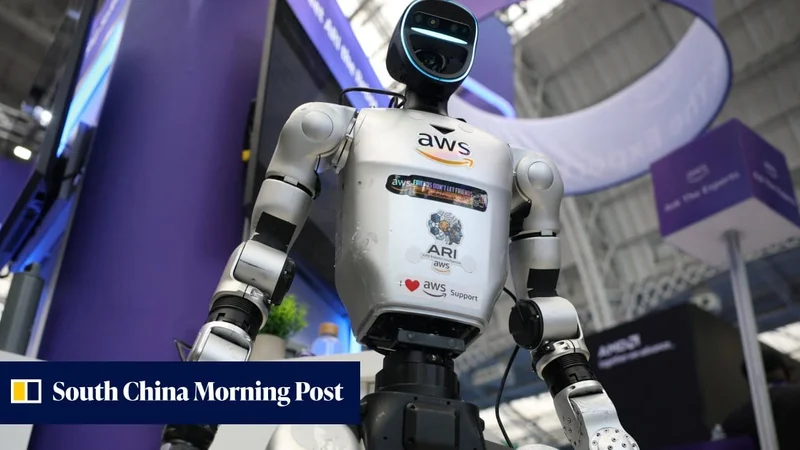
Image: Scmp
Main Takeaway
Unitree Robotics raised $904 million in Shanghai, drawing more than 8,000 retail subscriptions as investors bet on China’s humanoid robotics industry.
Jump to Key PointsSummary
A landmark Shanghai listing
Unitree Robotics raised 6.1 billion yuan, or about $904 million, in its Shanghai STAR Market initial public offering and is set to begin trading as China’s first publicly traded humanoid robot maker. The Hangzhou-based company priced the offering at 150.80 yuan per share, giving it a valuation of roughly $9 billion, according to the IPO timeline published by Valueaddvc and figures cited by Bloomberg AI.
Retail demand far exceeded the shares available. Unitree said subscriptions were more than 8,000 times oversubscribed, a level that reflects intense enthusiasm for robotics among Chinese investors. The listing follows the company’s successful review by the Shanghai Stock Exchange and places Unitree at the center of a wave of Chinese robotics offerings.
Retail investors set the pace
The IPO became one of China’s most closely watched technology listings because retail investors treated Unitree as a direct bet on humanoid robots. Its offering drew more attention than the much larger Shein IPO, which seeks to raise as much as $3 billion, according to Fortune AI and Finance.yahoo. Secondary-market expectations also pointed to a sharp opening move, although the trading debut will determine how much of that enthusiasm survives contact with public-market pricing.
Unitree’s appeal rests partly on its visibility. Its robots perform acrobatics, walk on two legs and have become familiar demonstrations at technology events. The company sells the G1 humanoid robot and Go2 robotic dog, giving investors a consumer-facing product story alongside its industrial ambitions. The IPO’s demand shows how quickly robotics has joined artificial intelligence as a favored theme in China’s equity markets.
Products ahead of proven profits
Unitree has established a commercial foothold, but the public offering also exposes the gap between engineering demonstrations and large-scale profitability. Blog.robozaps says the company shipped more than 5,500 humanoids in 2025, while its products include a G1 priced around $13,500 and a Go2 robot dog starting near $1,600. Those figures indicate real sales, yet they remain small compared with the production volumes needed to support a multibillion-dollar valuation.
Humanoid robots require expensive mechanical components, batteries, actuators, sensors and software. They also need reliable performance in workplaces before customers deploy them at scale. CNBC framed the IPO as a test of whether investors will fund a technology whose commercial model remains under construction. Kraneshares highlights Unitree’s combination of growth and manufacturing capability, while the company’s planned proceeds give it capital to expand research, production and market reach.
China’s answer to global rivals
Unitree competes in a field that includes Tesla, Boston Dynamics and a growing group of Chinese robotics startups. Its listing arrives as the United States and China compete for leadership in artificial intelligence, advanced manufacturing and embodied systems. Bloomberg AI cited Morgan Stanley’s estimate that the humanoid robotics industry could reach $5 trillion by 2050, placing Unitree’s valuation within a much larger investment narrative.
The STAR Market was created for high-growth technology companies and has become a natural venue for robotics firms seeking public funding. Unitree’s offering also gives Chinese investors a listed vehicle for exposure to humanoid machines at a time when domestic startups are pursuing their own IPO plans. South China Morning Post described the listing as part of an intensifying US-China robotics rivalry, while People’s Daily reported the company had cleared its listing review.
What the valuation will test
Unitree’s debut will provide an immediate market judgment on whether robotics enthusiasm has outrun operating fundamentals. A strong opening would encourage other Chinese robot makers to accelerate listings, raise capital and expand manufacturing. A weak performance would pressure companies to show clearer revenue, margins and customer adoption before seeking comparable valuations.
The IPO also separates two kinds of demand: excitement for the category and confidence in Unitree itself. More than 8,000 retail subscriptions demonstrate powerful investor interest, but they don't establish that humanoid robots are ready for widespread deployment. Reuters’ coverage centers on Unitree’s role in China’s humanoid sector, while CNBC emphasizes the unresolved question of monetization. The company now faces the harder phase, converting public-market attention into repeatable sales and dependable machines.
The next milestones
Unitree’s immediate test is its first trading session in Shanghai, followed by the company’s ability to meet the growth expectations built into its valuation. Investors will watch shipments, revenue from humanoid and quadruped robots, production capacity and evidence of industrial customers using the machines beyond demonstrations.
The $904 million raise gives Unitree resources to compete internationally and deepen its position in China’s robotics supply chain. It also establishes a public benchmark for a sector that has largely relied on private funding and strategic investment. Morningstar described the listing as a possible starting point for a wider investor rush. That rush will endure only if Unitree and its peers turn impressive movement into useful work at a price customers will pay.
Key Points
Unitree Robotics raised $904 million in Shanghai through an oversubscribed STAR Market humanoid robotics IPO.
Retail demand exceeded available Unitree IPO shares by more than 8,000 times before trading began.
Unitree’s roughly $9 billion valuation tests investor confidence in humanoid robots’ commercial prospects.
The Shanghai listing makes Unitree mainland China’s first publicly traded humanoid robot maker.
Unitree competes with Tesla, Boston Dynamics and Chinese robotics startups for global market share.
Questions Answered
Unitree Robotics raised 6.1 billion yuan, approximately $904 million, in its Shanghai STAR Market IPO. The offering priced shares at 150.80 yuan and valued the company at about $9 billion.
Unitree Robotics attracted extreme retail demand because investors are betting on humanoid robots, artificial intelligence and China’s advanced-manufacturing sector. Its public profile and acrobatic robot demonstrations also gave the IPO unusual consumer visibility.
Unitree Robotics is described as mainland China’s first publicly traded humanoid robot maker. Its Shanghai STAR Market listing gives public investors direct exposure to a company focused on humanoid and quadruped robots.
Unitree Robotics sells humanoid robots including the G1, along with Go2 robotic dogs and other legged-robot products. Reported pricing ranges from about $1,600 for a Go2 to roughly $13,500 for a G1, with industrial models sold through customer quotations.
Unitree Robotics will face scrutiny over shipments, production capacity, revenue, margins and customer deployments after its Shanghai debut. Investors will use those measures to judge whether the company’s valuation reflects operating results or robotics-sector enthusiasm.
Source Reliability
31% of sources are highly trusted · Avg reliability: 69
Go deeper with Organic Intel
Simple AI systems for your life, work, and business. Each one includes copyable prompts, guides, and downloadable resources.
Explore Systems