Nvidia Faces Intensifying Scrutiny as AI Chip Smuggling Cases Test US Export Controls
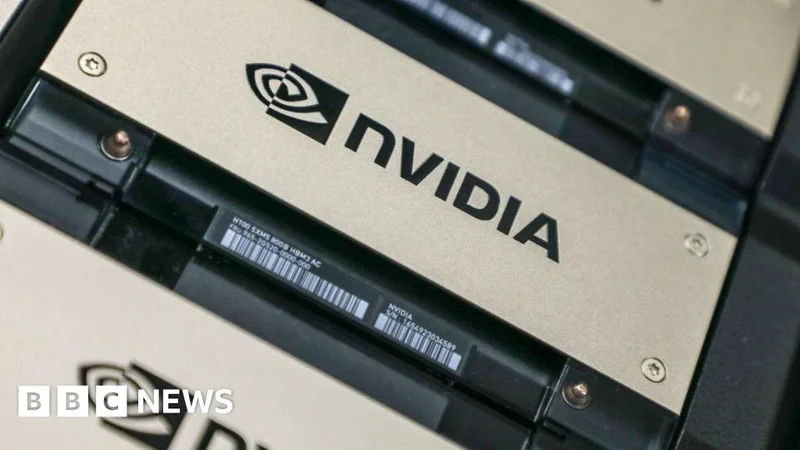
Image: Bbc
Main Takeaway
Nvidia-linked chip smuggling cases involving China are prompting scrutiny of export controls, corporate compliance, and the effectiveness of US efforts to restrict advanced AI technology.
Jump to Key PointsSummary
Charges expose a widening enforcement problem
US authorities have charged people in multiple cases involving the alleged illegal shipment of Nvidia AI hardware to China, turning export-control enforcement into a direct test of the semiconductor supply chain. The cases involve Chinese nationals in California, US citizens and Chinese nationals in Florida, and a separate Taiwan investigation involving employees of Nvidia and Super Micro Computer.
The California case centers on Chuan Geng and Shiwei Yang, who prosecutors accuse of exporting Nvidia H100 GPUs and other technology without required licenses from October 2022 through July 2025. A separate federal case names four people accused of conspiring to export Nvidia GPUs with AI applications. The overlapping investigations show that enforcement activity spans distributors, logistics networks, server companies, and individual employees rather than a single alleged operation.
How the alleged networks operated
The alleged schemes relied on intermediaries, false paperwork, and shipments disguised as ordinary commercial equipment. Prosecutors say one group used a California-based company to move tens of millions of dollars in Nvidia hardware to China, while another allegedly used fake documents and dummy equipment to evade audits in a plan involving technology valued in the billions.
The hardware at issue matters because advanced GPUs are the core computing component for training and running sophisticated AI systems. Bloomberg valued servers in one case at about $300 million, while other coverage described a separate Super Micro-linked investigation involving $2.5 billion in equipment. Those figures refer to different cases, but together they show the scale of the financial incentives behind attempts to bypass US licensing rules.
Taiwan becomes a critical enforcement front
Taiwan has become a central enforcement point because its companies manufacture, assemble, and distribute much of the infrastructure used in advanced AI computing. Taiwanese prosecutors charged 9 people over alleged illegal exports of high-end AI servers to mainland China, including 1 Nvidia employee and 2 employees of Super Micro Computer.
The Taiwan case broadens the issue beyond US border controls. Servers can be assembled from multiple components, routed through several jurisdictions, and sold through business relationships that obscure the final customer. Nvidia CEO Jensen Huang urged Super Micro to strengthen its export compliance controls after arriving in Taipei, while Nvidia said it expects partners to follow US trade rules. The scrutiny now reaches manufacturers, server integrators, resellers, and local staff with access to supply-chain information.
Why Nvidia faces difficult questions
Nvidia is not accused in the cited cases of directing the alleged smuggling, but its products are repeatedly appearing in prosecutions that test whether corporate safeguards can identify suspicious orders before shipment. Officials and investigators are examining whether distributors, partners, and employees missed warning signs tied to customer identities, shipping routes, product configurations, or unusual purchasing patterns.
The company operates inside a supply chain where it sells chips through partners and server manufacturers rather than controlling every downstream transaction. That structure creates practical compliance challenges, but it also puts pressure on Nvidia to show that contractual rules are backed by screening, audits, and consequences. The cases raise a broader question about how much responsibility manufacturers carry when their products move through independent distributors and reappear in restricted markets.
Export controls meet strong market incentives
The enforcement challenge exists because advanced AI chips command high prices and provide capabilities that are difficult to replace. A research analysis from the Center for a New American Security argues that China’s demand, the performance gap between restricted and lower-tier hardware, and a history of technology smuggling create persistent incentives to evade controls.
Criminal cases can punish individual actors, but they don't automatically close the routes that make diversion profitable. Investigators must track ownership, end users, freight movements, cloud access, and the assembly of complete systems, not just the sale of individual GPUs. The cases also create pressure for clearer licensing standards and tighter cooperation among US agencies, Taiwan, chipmakers, server companies, freight firms, and overseas authorities.
What happens next for the industry
The immediate consequences will center on prosecutions, corporate compliance reviews, and tighter scrutiny of shipments involving high-end GPUs and AI servers. Nvidia partners face pressure to document customers and final destinations more carefully, while Taiwan’s enforcement actions show that local authorities are taking a larger role in policing the trade.
The cases also give US policymakers evidence that restrictions depend on supply-chain enforcement as much as on rules governing direct exports. If prosecutions continue across several jurisdictions, companies will face higher compliance costs and closer checks on resellers and employees. If smuggling networks keep operating despite those actions, officials will face pressure to redesign controls around complete computing systems and end-use verification rather than relying mainly on chip-level licensing.
Key Points
Nvidia faces scrutiny as multiple prosecutions allege advanced AI chips reached China despite US export controls.
US prosecutors charged California-based Chinese nationals over alleged shipments of Nvidia H100 GPUs to China.
Taiwan charged 9 people, including Nvidia and Super Micro staffers, over alleged illegal AI server exports.
Alleged smuggling networks used intermediaries, false documents, dummy equipment, and complex shipping routes.
The cases are testing whether chipmakers and server partners can police downstream customers effectively.
Questions Answered
Nvidia is facing questions because its advanced GPUs have appeared in multiple alleged export-control evasion cases involving China. The cases are prompting scrutiny of partner screening, distributor oversight, employee conduct, and end-user verification.
Nvidia executives were not identified as charged in the cited cases. The prosecutions involve alleged actions by distributors, Chinese nationals, US citizens, and employees connected with Nvidia and Super Micro.
Nvidia H100 GPUs and other advanced AI technology were allegedly shipped to China. Authorities also cited high-end AI servers containing Nvidia hardware, which can be assembled and routed through several countries.
Jensen Huang urged Super Micro Computer to strengthen its export compliance controls. Nvidia has also said its partners must follow US trade rules.
The Nvidia cases could bring tighter screening of customers, distributors, server integrators, freight routes, and final destinations. Companies may face higher compliance costs and closer checks on complete AI systems rather than individual chips alone.
Source Reliability
88% of sources are highly trusted · Avg reliability: 89
Go deeper with Organic Intel
Simple AI systems for your life, work, and business. Each one includes copyable prompts, guides, and downloadable resources.
Explore Systems