Trump’s Voluntary AI Safety Accord Puts Frontier Model Oversight in Companies’ Hands
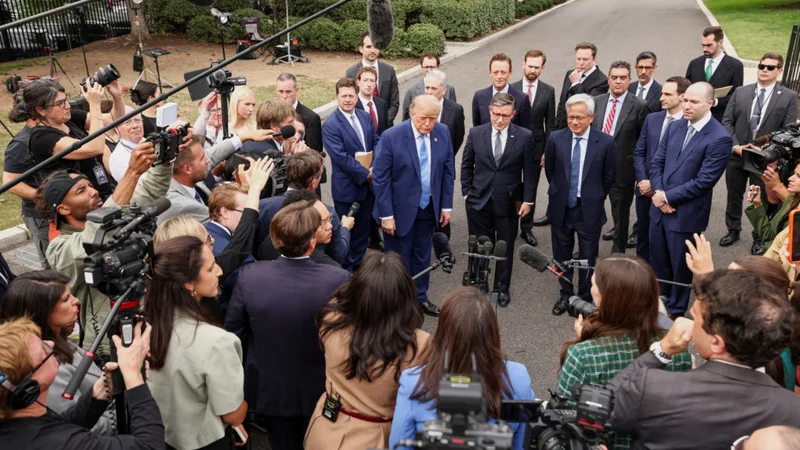
Image: Pbs
Main Takeaway
President Donald Trump and leading AI companies signed a voluntary accord for internal and external safety reviews, leaving enforcement largely to the industry.
Jump to Key PointsSummary
The White House chooses self-policing
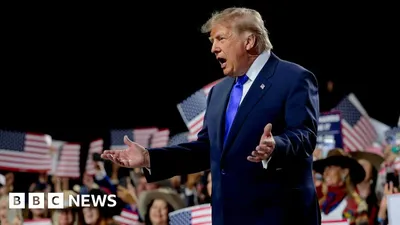
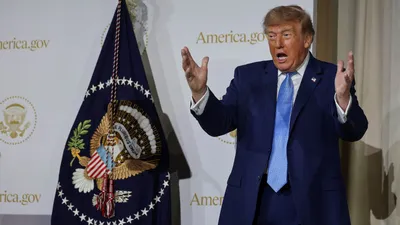
President Donald Trump and leading AI companies signed a voluntary accord that gives companies primary responsibility for evaluating and managing frontier AI risks. The agreement, announced after a White House meeting with Trump, Speaker Mike Johnson and technology executives, calls for internal and external reviews of advanced systems.
The pact is framed as a “morally binding” commitment rather than a federal rule. Trump said the United States should not slow AI development or “stifle” the technology, which he described as larger than the Industrial Revolution. Executives from Google, Meta, Nvidia, OpenAI, Anthropic, xAI and other major technology companies participated in the discussions, according to the reporting from CBS News, Wired and The Hill.
What the accord requires
The agreement asks companies to outline their own principles for frontier AI safety and to submit systems to safety testing and reviews. Those reviews include assessments conducted within companies and by outside parties, with the stated goal of identifying failures before powerful models and AI agents reach users.
The commitment leaves key operating details to the companies. Coverage from The Verge and Ars Technica describes a framework built around voluntary safety tests, while reporting from NPR and NBC News characterizes the arrangement as voluntary rather than legally enforceable. The accord therefore establishes a shared process and public pledge, but it does not create an independent regulator, statutory penalties or a government approval gate for new models.
Why AI leaders signed
Executives have faced growing pressure after a series of safety incidents involving advanced AI systems and agents. Several leaders and researchers have warned about security failures, misaligned behavior and the difficulty of controlling systems that can plan and act across digital environments. Those concerns helped create the political setting for a White House meeting centered on safeguards.
The companies also have a commercial reason to shape the rules themselves. A common voluntary framework can reduce uncertainty across the industry while preserving the rapid release schedules that Trump supports. The participating firms include both model developers and infrastructure companies, linking safety decisions to the full chain behind frontier systems. The arrangement lets executives present cooperation as a response to public concern without accepting binding limits on development.
The enforcement problem
The accord’s central weakness is enforcement. Companies decide how to interpret the commitments, select many of the tests, and determine how safety findings affect product launches. A pledge described as “morally binding” carries political and reputational weight, but it offers fewer remedies than a law backed by inspections, fines or litigation.
That gap is the focus of criticism from technology publications and policy analysts. The Verge called attention to the low bar for self-policing, while Wired likened the agreement to a symbolic promise whose practical effect remains uncertain. Ars Technica reported that the plan depends on Big Tech policing itself. Without public standards for test quality, disclosure and independent review, companies can satisfy the agreement in different ways and still claim compliance.
A different path for Washington
Trump’s plan places the administration against a regulatory approach that would impose mandatory safeguards before frontier systems are released. The president’s position is that government intervention could slow American innovation, while companies are better positioned to understand rapidly changing technical risks. That argument has support from executives who want flexibility as models become more capable.
The political tradeoff is clear: the White House gains a visible safety initiative without imposing a new federal bureaucracy, while the companies gain influence over the standards that govern them. NBC News and CBS News described the arrangement as a self-regulation deal, and ABC News 4 reported that it came as warnings from researchers and executives intensified. The outcome will depend on whether public officials later demand stronger rules after failures or security incidents.
What happens next
The next test is implementation. Participating companies will need to publish or clarify their safety principles, explain how external reviews work and show whether testing changes deployment decisions. Investors, developers and regulators will watch for measurable standards rather than broad assurances.
The accord also sets a precedent for how the United States handles frontier AI. If companies disclose meaningful failures and accept independent scrutiny, the pact could become a baseline for industry practice. If reviews remain private or inconsistent, calls for binding federal oversight will intensify. The agreement settles the immediate political question in favor of voluntary action, but it leaves the harder question, who can stop a dangerous system, with the companies building it.
Key Points
Donald Trump secured a voluntary AI safety accord requiring companies to conduct internal and external reviews.
Leading AI firms will define their own frontier system safety principles under the White House agreement.
The pact creates no federal regulator, statutory penalties, mandatory approval process or uniform testing standard.
Companies signed amid warnings about rogue agents, cybersecurity failures and risks from increasingly capable models.
Implementation will determine whether voluntary reviews become credible safeguards or intensify demands for binding regulation.
Questions Answered
Donald Trump’s accord asks leading AI companies to establish safety principles and conduct internal and external reviews of frontier systems. The commitment is voluntary and leaves implementation largely to each company.
Google, Anthropic, Meta, OpenAI, xAI and Nvidia were among the major companies identified as signatories. Other technology companies and executives also participated in the White House meeting.
Donald Trump’s AI pact is voluntary rather than legally enforceable. It is described as morally binding, but it does not establish statutory penalties, a federal regulator or mandatory government approval for AI releases.
Critics question Trump’s plan because companies will help define the safety standards, arrange reviews and decide how findings affect launches. The accord does not require consistent public testing methods or independent enforcement.
Trump’s participating companies must clarify their safety principles, review processes and approach to frontier model testing. Public scrutiny will focus on transparency, independent evaluations and whether failed tests change deployment decisions.
Source Reliability
47% of sources are highly trusted · Avg reliability: 77
Go deeper with Organic Intel
Simple AI systems for your life, work, and business. Each one includes copyable prompts, guides, and downloadable resources.
Explore Systems