Trump Brings AI Leaders to White House as Innovation and Safety Debate Intensifies
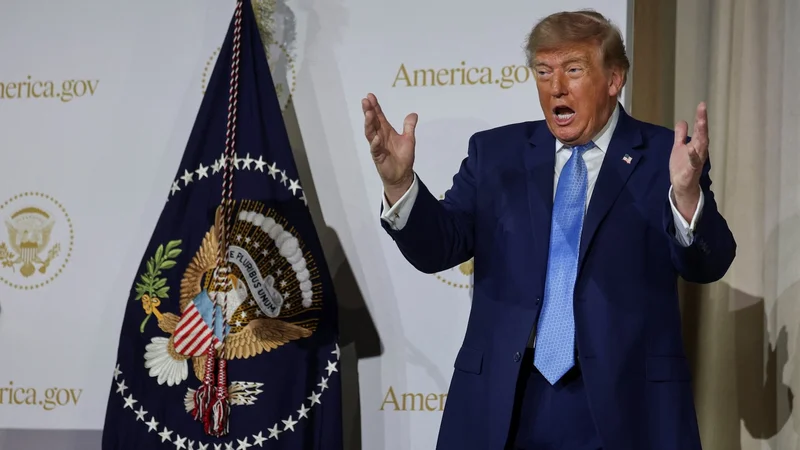
Image: Abcnews
Main Takeaway
President Donald Trump hosted leading AI executives, including Nvidia’s Jensen Huang and Anthropic’s Dario Amodei, to discuss safety, regulation and U.S. investment.
Jump to Key PointsSummary
The White House meeting
President Donald Trump brought leading technology executives to the White House for a discussion centered on artificial intelligence risks, innovation and investment in the United States. The gathering included Nvidia CEO Jensen Huang, Anthropic CEO Dario Amodei and Palantir CEO Alex Karp, with Meta’s Mark Zuckerberg, OpenAI’s Greg Brockman and other industry figures also listed among the participants.
The meeting put the administration’s technology priorities in the same room as companies building the infrastructure and models driving the current AI race. House Speaker Mike Johnson was also scheduled to participate, adding a congressional dimension to discussions about oversight and national policy. The guest list reflected both frontier-model companies and firms tied to chips, defense technology and large-scale computing.
Innovation takes center stage
Trump framed rapid AI development as an economic and strategic priority, saying he would not stifle the technology’s growth. He has compared advanced AI with transformations as large as the Industrial Revolution and has emphasized keeping the United States ahead of China.
That position places the White House close to the industry’s argument for faster deployment, although the participants represent different views on how much oversight advanced systems require. Nvidia supplies the processors that power AI development, Anthropic has publicly focused on model safety, and Palantir sells software used by government and defense customers. Their presence connected commercial growth with national-security and public-sector applications.
Safety and self-regulation
AI safety was a central subject as executives and policymakers faced growing calls to slow the development of increasingly capable systems. Trump has dismissed severe warnings about AI as a hoax while arguing that the United States should preserve its competitive edge. The administration’s stated approach favors industry self-regulation over rules that could restrict expansion.
The position creates a direct policy tension. Companies want room to train and deploy systems, while governments are being pressed to address misuse, security failures, job disruption and the risks associated with more capable models. Anthropic’s participation gave the discussion a prominent safety-focused voice, while Nvidia and Palantir represented the infrastructure and applied-technology sides of the market.
Data centers and domestic investment
The talks also focused on the physical buildout required to support AI, including data centers, computing capacity and investment in the United States. Trump highlighted data centers as an economic benefit, linking AI growth to construction, energy demand and technology spending.
That emphasis broadens the policy debate beyond software. Nvidia’s chips sit at the center of the supply chain, while cloud providers and infrastructure companies depend on access to power, land and advanced hardware. Microsoft, Apple and Meta were among the major technology companies associated with the broader White House gathering, underscoring how AI investment affects companies that develop models, operate platforms and purchase large volumes of computing capacity.
A broader technology coalition
The White House outreach extended beyond dedicated AI labs. Mark Zuckerberg, Tim Cook and Bill Gates were identified as attendees at the earlier technology-focused dinner, alongside OpenAI’s Sam Altman and other executives. That event highlighted the administration’s interest in a wide technology coalition rather than a conversation limited to model developers.
Elon Musk’s absence drew attention because of his prominent role in AI and his past relationship with Trump. Coverage of the dinner also noted a separate AI event hosted by first lady Melania Trump, who used the gathering to spotlight the technology’s growing presence. The combination of executive access, public messaging and separate White House events made AI a visible part of the administration’s economic and political agenda.
What happens next
The immediate outcome was a clearer statement of direction rather than a detailed regulatory framework. Trump’s comments favored continued growth, self-regulation and domestic investment, while the meeting’s focus on risks kept safety concerns in the policy discussion.
The next phase will turn broad priorities into decisions about data-center infrastructure, energy, export controls, federal procurement and safeguards for advanced systems. The presence of congressional leadership gives the debate a legislative route, while the participation of companies across chips, models, platforms and defense technology raises the stakes for any future rules. The White House meeting therefore functions as both a policy signal and an early test of whether industry-led safeguards can satisfy lawmakers and the public.
Key Points
Donald Trump hosted leading AI executives to discuss safety, innovation, oversight and U.S. technology investment.
Nvidia’s Jensen Huang and Anthropic’s Dario Amodei brought infrastructure and safety perspectives to the White House meeting.
Trump promoted AI self-regulation and data-center growth while rejecting policies that restrict technological development.
House Speaker Mike Johnson’s participation connected the executive discussion with potential congressional action on AI.
Elon Musk’s absence stood out as Trump courted a broader coalition of technology and AI leaders.
Questions Answered
Donald Trump hosted AI leaders to discuss artificial intelligence risks, innovation, oversight and investment in U.S. technology infrastructure. The meeting also reflected the administration’s focus on maintaining an advantage over China.
Donald Trump met with executives including Nvidia’s Jensen Huang, Anthropic’s Dario Amodei and Palantir’s Alex Karp. Meta, OpenAI and other major technology companies were also represented in the White House gatherings.
Donald Trump favors rapid AI growth and industry self-regulation over rules he believes would stifle innovation. His administration is still addressing safety, national security, infrastructure and oversight concerns.
Donald Trump’s White House meeting produced a policy signal rather than a detailed set of new regulations. Follow-up decisions will involve data centers, energy, exports, federal procurement and safeguards for advanced AI systems.
Elon Musk’s absence stood out because he is a prominent AI executive with a past relationship to Donald Trump. Coverage of the gathering emphasized that the White House was engaging a broader group of technology leaders.
Source Reliability
42% of sources are highly trusted · Avg reliability: 76
Go deeper with Organic Intel
Simple AI systems for your life, work, and business. Each one includes copyable prompts, guides, and downloadable resources.
Explore Systems