Trump Orders Federal Agencies to Rename AI ‘Super Intelligence’ Amid Self-Policing Accord
Image: Whitehouse
Main Takeaway
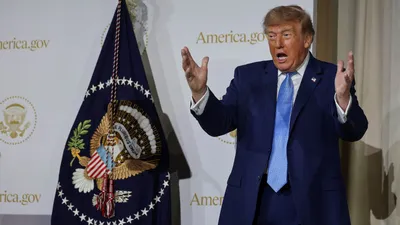
President Donald Trump ordered federal agencies to replace “artificial intelligence” with “Super Intelligence,” while technology executives signed a voluntary safety accord.
Jump to Key PointsSummary
The federal terminology shift
President Donald Trump signed an executive order directing the executive branch to replace “artificial intelligence” and “AI” with “Super Intelligence” and “SI” in official government communications. The change applies to agency correspondence, public websites, press releases, reports and policy documents, according to the White House fact sheet and multiple accounts of the order.
The order keeps the underlying technology definition unchanged. It establishes a government vocabulary change rather than a technical reclassification, with federal agencies expected to update their language across public-facing and internal materials. The White House framed the move as recognition of rapidly advancing capabilities and the technology’s promise for Americans.
Why Trump chose the phrase
Trump presented “super” as a stronger and simpler word than “artificial,” saying the new label better reflects the technology’s capabilities. The rebranding came as his administration promoted continued AI development and faced public criticism over energy use, data centers and the absence of tougher safeguards.
The timing connected the terminology order to a broader political effort to defend the technology. Bloomberg described the move as a response to AI’s branding problem, while CNBC tied the announcement to polling and concerns that support for AI infrastructure could hurt Republicans in the 2026 midterm elections. The Independent portrayed Trump’s remarks as an appeal for Americans to trust the technology despite rising anti-AI sentiment.
Industry leaders join the White House
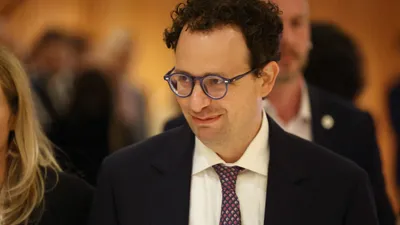
The announcement followed a White House meeting with prominent technology executives, including Nvidia CEO Jensen Huang, SpaceX and xAI chief Elon Musk, and Anthropic CEO Dario Amodei. Their presence gave the terminology shift a wider industry setting, linking the administration’s language preference to its relationships with leading AI companies.
The meeting also produced a separate voluntary agreement focused on safety practices. Six major technology executives signed what USA Today described as a “morally binding” accord calling for internal processes to develop the technology safely. The arrangement reflects Vice President JD Vance’s stated preference for cooperation with AI companies over broad new regulation, according to Nextgov.
Regulation gives way to partnership
The administration’s message is centered on expansion, collaboration and industry self-policing. Trump has rejected calls for a slower development pace, while officials have emphasized the economic and strategic value of advanced AI systems. The new terminology reinforces that posture by presenting the technology as an achievement to promote rather than a risk category to constrain.
A voluntary accord places responsibility for safety inside companies instead of creating enforceable requirements through legislation or regulation. That distinction matters because the agreement’s practical effect depends on the companies’ internal controls, public commitments and willingness to disclose how those controls operate. The order itself changes federal language, while the accord addresses corporate conduct through nonbinding commitments.
Limits of the executive order
The order governs the executive branch, not private companies, Congress, state governments or the public. Businesses, researchers and international organizations remain free to use “artificial intelligence” and “AI,” which remain the standard terms across science, engineering and commercial markets.
Federal agencies will face a messaging and document-management task as they revise websites, forms, reports and correspondence. The White House says “SI” covers the same technologies previously included under the federal definition of AI, so the change does not create a new class of systems or alter existing capabilities. AP reported that the language also affects diplomatic communications, extending the terminology beyond domestic agency materials.
What happens next
The immediate result will be a government-wide vocabulary change, while the broader test will be whether the voluntary safety accord produces measurable safeguards. Agencies must adopt the new wording, and companies that signed the agreement will face scrutiny over how they translate general safety promises into operating rules.
The policy also sets up a contrast between branding and governance. “Super Intelligence” gives the administration an optimistic public frame, but technical standards, energy demands, labor effects, security risks and accountability still require concrete decisions. The order can standardize federal language quickly; its influence on public trust and industry behavior will depend on what follows the signing ceremony.
Key Points
Donald Trump ordered federal agencies to replace “artificial intelligence” with “Super Intelligence” in official communications.
The executive order changes federal terminology but leaves the underlying definition and technology unchanged.
Trump linked the rebrand to continued AI expansion amid backlash over regulation, energy use and data centers.
Six technology executives signed a voluntary safety accord alongside the White House announcement.
Private companies, states, Congress and researchers remain free to use the standard terms AI and artificial intelligence.
Questions Answered
Donald Trump ordered federal agencies to call artificial intelligence “Super Intelligence,” abbreviated SI. The terminology applies to executive-branch communications, websites, reports, policy documents and correspondence.
Donald Trump’s order does not change the federal definition of the technology. It replaces the terms “artificial intelligence” and “AI” with “Super Intelligence” and “SI” in government language.
Donald Trump said “super” better communicates the technology’s capabilities and promise. The rebrand also came as his administration defended continued AI development amid public and political backlash.
Donald Trump and six technology executives signed a voluntary AI safety accord at the White House. The agreement calls for internal company processes to support safer development, but it is not a binding regulation.
Donald Trump’s order does not require private companies to use “Super Intelligence.” It governs the executive branch, while businesses, researchers, Congress and state governments can continue using AI and artificial intelligence.
Source Reliability
46% of sources are highly trusted · Avg reliability: 82
Go deeper with Organic Intel
Simple AI systems for your life, work, and business. Each one includes copyable prompts, guides, and downloadable resources.
Explore Systems