Trump Rejects AI Pause as China Competition Turns Safety Debate Into a Global Governance Test
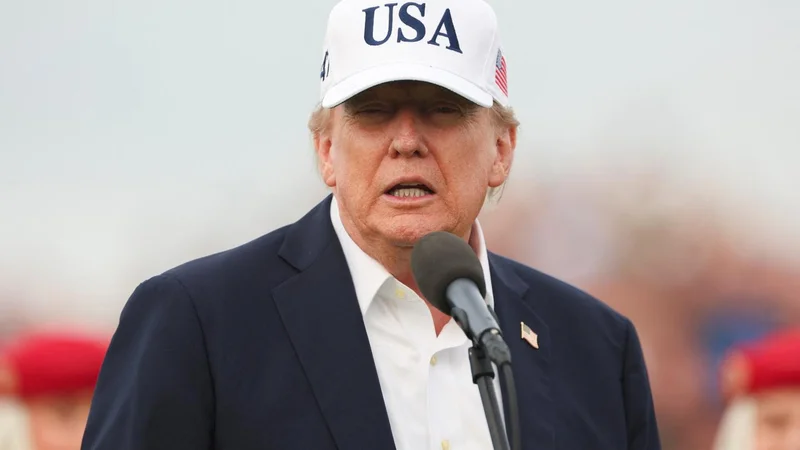
Image: Lemonde
Main Takeaway
Donald Trump rejected calls to slow AI development as China dismissed the proposal, exposing the limits of any safety pause without cooperation between Washington and Beijing.
Jump to Key PointsSummary
The pause collides with rivalry
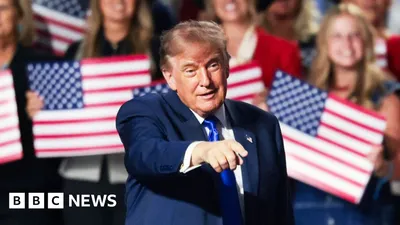
The United States and China are rejecting a unilateral slowdown in artificial intelligence, turning a safety proposal from leading technology executives into a test of strategic competition. President Donald Trump said the United States must stay ahead of Beijing, while Chinese officials called American warnings fearmongering and part of a Cold War strategy.
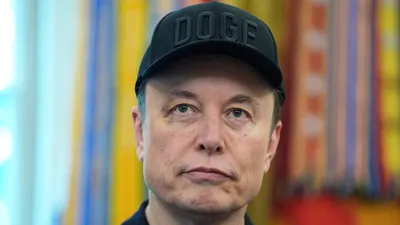
The dispute followed a September 12 essay by Anthropic CEO Dario Amodei, who urged companies to slow improvements to advanced models and submit systems to independent evaluation. OpenAI CEO Sam Altman and SpaceX founder Elon Musk endorsed the argument, but Trump dismissed the idea as incompatible with the race against China. The debate now joins technical safety, national security and industrial policy in a single political fight.
Why Washington rejected restraint
Trump's position rests on a simple strategic calculation: any American pause could give China time to narrow the gap in advanced AI. The president has framed the technology as a contest in which national leadership matters more than voluntary restraint, a stance that places economic strength, military capability and technological influence alongside safety concerns.
Amodei made a similar security argument from the opposite direction. His essay warned that a Chinese lead would pose grave danger to the United States and the wider world, while calling for restrictions on sales of critical technology to China. Bloomberg's analysis described the policy challenge as one with few attractive options, since export controls and domestic restraint each carry costs, while a purely American slowdown cannot control development elsewhere.
Beijing rejects the American framing
China's government has rejected the idea that U.S. safety warnings provide a neutral basis for slowing AI development. Foreign Ministry spokesperson Guo Jiakun said fearmongering, confrontation and malicious competition would disrupt global AI governance and serve no one's interests.
That response reflects Beijing's view that calls for restraint are entangled with efforts to limit China's access to advanced computing and other key technologies. The disagreement is therefore about governance terms as much as model capability. Washington presents leadership as protection against a rival, while Beijing sees some American proposals as containment packaged as safety policy. Bloomberg's commentary reaches a related conclusion: meaningful limits require transparency and participation from both major powers, not a rule followed by only one side.
The cooperation problem
An AI pause cannot reliably govern systems developed across competing countries unless the United States and China agree on shared conditions. A company that slows training, evaluation or deployment in one market can still face systems built elsewhere under different rules, leaving regulators with limited visibility into capabilities and incidents.
The Bloomberg opinion segment used a simulated WeChat bug to illustrate how an AI-generated failure can spread through a globally connected platform, making national borders poor safety boundaries. Independent evaluation, disclosure of dangerous capabilities and communication about incidents would require trusted channels across governments and companies. The political climate makes that difficult: Beijing describes U.S. warnings as confrontation, while Washington treats Chinese progress as a strategic threat. The result is a governance gap in which safety measures risk becoming bargaining chips.
Industry leaders face a divided response
The unusual alignment among Amodei, Altman and Musk brought existential AI risk into mainstream politics, but it did not produce agreement on the response. Their shared concern about rapidly improving models collided with disagreements over whether slowing development would protect the public or weaken the United States.
The episode also arrives as major AI companies confront heavy funding demands and growing pressure to show commercial returns, according to Le Monde. A deliberate slowdown would affect research schedules, product launches and investment plans, while independent reviews could add time and cost to frontier development. Restrictions on Chinese access to key technologies would create a separate layer of pressure for chipmakers, cloud providers and model developers operating across international markets.
What happens next
The immediate policy path points toward selective controls and risk testing rather than a broad international pause. The United States can restrict access to certain technologies, require evaluations for high-capability systems and negotiate limited safety channels, but those measures won't substitute for Chinese participation in global rules.
China's rejection makes a shared moratorium politically remote, while Trump's stance signals that national competition will guide U.S. policy. The debate still establishes a durable question for governments and developers: whether safety standards can be verified and enforced across rival systems without reducing cooperation to another front in the technology conflict. Any framework that treats AI as a purely domestic issue will face the same boundary problem exposed by cross-border platforms and globally distributed computing.
Key Points
Donald Trump rejected an AI pause as China competition takes priority over unilateral development restraint.
China dismissed American AI slowdown calls as fearmongering and a Cold War containment strategy.
Anthropic CEO Dario Amodei urged slower model improvements and independent evaluations for advanced systems.
U.S. export controls and domestic restraint offer limited control without Chinese participation in shared rules.
Cross-border AI failures show why transparency and incident communication require cooperation between Washington and Beijing.
Questions Answered
Donald Trump rejected an AI pause because he said the United States must stay ahead of China in artificial intelligence. His position treats AI leadership as a national security and economic priority, even as technology executives warn about rapidly advancing model risks.
Dario Amodei proposed slowing the pace of AI model improvements and having advanced systems evaluated by independent reviewers. OpenAI CEO Sam Altman and Elon Musk endorsed the broad call for greater restraint.
China does not support the American calls described in the article for slowing AI development. Chinese Foreign Ministry spokesperson Guo Jiakun called the warnings fearmongering and said confrontation would disrupt global AI governance.
An AI pause would require China because AI development, computing infrastructure and digital platforms cross national borders. A unilateral U.S. slowdown would not establish shared limits, evaluations or incident reporting for systems developed under different rules.
The U.S.-China AI dispute is likely to focus on targeted technology controls, model evaluations and limited governance channels rather than a broad pause. The central challenge will be creating transparency and safety standards while both governments treat AI leadership as strategically important.
Source Reliability
75% of sources are highly trusted · Avg reliability: 87
Go deeper with Organic Intel
Simple AI systems for your life, work, and business. Each one includes copyable prompts, guides, and downloadable resources.
Explore Systems