Data Center Backlash Unites Texas Voters and Turns AI Infrastructure Into a National Political Fight
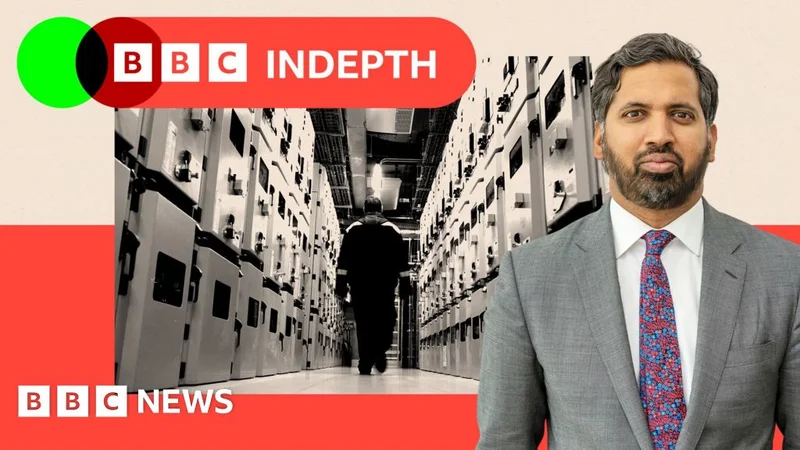
Image: Bbc
Main Takeaway
Data center opposition is reshaping Texas races and spreading nationwide as voters challenge power costs, noise, water use, land development, and AI’s political influence.
Jump to Key PointsSummary
A local fight with national reach
Data center construction has become a unifying political grievance across the United States, linking rural conservatives, environmental activists, urban voters, and civil rights groups around concerns about power, water, noise, land use, and public subsidies. The facilities support AI services, cryptocurrency mining, and cloud computing, but their physical costs are borne by nearby communities. The Verge describes opposition emerging from Texas to Pennsylvania, while Heatmap reports similar conflicts in Arizona and the Washington, D.C., suburbs.
The issue has moved beyond zoning meetings. Data center proposals have delayed or blocked projects worth billions, according to Brookings, and the fights are now appearing in congressional, gubernatorial, legislative, and local campaigns. National leaders continue to frame AI infrastructure as essential to technological competition, creating a sharp divide between national growth goals and local control.
Why voters are pushing back
Voters object to data centers because the facilities consume large amounts of electricity and water, generate persistent noise, and alter rural or suburban landscapes. A University of Texas poll found opposition extending beyond the rural and exurban communities where construction is concentrated, reflecting broader ambivalence about AI’s economic and social effects. The BBC describes the infrastructure as an energy-intensive foundation for AI services, with thousands of chips operating continuously inside large industrial sites.
Residents also question who pays for the expansion. New substations, transmission lines, roads, and tax incentives can shift costs toward households while the economic gains remain concentrated among developers and technology companies. Heatmap characterizes the opposition as a cross-ideological movement, while Brookings frames the disputes as a fight over democratic accountability and control of AI’s underlying infrastructure.
Texas becomes the test case
Texas has become the clearest example of data center backlash entering electoral politics. Projects in and around Austin, Taylor, Temple, Hood County, and Grimes County have drawn opposition over proposed sites, noise, industrial development, and pressure on local resources. The Texas NAACP has tracked resistance in several communities, including a dispute over a Taylor facility planned for land intended as a park, according to The Verge.
The backlash is cutting across the state’s usual partisan lines. Rural Republicans interviewed by Houston Public Media said they might vote for Democrats or stay home because of their party’s response to nearby facilities. The Texas Tribune describes residents living near Elon Musk’s planned Terafab semiconductor factory as part of a wider rural reaction to large technology projects. A Texas poll cited by Fox 7 Austin found voters opposing data centers even as major statewide races remained closely contested.
A crack in Republican politics
Data centers are creating an unusual opening for Democratic candidates in conservative areas, but the political effect depends on local conditions and turnout. Residents who oppose development often describe themselves as focused on property rights, government accountability, and community control rather than AI policy. Those concerns give Democrats a way to reach voters who have little interest in traditional partisan appeals.
The shift remains uneven. Texas Republicans retain a strong structural advantage, and individual disputes do not automatically translate into statewide realignment. Still, the issue has weakened the assumption that support for technology investment is politically cost-free. Houston Public Media found conservative voters considering Democratic votes or abstention, while the Texas Tribune reports that rural opposition is testing the Republican coalition’s long-standing strength outside major cities.
Money meets community resistance
The political fight is also being shaped by large technology donations. Leading the Future, a super PAC backed by venture capitalist Marc Andreessen and OpenAI President Greg Brockman, has spent $45 million in a year, according to The Verge. That spending reflects an effort by technology leaders to influence candidates and policy as governments decide how quickly to approve new infrastructure.
Brookings describes a widening imbalance between technology companies with substantial capital and employee-led or community groups seeking stronger oversight. The conflict is therefore about more than individual facilities. It concerns whether decisions about electricity, land, environmental burdens, and public incentives remain with local governments or shift toward companies pursuing national AI ambitions. The resulting backlash gives activists a concrete target: a building, a transmission line, or a tax agreement in their own community.
What happens next
Data center opposition will remain a durable political issue as developers seek sites and governments weigh AI investment against local costs. Campaigns are likely to focus on permitting rules, utility rates, water use, noise limits, tax abatements, and requirements for community benefits. The disputes will also test whether national promises of jobs and technological leadership outweigh residents’ concerns about immediate changes to their neighborhoods.
The central tension is now visible across the country: AI depends on large physical systems, while political support is built through local consent. Texas provides the most developed example, but conflicts in other states show the pattern is broader. As the 2026 election cycle advances, candidates from both parties will have to explain who benefits from data center growth, who pays for it, and who gets the final say.
Key Points
Data centers are becoming a cross-partisan political flashpoint over electricity, water, noise, land, and public subsidies.
Texas voters are challenging data center projects across rural, suburban, and metropolitan communities.
Conservative Texas voters are considering Democratic candidates or abstention over Republican data center policies.
Technology-backed super PAC spending is intensifying conflict over AI infrastructure and political accountability.
Local opposition is delaying billions of dollars in proposed data center and AI infrastructure projects.
Questions Answered
Texas voters oppose data centers because of electricity demand, water use, noise, land development, and concerns about public costs. The disputes have spread across rural, suburban, and metropolitan communities.
Data centers are affecting Texas elections by creating tension between Republican candidates and conservative voters in communities facing large projects. Some voters interviewed by Houston Public Media said they may support Democrats or skip the election.
Data center opposition includes rural Republicans, environmental activists, civil rights organizations, suburban residents, and some Democratic groups. Their reasons vary, but concerns about local control, utility costs, and industrial development overlap.
Leading the Future, a super PAC backed by Marc Andreessen and OpenAI President Greg Brockman, has spent $45 million in a year. The spending reflects technology leaders’ effort to shape AI policy and elections.
Data center projects will face closer scrutiny over permitting, power rates, water use, noise, tax incentives, and community benefits. Candidates and local officials will increasingly have to balance AI investment against public opposition.
Source Reliability
67% of sources are highly trusted · Avg reliability: 82
Go deeper with Organic Intel
Simple AI systems for your life, work, and business. Each one includes copyable prompts, guides, and downloadable resources.
Explore Systems