US Orders Federal Agencies to Remove DeepSeek AI Over National Security and Contracting Risks
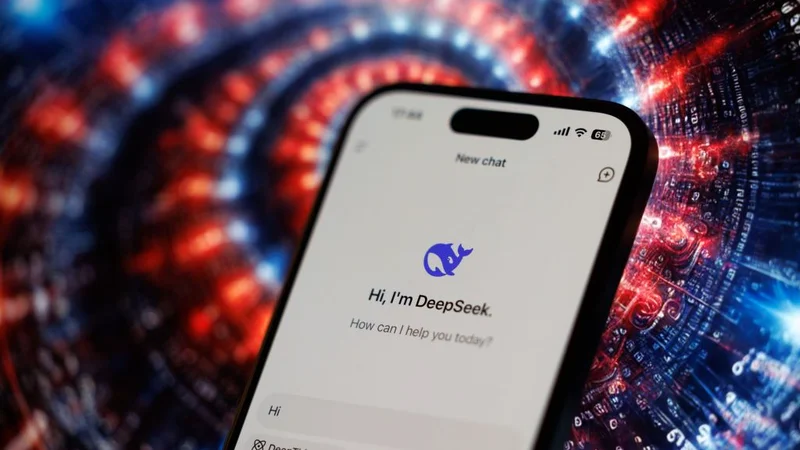
Image: TechCrunch AI
Main Takeaway
The US government has ordered civilian federal agencies to stop using DeepSeek products and remove related services from government systems over national security concerns.
Jump to Key PointsSummary
Federal systems face a DeepSeek ban
The US government has ordered civilian federal agencies to stop purchasing DeepSeek products and remove the Chinese startup’s AI from government IT systems. The directive also covers third-party products and services built using DeepSeek technology, according to reporting by TechCrunch and several outlets citing the Department of Homeland Security.
The order targets civilian agencies rather than describing a government-wide prohibition on every private-sector use of DeepSeek. Reports from Bloomberg, Reuters and The Wall Street Journal frame the move as both an operational ban and a contracting restriction, blocking agencies from acquiring services tied to the company. The action puts DeepSeek alongside other Chinese technology firms that have faced limits in US government environments because of data, influence and supply-chain concerns.
Security concerns drive the action
National security concerns are the stated reason for removing DeepSeek from federal systems. The administration has focused on the company’s Chinese ownership and operations in China, while officials have treated the software and services as a risk inside sensitive government networks.
The central issue is control over data, model behavior and software dependencies. An AI system embedded directly in agency workflows can process internal documents, employee queries or operational information, while third-party tools can create less visible routes into government environments. CyberScoop, South China Morning Post and NDTV describe the order as a response to security risks associated with DeepSeek’s presence in federal systems. The policy also reflects a wider US effort to limit Chinese technology exposure in public infrastructure.
Contracts and third-party tools included
The restriction reaches beyond a standalone DeepSeek chatbot. Agencies are being told to stop purchasing products or services developed by DeepSeek and to remove third-party services that use its technology, according to TechCrunch and Bloomberg.
That broader language matters because open-weight AI models can be downloaded, modified and embedded into other applications. A government contractor could offer a branded assistant or software feature without presenting DeepSeek as the visible product. By including derivative services, the directive targets the underlying model supply chain as well as the company’s own interfaces. Reports from Politico, Inside Government Contracts and Codedtrip also connect the federal action to government procurement rules and a wider push by lawmakers and officials to restrict DeepSeek in public-sector contracts.
Open models sharpen the competitive stakes
DeepSeek’s lower-cost, open-weight models have made the company a notable competitor in the AI market and increased the policy stakes of the federal ban. Bloomberg described the models as more affordable than many rival systems, a factor that helped drive interest among developers and businesses.
Open-weight software spreads differently from a closed commercial service. Developers can host a model themselves, alter it, or incorporate it into another application, making procurement screening harder and extending the model’s reach beyond a single vendor relationship. The US action therefore gives agencies a clear exclusion rule, but it also creates a compliance task for contractors that must trace model origins through their software stacks. Reuters, The Wall Street Journal and South China Morning Post place the decision within the broader technology competition between Washington and Beijing.
Agencies and contractors must adjust
Federal civilian agencies must identify DeepSeek software, services and related integrations already present in their systems, then remove or replace them. Contractors serving those agencies face a parallel review of AI components embedded in products, cloud services and development tools.
The policy can affect procurement decisions even where DeepSeek is not the named vendor. Agencies may need documentation showing which model powers a service, where inference occurs, how data is handled and whether a contractor has reused a restricted model. Inside Government Contracts reports that federal and state governments are moving quickly to restrict use, while Politico and CyberScoop describe the federal order as an immediate government IT measure. The result is a new screening requirement for AI suppliers seeking public-sector work.
What happens across the AI market
The federal ban strengthens demand for AI providers that can offer trusted hosting, clear data controls and procurement documentation. US-based companies such as Microsoft, Google and OpenAI stand to benefit from agencies seeking replacement systems, although the order itself does not name a specific substitute.
The measure also raises the cost of using open models in regulated environments. Model developers and contractors will face greater pressure to document training provenance, ownership, deployment locations and downstream integrations. For DeepSeek, exclusion from federal systems limits direct government adoption and adds a reputational hurdle with commercial customers that sell into regulated industries. The next stage will involve implementation details, contractor guidance and possible legislation extending restrictions beyond civilian agencies.
Key Points
DeepSeek faces removal from civilian federal systems under a US national security directive.
Federal agencies must stop buying DeepSeek products and services built with its models.
Third-party contractors must review software supply chains for embedded DeepSeek technology.
DeepSeek’s open-weight models increase both adoption opportunities and government procurement concerns.
US AI vendors may gain replacement demand from federal agencies and regulated contractors.
Questions Answered
The US is restricting DeepSeek in federal agencies because officials cite national security risks tied to the Chinese AI company. Concerns include data handling, software dependencies and the use of DeepSeek technology inside government networks.
The order covers DeepSeek products, purchased services and third-party tools built with DeepSeek technology. Agencies must remove identified DeepSeek software and related services from civilian government IT systems.
The reported order directly applies to civilian federal agencies and government procurement. It does not establish a blanket ban on every private-sector use, though contractors serving the government face additional compliance requirements.
Government contractors must review whether DeepSeek models are embedded in their products, cloud services or software tools. They may need to document model origins, deployment locations and data practices before selling services to federal agencies.
Federal agencies will inventory and remove affected systems, while contractors and vendors will assess replacement options. Further guidance or legislation could expand restrictions to additional public-sector environments.
Source Reliability
47% of sources are highly trusted · Avg reliability: 73
Go deeper with Organic Intel
Simple AI systems for your life, work, and business. Each one includes copyable prompts, guides, and downloadable resources.
Explore Systems