True Anomaly Lands $650M Series D, Reaches $2.2B Valuation for Space Defense Systems
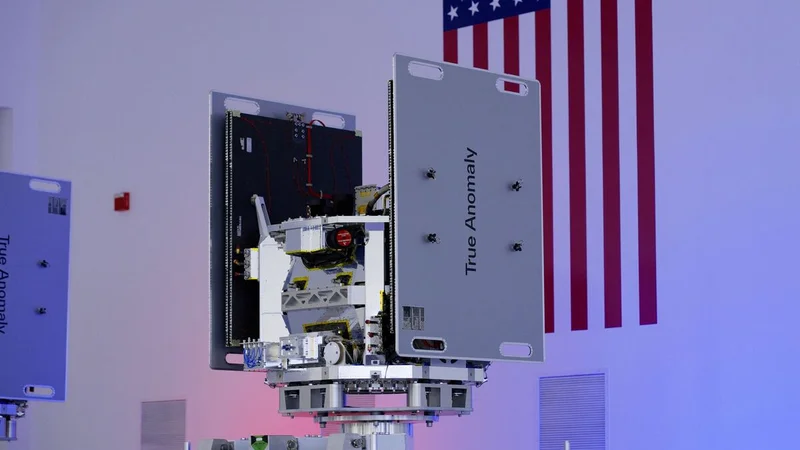
Image: Bloomberg AI
Main Takeaway
Defense space startup True Anomaly raises $650M in Series D funding at $2.2B valuation, positioning itself as key contractor for Trump's Golden Dome.
Jump to Key PointsSummary
The funding round that tripled True Anomaly's worth
True Anomaly just closed a monster $650 million Series D round that catapulted its valuation to $2.2 billion. This represents a massive leap from the $260 million Series C the company raised in what appears to be a separate, earlier round. Eclipse Ventures and Riot Ventures led the oversubscribed funding, which will bankroll aggressive hiring and scaling of the company's satellite constellation business.
The timing isn't accidental. Multiple sources confirm True Anomaly was recently selected as one of just twelve companies to develop interceptors for Trump's Golden Dome missile defense shield. This national security contract appears to have driven investor confidence through the roof, with Bloomberg noting the company is "the only space startup" tapped for this specific program.
What this means for the militarization of space
This funding round signals a tectonic shift in how defense dollars flow to private space companies. True Anomaly isn't just building satellites; they're building weapons in space. The company's core mission involves developing autonomous orbital systems that can track, intercept, and neutralize hostile satellites or incoming missiles.
The $650 million injection puts True Anomaly in rare company. Only a handful of private space companies have achieved multi-billion dollar valuations, and even fewer specialize in offensive space capabilities. This positions the startup alongside SpaceX and Blue Origin in terms of valuation, but with a laser focus on space-based weapons systems rather than launch or exploration.
Government contracts typically move at glacial speed. The fact that True Anomaly secured this funding within months of being named to the Golden Dome program suggests investors see immediate revenue potential in defense space tech. Venture capital is betting that space weapons will be as lucrative as terrestrial ones.
The new space race's first weapons contractor
True Anomaly emerged from stealth just three years ago with a pitch that sounded like science fiction: autonomous spacecraft that can hunt and destroy enemy satellites. Today, that pitch is worth $2.2 billion. The company has already launched multiple demonstration missions showing their spacecraft can autonomously rendezvous with other objects in orbit, a critical capability for any space-based interceptor system.
Their technology stack combines AI-powered autonomous navigation with modular spacecraft designs that can be rapidly reconfigured for different missions. Think of them as building the space equivalent of a Swiss Army knife that happens to include a missile. The company operates a fleet of "Jackal" spacecraft designed specifically for orbital intercept missions.
Unlike traditional defense contractors who take decades to deliver capabilities, True Anomaly's approach mirrors Silicon Valley's rapid iteration model. They've gone from concept to operational spacecraft in under 36 months, a timeline that would make legacy contractors like Boeing or Lockheed Martin blush.
Why the Golden Dome contract changes everything
The Golden Dome program represents Trump's vision for a comprehensive missile defense shield covering the continental United States. True Anomaly's role involves developing space-based interceptors that can destroy incoming missiles during their boost phase, before they can deploy countermeasures or multiple warheads.
This isn't just another defense contract. The program's scope and budget dwarf traditional missile defense initiatives, with estimates ranging from hundreds of billions to over a trillion dollars. Being selected as one of twelve companies puts True Anomaly at the table for what could become the largest defense procurement program in history.
The selection also validates True Anomaly's controversial approach to space warfare. While other companies focus on defensive measures like jamming or blinding enemy satellites, True Anomaly builds spacecraft designed to physically destroy targets. This aggressive stance appears to align with current Pentagon doctrine favoring space superiority over space diplomacy.
What happens when VCs fund weapons in orbit
This funding round raises uncomfortable questions about the privatization of space warfare. Traditional defense contractors operate under strict government oversight and export controls. True Anomaly, as a venture-backed startup, answers to both Pentagon program managers and Silicon Valley investors seeking returns.
The company will likely use the $650 million to expand its Colorado manufacturing facilities and launch more demonstration missions. They're hiring aggressively across engineering, operations, and government relations roles. Sources suggest the company plans to triple its headcount within 18 months.
But the bigger play involves scaling production of their interceptor spacecraft. Each unit costs tens of millions to manufacture, and the Golden Dome program could require hundreds of operational interceptors in orbit. This creates a potential market worth tens of billions, explaining why investors were willing to pay such a premium valuation.
The competitive landscape just got weaponized
True Anomaly's funding success will trigger a cascade of competitive responses. Established defense contractors like Raytheon and Northrop Grumman are scrambling to match the startup's rapid development timelines. Venture firms that previously avoided defense tech are now hunting for the next True Anomaly.
SpaceX's Starshield program, focused on military applications of Starlink, suddenly looks less comprehensive. While SpaceX provides communication and surveillance capabilities, they don't build weapons. This leaves a massive gap that True Anomaly appears positioned to fill.
The funding also validates the broader defense tech thesis pursued by Eclipse and Riot Ventures. These firms bet early that Silicon Valley speed could transform military procurement. With True Anomaly's success, expect dozens of copycat startups pitching AI-powered weapons systems to national security agencies.
Regulatory and ethical red flags
True Anomaly's rapid ascent hasn't gone unnoticed by arms control advocates. The company's focus on space-based weapons systems runs counter to decades of international treaties designed to prevent the weaponization of space. The Outer Space Treaty specifically prohibits weapons of mass destruction in orbit, though it predates modern kinetic interceptors.
Congressional oversight committees have already requested briefings on True Anomaly's capabilities and export control measures. The company's technology could theoretically be used against commercial satellites, raising questions about dual-use restrictions and international sales.
The timing is particularly sensitive as China and Russia have both accused the US of violating space treaties with recent weapons tests. True Anomaly's public success makes them a prime target for diplomatic protests and potential sanctions if their technology is seen as destabilizing global space security.
What comes next for space warfare startups
True Anomaly's $2.2 billion valuation sets a new benchmark for defense space companies, but it also creates enormous pressure to deliver results. The company must demonstrate operational interceptors within the aggressive timelines promised to Pentagon officials. Any delays or failures could crater investor confidence and the broader defense tech funding boom.
Expect the next 18 months to bring a flurry of announcements: additional manufacturing facilities, launch contracts with SpaceX or Rocket Lab, and potentially a Series E round at even higher valuations. The company is also likely to pursue acquisitions of smaller satellite component manufacturers to accelerate production.
The bigger question involves whether this marks the beginning of a new era in space security or a speculative bubble driven by geopolitical fears. If True Anomaly succeeds, we'll see dozens of similar companies chasing defense contracts. If they stumble, the entire defense tech sector could face a brutal reckoning.
Key Points
True Anomaly closed $650M Series D at $2.2B valuation, led by Eclipse and Riot Ventures
Selected as one of 12 contractors for Trump's $1T+ Golden Dome missile defense program
Develops autonomous spacecraft (Jackal) for orbital intercept and space-based weapons
Represents shift from traditional defense contractors to Silicon Valley-style rapid development
Plans to triple workforce and scale Colorado manufacturing facilities
Questions Answered
Autonomous spacecraft called Jackal designed for orbital intercept missions, capable of tracking and destroying enemy satellites or incoming missiles from space.
True Anomaly was selected as one of 12 contractors to develop space-based interceptors for the Golden Dome missile defense shield, driving investor confidence in the $650M round.
This $650M Series D represents a massive step-up from their earlier $260M Series C, both in amount raised and company valuation jumping to $2.2B.
True Anomaly operates from Colorado with plans to expand manufacturing facilities there using the new funding.
Eclipse Ventures and Riot Ventures led the oversubscribed Series D round.
While the Outer Space Treaty prohibits WMDs in space, kinetic interceptors exist in a legal gray area that's increasingly being tested by US defense programs.
Source Reliability
43% of sources are established · Avg reliability: 62
Go deeper with Organic Intel
Simple AI systems for your life, work, and business. Each one includes copyable prompts, guides, and downloadable resources.
Explore Systems