BP Doubles Profits as Iran War Sends Oil Past $100 and US Gas to Multiyear Highs
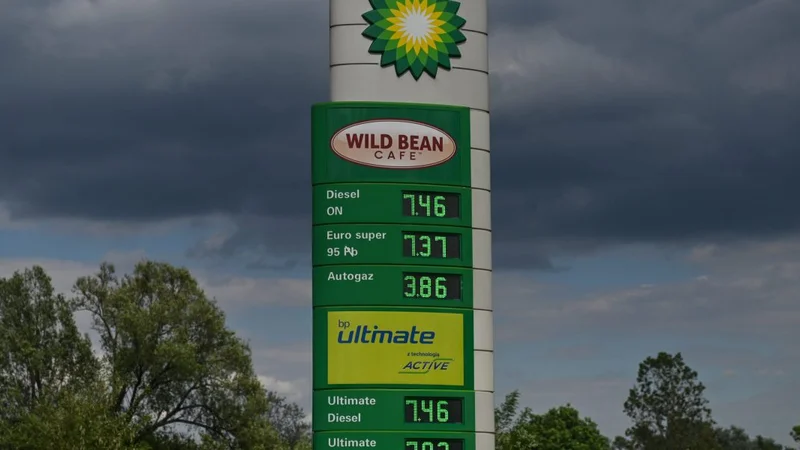
Image: Fortune AI
Main Takeaway
BP's Q1 profit soared past $6.4bn on the back of 60% crude spike triggered by Middle-East conflict, igniting calls for windfall taxes and share-buyback.
Jump to Key PointsSummary
BP posts $6.4bn Q1 profit, double last year
BP beat every analyst forecast on 28 April, revealing first-quarter profit that more than doubled to $6.4bn versus $2.6bn a year earlier, according to company filings cited by CNBC, the Wall Street Journal, and The Guardian. The British energy giant was the first of the oil majors to report, giving an early glimpse of the windfall headed to rivals ExxonMobil, Chevron, and ConocoPhillips when they post results next week. Nearly all of the jump traced to crude prices that surged roughly 60 percent after hostilities broke out between Iran and the US-led coalition in March, Fortune notes.
Pump pain spreads from California to Connecticut
While BP booked an estimated $30 million an hour, American drivers on the same day paid the highest gasoline prices in eight years, AAA data cited by Fortune and Upday show. Regular unleaded averaged $4.29 a gallon nationwide, with western states topping $5.50. Diesel, the backbone of trucking and farming, flirted with $5.40, adding immediate cost pressure on groceries and freight. Consumer advocates point out the asymmetry: prices at the pump rose within days of the conflict, yet wholesale crude has already slipped 8 percent from its peak while retail fuel has barely budged.
Trading desk delivers ‘exceptional’ gains
Management singled out its oil-trading unit for what CFO Murray Auchincloss called an “exceptional quarter,” language echoed in both the WSJ and Bloomberg dispatches. Traders capitalized on violent price swings between Brent, WTI, and Middle-East grades after Iranian exports fell by an estimated 1.5 million barrels a day. BP did not disclose the desk’s P&L, but analysts at Bernstein estimate the unit added at least $800 million above baseline expectations. Rivals such as Shell and TotalEnergies are expected to show similar trading upside when they report next week, though BP’s heavier tilt toward crude over natural gas likely gives it an edge this cycle.
Windfall-tax drumbeat grows louder
U.K. opposition parties and U.S. progressive lawmakers renewed calls for “excess profit” levies within hours of the earnings drop. The British Trades Union Congress labeled the figures “horrifying,” while Senator Sheldon Whitehouse re-introduced legislation to tax oil majors on windfall margins above pre-war levels. BP counters that it already pays an effective tax rate above 40 percent and that any additional levy would simply be passed through to consumers. Still, political risk is rising: the U.K. Treasury has asked the Office for Budget Responsibility to model a one-off 25 percent surcharge, according to the Independent.
Stock rallies ahead of buyback calculus
BP shares jumped 3.4 percent in pre-market trading on the headline beat, CNBC reports, extending year-to-date outperformance versus Exxon to 12 percentage points. Investors now expect the board to authorize a fresh $2.5 billion buyback when it meets next month, on top of the $1.75 billion already executed this year. Management hinted that shareholder returns will stay “front and center” but cautioned that upstream investment must also rise to replace sanctioned Iranian barrels. The company’s net debt ticked down to $22 billion, safely inside its $15–$25 billion target range.
What this means for the energy transition
Climate campaigners argue the war windfall should accelerate BP’s pivot to renewables, yet capital allocation tells a different story. Planned spending on low-carbon projects remains stuck at $2 billion for 2026, barely 15 percent of total capex. Meanwhile, BP revived two deep-water projects in the Gulf of Mexico that had been shelved at $60 oil. Analysts at Wood Mackenzie say every sustained $10 increase in Brent adds roughly $1.5 billion to BP’s annual free cash flow, giving management little incentive to speed the transition while hydrocarbons mint money.
What happens next
All eyes turn to Exxon and Chevron, whose results next week will confirm the scale of sector-wide windfalls. Traders will also parse OPEC+ meeting minutes due 4 May for any hint that Saudi Arabia will release spare capacity to cool prices. Domestically, the White House faces pressure to tap the Strategic Petroleum Reserve again, though officials privately say they prefer jawboning Gulf allies over draining emergency stocks. For consumers, relief at the pump likely waits until either a cease-fire or a coordinated SPR release breaks the market’s war premium.
Key Points
BP Q1 profit jumped to $6.4 billion, up 146 percent year-over-year.
Crude prices surged ~60 percent after the Iran conflict broke out in March.
U.S. gasoline hit multi-year highs above $4.29 while BP earned ~$30 million per hour.
Trading desk delivered “exceptional” gains from price swings after Iranian supply fell 1.5 mb/d.
Politicians renewed windfall-tax proposals; U.K. Treasury is modeling a 25 percent surcharge.
Questions Answered
BP reported $6.4 billion in first-quarter 2026 profit versus $2.6 billion in Q1 2025, a roughly 146 percent increase.
The outbreak of war between Iran and U.S.-led forces cut Iranian crude exports by an estimated 1.5 million barrels per day, tightening global supply and pushing Brent crude up about 60 percent.
No. BP was simply the first major to report; analysts expect similar windfalls when ExxonMobil, Chevron, Shell, and others release results over the next two weeks.
Yes. U.K. opposition parties and some U.S. lawmakers have revived calls for windfall-profit taxes, and the British Treasury is modeling a one-off 25 percent surcharge.
Prices at the pump have reached eight-year highs above $4.29 per gallon. Relief depends either on a cease-fire that restores Iranian supply or a coordinated release of strategic petroleum reserves.
Not so far. BP’s 2026 low-carbon capex budget remains flat at ~$2 billion, or roughly 15 percent of total spending, while upstream oil projects are being accelerated.
Source Reliability
33% of sources are highly trusted · Avg reliability: 69
Go deeper with Organic Intel
Simple AI systems for your life, work, and business. Each one includes copyable prompts, guides, and downloadable resources.
Explore Systems