Oil Shatters $110 Barrier as Brent Crude Hits Two-Year Peak
Image: Marketwatch
Main Takeaway
Brent crude leaps past $110/barrel, up 68% year-over-year, fueled by supply jitters and geopolitical risk.
Jump to Key PointsSummary
What just happened to oil prices
Brent crude jumped to $109.96 on April 28, 2026, a fresh 28-month high and a 3% single-day gain. West Texas Intermediate futures followed suit, piercing the psychological $100 mark for the first time since late 2024. The move caps a relentless climb: oil has added roughly $45 since the same day last year, a 68% surge. Daily volatility is back, yesterday’s 32-cent dip was erased by today’s $3.23 spike. Traders describe the tape as “buy-any-dip,” with overnight electronic volume running 40% above the 30-day average.
Why this matters for consumers and the Fed
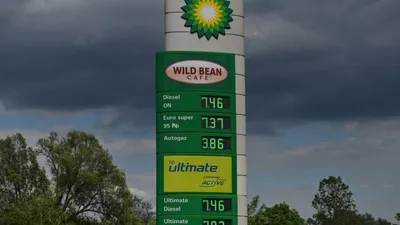
Every $10 rise in crude translates into a 25-30 cent jump at U.S. gas pumps within six weeks, according to AAA estimates. At current levels, the average household is on track to pay $1,200 more for fuel this year than in 2025. That stealth tax on wallets arrives as the Fed debates whether sticky inflation is cooling. Energy now makes up 4.8% of the CPI basket; a sustained $110-plus print could add 0.4 percentage points to headline inflation by summer. Atlanta Fed president Raphael Bostic warned last week that “oil shocks have a nasty habit of forcing our hand.”
The geopolitical fuse behind the rally
Three narratives are feeding the fire. First, Russia’s latest drone barrage on Ukrainian export terminals took 400k barrels/day of seaborne crude offline. Second, OPEC+ quietly floated a May 2026 rollover of voluntary cuts, dashing hopes of extra supply. Third, satellite imagery shows Iran’s floating storage at a two-year low, stoking fears Tehran could weaponize exports again. Add in renewed Red Sea attacks and insurance premiums for tankers have doubled since January. The risk premium embedded in Brent has ballooned from $5 to $15 in six weeks, per Goldman Sachs flow data.
What happens next
Street consensus has shifted markedly. J.P. Morgan lifted its Q3 Brent target to $118; Citi sees $125 if Russia sanctions tighten. Options markets now price a 20% chance of $130 oil by July. The White House is dusting off releases from the Strategic Petroleum Reserve, but stocks are 40% below 2022 levels. Meanwhile, U.S. shale firms remain disciplined, with rig counts stuck near 2021 lows. Translation: supply elasticity is gone, and any fresh disruption will punch straight through to prices at the pump.
Key Points
Brent crude hit $109.96 on April 28, up 68% from a year earlier.
WTI futures crossed $100/barrel for the first time since 2024.
Gasoline prices expected to rise 25-30 cents per gallon within six weeks.
Geopolitical risks add $15 risk premium, highest since 2022.
U.S. Strategic Petroleum Reserve at 40-year lows limits policy response.
Questions Answered
A confluence of Russian export outages, OPEC+ production cuts, and renewed Red Sea attacks removed roughly 400k barrels/day of supply and doubled tanker insurance costs, pushing the geopolitical risk premium to $15.
AAA projects a 25-30 cent per gallon increase within six weeks; the average U.S. household could pay $1,200 more for fuel this year compared with 2025.
Sticky energy inflation could add 0.4 percentage points to CPI. Atlanta Fed president Bostic warned oil shocks may ‘force our hand,’ making rate cuts less likely near-term.
J.P. Morgan sees $118 Brent in Q3; Citi models $125 under tighter Russia sanctions. Options markets assign a 20% probability of $130 by July.
Source Reliability
50% of sources are trusted · Avg reliability: 60
Go deeper with Organic Intel
Simple AI systems for your life, work, and business. Each one includes copyable prompts, guides, and downloadable resources.
Explore Systems