Tesla and SpaceX Boards Explore $3.5 Trillion Merger as Musk Faces Governance and Valuation Tests
Image: Fortune AI
Main Takeaway
Tesla and SpaceX boards are studying a potential merger that would create a roughly $3.5 trillion company, with Elon Musk backing the idea while recusing himself from talks.
Jump to Key PointsSummary
Boards examine an unprecedented deal
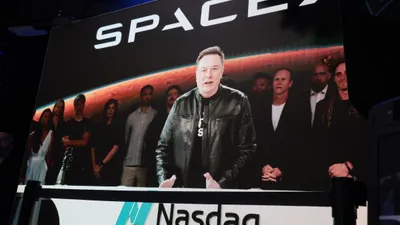
Tesla and SpaceX boards are studying a combination that would create a company valued at roughly $3.5 trillion, making it the largest corporate merger ever discussed at that scale. Independent directors at both companies formed special committees to examine the proposal, while Elon Musk endorsed the idea during SpaceX’s third-quarter earnings call.
Musk said he cannot participate in negotiations because he is a conflicted party. The structure, valuation, ownership terms and timeline remain unsettled, and the board review does not guarantee that a transaction will proceed. Bloomberg described the combination as an openly supported possibility, while Fortune characterized the talks as a test of Musk’s influence over two companies with separate shareholders and businesses. The New York Times also identified the proposal as Musk’s next major corporate move.
Why Musk wants the combination
The proposed merger would bring Tesla’s electric-vehicle, battery and artificial-intelligence operations together with SpaceX’s launch, satellite and space businesses under one corporate structure. Musk has framed the companies as strategically connected, particularly through AI, robotics, autonomous systems and large-scale infrastructure. SpaceX’s growing profitability and the company’s expected public-market valuation have given the idea a stronger financial foundation than earlier speculation.
The transaction would also consolidate Musk’s expanding corporate empire after SpaceX’s public offering pushed his paper wealth above $1 trillion, Fortune reported. Analysts are assessing whether shared technology, capital and engineering talent would justify the complexity of combining businesses with very different regulatory profiles. Pierre Ferragu of New Street Research called the possibility “extremely tangible,” according to Bloomberg. Ark Invest has placed a $2.7 trillion value on the earnings opportunity from a combined company, according to Yahoo Finance.
Valuation drives the debate
A $3.5 trillion valuation would place the merged company among the world’s largest publicly traded businesses, but the number depends on how investors value SpaceX’s private-market shares and Tesla’s public equity. SpaceX’s launch activity, satellite network and profitability support a high valuation, while Tesla’s results remain tied to vehicle demand, margins, autonomy efforts and energy products.
That mix creates a difficult exchange-ratio question. Tesla investors would need to determine how much of the combined company they receive for their shares, and SpaceX holders would need to assess whether public-market exposure adds value or imposes a discount. Cathie Wood’s Ark Invest has offered a separate $2.7 trillion estimate, showing how widely outcomes could vary depending on assumptions about growth and synergies. Finance-focused coverage has treated the deal as a valuation exercise as much as a strategic proposal.
Governance becomes the central test
The boards’ use of independent special committees places governance at the center of the proposed merger. Musk controls or strongly influences both companies, so directors must demonstrate that negotiations protect outside shareholders rather than simply expand his control. His stated recusal addresses one conflict, but it does not remove the broader questions surrounding influence, board independence and deal approval.
Fortune highlighted the pressure from pension funds, workplace-safety data and legal scrutiny around Musk’s companies. A merger would also require extensive disclosures, shareholder votes and regulatory review. The New York Times framed the proposal as a major test of whether Musk’s unusually broad authority can coexist with conventional public-company safeguards. Any transaction would face scrutiny over fairness, executive incentives and the treatment of investors who do not share Musk’s long-term plans.
The businesses bring different risks
Tesla and SpaceX operate in sectors with distinct economics and oversight, making integration difficult even if the ownership structure is attractive. Tesla sells vehicles, batteries and energy systems into competitive consumer markets. SpaceX depends on launch contracts, satellite connectivity, aerospace engineering and government relationships, with profitability shaped by deployment schedules and capital spending.
A merger could give Tesla access to SpaceX engineering and infrastructure, while SpaceX could gain a broader public-equity base and additional financing options. It could also expose each business to risks created by the other. Investors would have to value a company spanning autos, AI, robotics, communications and spaceflight, while regulators would examine competition, national-security issues and related-party governance. Coverage from Bloomberg, Haystack and Fortune has tied the proposal to SpaceX’s stronger financial position and Musk’s wider strategy across industries.
What happens next
The immediate next step is a review by the special committees, followed by decisions on valuation, transaction structure and whether to recommend a formal agreement. Shareholders would then face a detailed vote process, while regulators and government customers would assess the consequences of combining a major automaker with a critical aerospace and satellite provider.
The proposal remains exploratory rather than an announced transaction. Market reaction will focus on whether the committees can establish an arm’s-length process and whether the expected benefits exceed the financial and governance risks. A failed review would leave Tesla and SpaceX separate, but the discussion has already highlighted how closely Musk’s companies are linked in investor expectations, capital allocation and strategic planning.
Key Points
Tesla and SpaceX boards are studying a potential merger valued at roughly $3.5 trillion.
Elon Musk backs the combination but says conflicts prevent him from participating in negotiations.
Independent board committees must resolve valuation, exchange ratios, governance and shareholder approval.
SpaceX profitability and its public-market valuation strengthen the strategic case for combining businesses.
Tesla and SpaceX would unite automotive, AI, energy, satellite and aerospace operations under one company.
Questions Answered
Tesla and SpaceX are studying a possible merger, but no transaction has been agreed. Independent committees are reviewing the proposal before any formal deal, shareholder vote or regulatory process.
A Tesla-SpaceX combination is valued at roughly $3.5 trillion based on current market estimates. Ark Invest has discussed a separate $2.7 trillion valuation tied to the combined company’s earnings opportunity.
Elon Musk supports a Tesla-SpaceX merger because the companies share interests in artificial intelligence, robotics, engineering talent and large-scale infrastructure. The deal would combine Tesla’s vehicles and energy operations with SpaceX’s launch and satellite businesses.
Elon Musk is excluded from Tesla-SpaceX merger negotiations because he is a conflicted party with influence over both companies. Independent directors formed special committees to evaluate the proposal and protect outside shareholders.
Tesla and SpaceX special committees will review the transaction’s structure, valuation and fairness. A formal agreement would still require shareholder approval and regulatory scrutiny.
Source Reliability
38% of sources are established · Avg reliability: 67
Go deeper with Organic Intel
Simple AI systems for your life, work, and business. Each one includes copyable prompts, guides, and downloadable resources.
Explore Systems