SpaceX’s First Public Earnings Report Puts AI Revenue Ahead of Starlink Amid Rising Infrastructure Costs
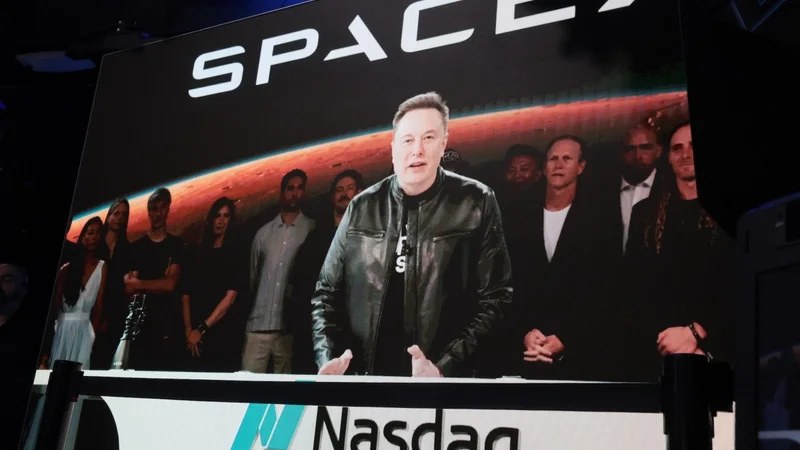
Image: TechCrunch AI
Main Takeaway
SpaceX reported $14.6 billion in third-quarter revenue as AI income reached $7.6 billion, surpassing Starlink while heavy infrastructure spending pressured investors.
Jump to Key PointsSummary
SpaceX’s AI business takes the lead
SpaceX’s first earnings report as a public company showed artificial intelligence becoming its largest reported growth engine. Third-quarter revenue reached $14.6 billion, up 161% from a year earlier and above the $12.86 billion analyst consensus cited by Fortune. AI revenue nearly tripled to $7.6 billion, surpassing Starlink for the first time, according to the same account.
The shift marks a sharp change in how investors value the company. SpaceX built its identity around launch services and satellite connectivity, but data-center leases, Grok agents and related computing activity now account for 52% of income in the TechCrunch account. Reuters, CNBC and Lufkin Daily News also described the results as an earnings beat after the initial public offering.
Strong revenue meets a thin profit
SpaceX returned to operating profitability in the quarter, but the bottom line remained narrow. Operating income reached $2.79 billion, compared with an operating loss of $541 million in the second quarter, while net income totaled $4.4 million, or 35 cents per share. The company posted a $5.5 billion loss a year earlier, Fortune reported.
The contrast between operating income and net income puts the company’s AI expansion under scrutiny. Revenue growth is accelerating, yet financing, depreciation and other costs leave little profit after expenses. Reports from Finance Yahoo, TechBuzz and CNBC centered on the same tension: SpaceX beat revenue expectations while spending on AI infrastructure rose sharply.
Computing spending drives the expansion
SpaceX’s AI growth is tied to physical infrastructure as much as software. The company is building data-center capacity and selling computing access, while Grok agents provide a software and services layer. Fortune also linked the results to the acquisition of Cursor and reported commercial arrangements involving Anthropic and Google.
That mix gives SpaceX several routes to recurring revenue, including computing leases, enterprise AI services and agent subscriptions. Finance Yahoo’s earnings preview emphasized annual recurring revenue as an increasingly important measure, while The Motley Fool focused on analyst projections for the AI business through 2030. The model resembles a vertically integrated technology platform: SpaceX supplies capital and infrastructure, while affiliated and partner AI products create demand for it.
Investors are weighing cost against scale
The market reaction highlighted a central concern: AI revenue growth requires enormous capital spending before it produces durable cash flow. SpaceX stock reached a new all-time low in one Finance Yahoo headline, while TechBuzz described a decline tied to surging AI infrastructure costs. Those reports frame the earnings beat as a test of investor patience rather than a clean victory.
The first public results therefore delivered two competing signals. Revenue growth, operating income and AI demand exceeded expectations, according to Fortune, Reuters and Lufkin Daily News. At the same time, the spending required to build computing capacity raises questions about margins, debt, depreciation and the pace at which leased infrastructure reaches full utilization. The New York Times likewise highlighted soaring AI spending in its account of the results.
Starlink’s role is being redefined
Starlink remains a major business, but AI has become the more prominent growth story in SpaceX’s first public-company results. AI revenue of $7.6 billion exceeded Starlink revenue in the quarter, according to Fortune, changing the balance between the company’s connectivity business and its computing operations.
That shift matters because Starlink has provided the clearest recurring-revenue narrative around SpaceX. AI introduces a larger addressable market, but it also places the company in direct competition for data-center customers, chips, electricity and skilled employees. Nvidia benefits from infrastructure demand, while Microsoft, Google and Anthropic face a stronger infrastructure supplier tied to Elon Musk’s AI ecosystem. The result makes SpaceX both a customer and competitor across several parts of the AI stack.
What investors will watch next
Future quarters will show whether SpaceX can turn AI scale into sustained earnings. Investors will focus on annual recurring revenue, data-center utilization, capital expenditure, operating margins and the contribution of Grok agents. The next reports will also clarify how much revenue comes from external customers, affiliated businesses and reported partnerships.
The IPO gives SpaceX a public valuation and a recurring reporting obligation at the moment its business is changing fastest. Reuters, CNBC and Finance Yahoo positioned the earnings release as an early benchmark for that transition, while The Motley Fool’s 2030 projections point to a much larger AI opportunity if spending produces durable demand. SpaceX’s next challenge is to prove that its AI infrastructure can grow faster than its costs.
Key Points
SpaceX reported $14.6 billion in third-quarter revenue as AI income surpassed Starlink for the first time.
SpaceX’s AI revenue nearly tripled to $7.6 billion, driven by computing leases, Grok agents and data centers.
SpaceX returned to operating profitability while net income remained thin after substantial infrastructure-related costs.
Investors focused on rising AI capital expenditures despite revenue and operating-income results above expectations.
SpaceX’s public-company transition will make recurring revenue, utilization and AI margins central investor metrics.
Questions Answered
SpaceX reported $7.6 billion in AI revenue for the third quarter. That figure nearly tripled year over year and exceeded Starlink revenue for the first time.
SpaceX beat revenue expectations in its first earnings report after the IPO. The company reported $14.6 billion in third-quarter revenue, above the $12.86 billion analyst consensus cited in coverage.
SpaceX stock fell because investors focused on rapidly rising AI infrastructure spending. The market is weighing strong revenue growth against capital requirements, margin pressure and the time needed for data centers to produce returns.
SpaceX’s AI business is driven by data centers, computing leases, Grok agents and related software activity. Coverage also linked the expansion to the Cursor acquisition and reported arrangements involving Anthropic and Google.
SpaceX investors will watch annual recurring revenue, data-center utilization, capital spending and operating margins. They will also assess whether external AI demand is growing fast enough to justify the company’s infrastructure costs.
Source Reliability
44% of sources are highly trusted · Avg reliability: 76
Go deeper with Organic Intel
Simple AI systems for your life, work, and business. Each one includes copyable prompts, guides, and downloadable resources.
Explore Systems