Super Micro Co-Founder Indicted in $2.5B Nvidia GPU Smuggling Ring to China
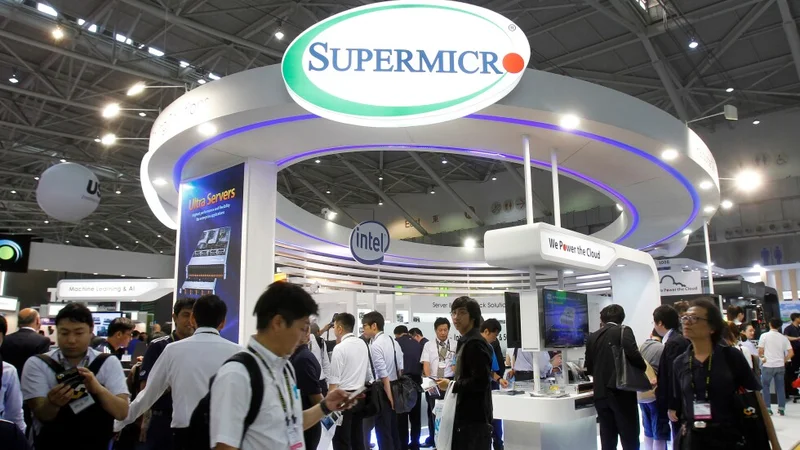
Image: Apnews
Main Takeaway
US unseals sweeping indictment against Super Micro Computer co-founder Wally Liaw and two others for allegedly diverting $2.5B in Nvidia-powered servers.
Jump to Key PointsSummary
Who was charged and what are the allegations?
The U.S. Attorney for the Southern District of New York unsealed a 23-count indictment Thursday charging Yih-Shyan "Wally" Liaw, 68, a co-founder of Super Micro Computer Inc.; Ruei-Tsang "Steven" Chang, a company employee; and Ting-Wei "Willy" Sun, a contractor. According to the charging papers, the trio orchestrated a six-year scheme that shipped more than $2.5 billion worth of U.S.-assembled servers containing export-controlled Nvidia GPUs — including Blackwell chips — to Chinese customers in violation of Commerce Department licensing requirements. Prosecutors allege they used shell companies, falsified end-user certificates, and even employed a hairdryer to swap serial-number stickers between real and dummy hardware to mask the ultimate destination.
How did the alleged smuggling operation work?
Court filings describe a textbook sanctions-busting playbook. Liaw allegedly leveraged his board seat and co-founder status to secure priority allocation of Nvidia GPUs during periods of severe shortage. Servers were first built at Super Micro’s California facilities, then routed through intermediaries in Hong Kong and Singapore. Paper trails showed the gear bound for “hypothetical third-country data centers,” but the indictment claims the racks ultimately landed in state-linked Chinese AI labs. To cover tracks, the group allegedly recycled serial numbers onto older, non-restricted units that were briefly powered on for customs photos before being scrapped. One email cited by prosecutors has Chang telling a logistics partner to “make the paperwork boring.”
What happened to Super Micro’s stock and governance?
Super Micro shares cratered 33% in after-hours trading the moment the indictment dropped, erasing roughly $9 billion in market value. By Friday morning Liaw had tendered his resignation from the board, which the company accepted “effective immediately.” In a terse statement, Super Micro stressed that the firm itself was not named as a defendant, that the alleged conduct occurred “outside the scope of employment,” and pledged full cooperation with investigators. Analysts at Morgan Stanley and JPMorgan both downgraded the stock, citing “regulatory overhang” and potential loss of Nvidia allocation priority.
Is this Super Micro’s first export-control brush?
Hardly. Fortune dredged up a 2010 deferred-prosecution agreement in which Super Micro paid $150,000 for illegally shipping server gear to Iran. More recently, the company disclosed in a 2024 10-K that it had received subpoenas from the Bureau of Industry and Security regarding “certain sales to customers in China.” Thursday’s charges suggest those earlier inquiries may have been connected to the same supply-chain routes. The pattern has lawmakers asking whether the SEC and Commerce Department were asleep at the switch while $2.5B in controlled tech walked out the door.
What penalties do the defendants face?
Each defendant faces maximum sentences of 20 years per count of violating the Export Control Reform Act, plus conspiracy and money-laundering charges. Prosecutors are also seeking asset forfeiture of at least $2.5 billion, including real estate in Silicon Valley and Taiwan. Liaw, a Taiwanese national with permanent U.S. residency, was arrested in San Jose; Chang and Sun remain at large and are considered flight risks. The DOJ’s export-enforcement chief told reporters the case “should serve as a wake-up call” to anyone tempted to treat national-security controls as a compliance checkbox.
How will this affect Nvidia and the broader AI supply chain?
Nvidia itself is not accused of wrongdoing, but the optics sting. The indictment repeatedly references “priority allocation” of Blackwell GPUs, raising questions about how aggressively Nvidia polices its distribution network. Chip analysts at SemiWiki note that if Super Micro loses its “preferred partner” status, Dell and HPE stand to scoop up the vacated allocation. Meanwhile, Chinese AI labs that depended on the diverted supply may face acute shortages just as domestic alternatives from Huawei and Baidu are ramping. The ripple effects could slow China’s model-training timelines by 6–12 months, according to Bernstein Research.
What comes next for regulators and the industry?
Expect Congress to haul Commerce and SEC officials for hearings on how a single board member allegedly moved $2.5B in controlled tech without detection. Industry lobbyists are already bracing for tighter end-user verification rules and possible expansion of the Entity List. Super Micro’s board has hired Kirkland & Ellis to run an independent internal probe; findings are due within 90 days. For other server makers, the message is blunt: treat export compliance as a C-suite issue or risk becoming the next headline.
Key Points
Co-founder Wally Liaw and two associates indicted for $2.5B Nvidia GPU smuggling to China over six years.
Scheme used shell firms, fake end-user docs, and serial-number swapping to evade US export controls.
Super Micro shares collapsed 33% and Liaw resigned from the board, though company itself is not charged.
Nvidia faces scrutiny over distributor oversight; Dell and HPE may gain lost Super Micro allocations.
Defendants face 20-year max prison terms plus $2.5B forfeiture; Congress likely to tighten export rules.
Questions Answered
No. The company issued a statement saying it was informed of the indictments against individuals and that the firm itself was not named as a defendant.
The indictment mentions export-controlled GPUs including Blackwell-generation accelerators, but does not specify exact SKUs. The servers contained high-performance AI chips subject to Commerce Department licensing requirements.
According to prosecutors, they used shell companies in Hong Kong and Singapore, falsified end-user certificates showing third-country destinations, and swapped serial-number stickers between real and dummy servers to deceive customs.
Each defendant faces a maximum of 20 years in prison per count of violating the Export Control Reform Act, plus conspiracy and money-laundering charges, and at least $2.5 billion in asset forfeiture.
Potentially. If Super Micro loses its ‘preferred partner’ status, Nvidia could reallocate supply to Dell, HPE, and other OEMs, tightening availability for Chinese customers already under sanctions.
No. Fortune found a 2010 deferred-prosecution agreement over illegal shipments to Iran, and the company disclosed in its 2024 10-K that it had received Commerce Department subpoenas regarding China sales.
Source Reliability
54% of sources are highly trusted · Avg reliability: 83
Go deeper with Organic Intel
Simple AI systems for your life, work, and business. Each one includes copyable prompts, guides, and downloadable resources.
Explore Systems