Spirit Airlines Collapses After Trump Bailout Talks Collapse
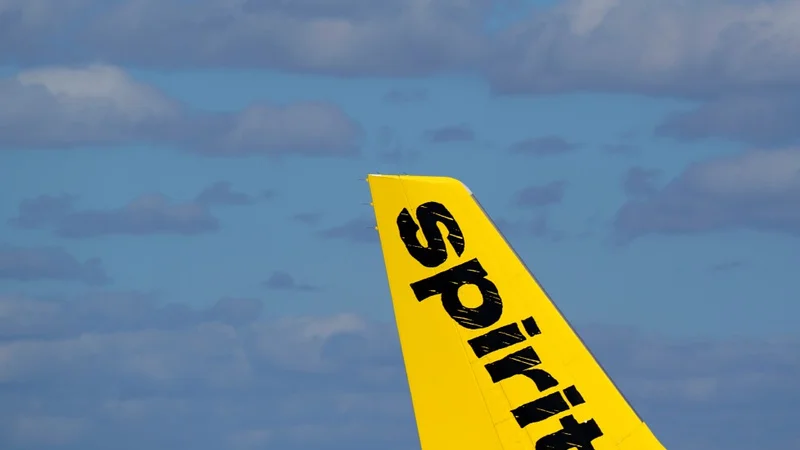
Image: Apnews
Main Takeaway
Spirit Airlines shuts down after 34 years as Trump's $500M taxpayer bailout talks fail, leaving 17,000 workers jobless and travelers stranded.
Jump to Key PointsSummary
What just happened
Spirit Airlines ceased operations at 3 a.m. EST Saturday after failing to secure a $500 million taxpayer bailout from the Trump administration. The ultra-low-cost carrier, known for its bright yellow planes and $9 fares, announced an "orderly wind-down" effective immediately. Last flight 1833 from Detroit landed in Dallas just after midnight, marking the end of 34 years in business.
The collapse came despite weeks of negotiations where President Trump publicly floated a government takeover with plans to resell Spirit once oil prices dropped. A final proposal was delivered Friday, but talks crumbled within hours. The airline's website now simply reads: "All flights have been canceled. Customer service is no longer available."
What the collapse means for travelers
Roughly 200,000 passengers woke up Saturday to canceled flights with no rebooking help. Spirit's refund-only approach leaves travelers scrambling to find last-minute alternatives, often at triple the original fare. The carrier's no-frills model served price-sensitive flyers who now face limited options.
Budget travel takes a significant hit. Spirit's disappearance removes a key pressure valve that kept legacy carriers' prices in check. Analysts expect immediate 15-25% fare increases on competing routes. For many Americans, Spirit's $19 cross-country flights were their only realistic travel option.
The failed bailout negotiations
Trump initially pitched the bailout as patriotic job-saving in January, but negotiations dragged for months. The $500 million package would have given taxpayers majority ownership, with plans to flip the airline once fuel costs normalized. Treasury officials reportedly balked at the price tag and lack of turnaround strategy.
Sources close to the talks say Spirit's second bankruptcy in two years made the deal politically toxic. The airline burned through $300 million in government payroll support during the pandemic, only to fail again. Trump's "only if it's a good deal" stance hardened as oil stayed above $80/barrel.
Impact on the airline industry
Spirit's exit shrinks the ultra-low-cost carrier market by 25% overnight. Frontier, Allegiant, and Sun Country see immediate stock bumps as competitors vanish. Legacy carriers like Delta and American gain pricing power on 400+ routes where Spirit was the cheapest option.
The ripple effects hit aircraft lessors hardest. Spirit leased 200 Airbus jets that now flood an already saturated market. Engine makers GE and Pratt & Whitney lose a major customer. Airport concession revenues crater at Spirit hubs like Fort Lauderdale and Las Vegas.
What happens to Spirit's 17,000 workers
Layoffs begin Monday with no severance for most. Pilots and flight attendants face a brutal job market where major carriers are already staffed up. Mechanics and ground crews have better prospects, but 80% will likely leave aviation entirely.
The Transport Workers Union calls it "devastating" for Florida's economy, where Spirit was a top-10 employer. Federal retraining funds are available, but processing takes months. Many workers learned the news via social media as Spirit's internal communications collapsed.
The political fallout
Trump's failure to close the Spirit deal becomes immediate campaign fodder. Democrats blast "reckless corporate socialism" that wasted months on a doomed bailout. Republicans split between free-market purists and job-protection advocates in swing-state Florida.
The episode complicates Trump's business-friendly image. His 2016 airline bailout promises now look hollow. Florida senators who lobbied hardest for the deal face angry constituents. The White House pivots to blaming "unreasonable union demands" that made the airline unviable.
What this signals for future bailouts
Spirit's collapse sets a precedent against airline bailouts. Treasury officials privately say future requests face much higher bars. The "too big to fail" argument loses steam when a major carrier shuts down with minimal economic disruption.
Other struggling airlines take note. Frontier accelerates merger talks with Spirit's assets. Regional carriers like Mesa restructure debt rather than seek federal help. The message from Washington: taxpayers won't endlessly subsidize broken business models.
The end of ultra-cheap flying
Spirit's demise marks the end of an era where flying cost less than driving. The airline's $9 base fares forced competitors to match prices they couldn't sustain. Without Spirit's pressure, industry analysts predict domestic fares will rise 20-30% within a year.
The collapse particularly hurts leisure travelers and visiting families. Spirit served 40 million passengers annually, many first-time flyers. Alternative bus service FlixBus reports 300% booking surges on former Spirit routes. America's brief experiment with European-style budget aviation appears over.
Key Points
Spirit Airlines shut down Saturday after 34 years, canceling all flights effective immediately
Trump administration's $500M taxpayer bailout talks collapsed Friday despite "final proposal" delivery
17,000 workers lose jobs with no severance as airline enters liquidation
200,000 passengers stranded with only refunds offered, no rebooking assistance
Ultra-low-cost market shrinks 25%, expected 20-30% fare increases on former Spirit routes
Questions Answered
Yes. Spirit's website states all customers will receive automatic refunds to original payment methods, though processing may take 7-10 business days.
Treasury officials reportedly rejected the $500 million price tag, citing Spirit's second bankruptcy and lack of viable turnaround plan amid high oil prices.
Fort Lauderdale, Las Vegas, Orlando, Dallas, and Atlantic City lost the most flights, as these were Spirit's primary hubs.
Spirit's 200 leased Airbus jets will enter the secondary market, but with oversupply, expect fire-sale prices rather than immediate acquisition.
Frontier and Allegiant face less immediate risk but may consolidate. The ultra-low-cost model itself is under pressure from rising costs.
Bank cards: 3-5 days. Debit cards: 5-7 days. Checks/money orders: 7-10 days. No expedited processing available.
Source Reliability
46% of sources are highly trusted · Avg reliability: 77
Go deeper with Organic Intel
Simple AI systems for your life, work, and business. Each one includes copyable prompts, guides, and downloadable resources.
Explore Systems