Citadel's Rubner Calls Tech Selloff a Buy Signal as AI Demand Holds
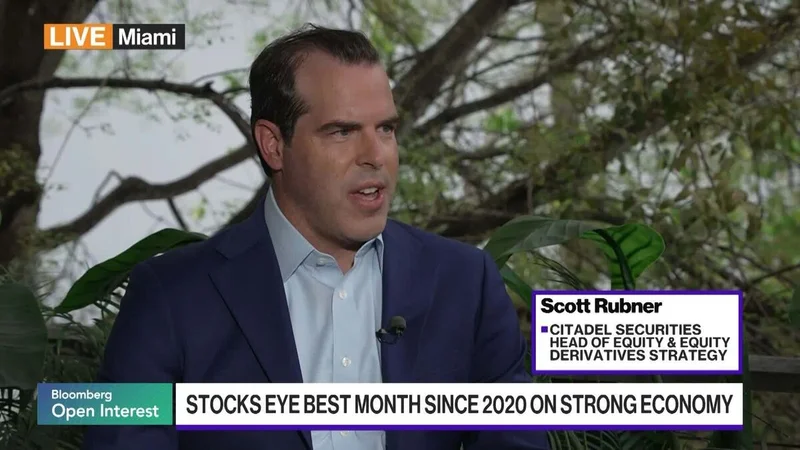
Image: Bloomberg AI
Main Takeaway
Citadel Securities strategist Scott Rubner sees recent tech weakness as oversold, with AI spending intact and retail capitulation creating opportunity.
Jump to Key PointsSummary
The core argument
Scott Rubner, head of equity and equity derivatives strategy at Citadel Securities, is telling clients that the recent tech selloff represents a buying opportunity rather than a structural breakdown. His view hinges on a simple observation: AI spending and demand haven't actually declined despite the market's panic. According to Bloomberg's coverage, Rubner specifically points to US megacap tech stocks as oversold given the fundamentals remain intact.
This isn't just theoretical positioning. Rubner's analysis comes from Citadel's unique vantage point as a dominant market maker that sees real-time flow data from both institutional and retail traders. When he says AI demand is stable, he's looking at actual order flow and client positioning, not just survey data or earnings calls.
What retail capitulation signals
The timing matters here. UK Finance Yahoo reports that retail investors turned net sellers of US equities and options last week on Citadel's platform, marking only the 19th such instance since January 2020. Net notional spending by retail investors fell 55% in March from February and is down 70% from January's peak. This kind of retail capitulation historically marks local bottoms rather than continued downside.
Rubner's data shows individual traders are selling into weakness, creating what he calls a classic FOMO-to-fear flip. The same investors who were piling into tech stocks during the AI boom are now dumping them indiscriminately. This creates the exact conditions that sophisticated investors like Citadel's clients seek to exploit.
Why AI spending remains the key metric
Despite the market's recent skepticism about AI valuations, Rubner emphasizes that actual spending on AI infrastructure and applications hasn't shown signs of weakening. This directly contradicts the narrative that the AI trade is unraveling due to overspending or diminishing returns. His view aligns with recent enterprise AI adoption trends showing continued budget increases.
The distinction is crucial. While AI stock prices have corrected significantly, the underlying business drivers haven't. Companies continue to allocate increasing portions of their tech budgets to AI capabilities, creating a disconnect between fundamentals and pricing that Rubner sees as temporary.
Market mechanics behind the call
Citadel's position as a market maker gives Rubner unique insight into how positioning drives price action. He notes that lower volatility expectations are actually supportive for stocks going forward, as the VIX has compressed from recent highs. This creates a technical backdrop where forced selling pressure diminishes and natural buyers can reassert control.
The firm's flow data also shows institutional clients are starting to nibble at oversold tech names, suggesting the smart money is beginning to position for a reversal. This institutional accumulation typically precedes broader market recoveries by several weeks, making Rubner's timing particularly noteworthy.
What happens next for investors
Rubner's framework suggests investors should focus on the megacap tech names that have been hit hardest during this selloff, particularly those with clear AI revenue exposure. His view is that the market has conflated short-term volatility with long-term fundamentals, creating opportunities for patient capital willing to look 6-12 months ahead.
For retail investors, the message is uncomfortable but clear: the same crowd that was buying tech at 2025 peaks is now selling at 2026 lows. This pattern repeats across market cycles, and Rubner's data suggests this instance won't be different. The key is distinguishing between temporary sentiment shifts and actual business deterioration, with AI spending serving as the crucial differentiator.
Key Points
Scott Rubner sees recent tech weakness as oversold with AI spending and demand remaining stable
Retail investors recorded only their 19th net selling week since 2020, creating contrarian opportunity
Net retail spending down 70% from January peak, historically marking local market bottoms
Citadel's market-making data shows institutional clients starting to accumulate oversold tech names
Rubner emphasizes megacap tech stocks with clear AI revenue exposure as primary beneficiaries
Questions Answered
As a dominant market maker, Citadel Securities sees real-time flow data from both institutional and retail clients, giving them unique insight into positioning and sentiment shifts before they're reflected in prices.
While AI stock prices have corrected significantly, actual corporate spending on AI infrastructure and applications hasn't declined, creating a temporary disconnect that Rubner sees as a buying opportunity.
According to Citadel's data, retail investor net selling has occurred only 19 times since 2020, with such episodes historically marking local market bottoms rather than continued downside pressure.
Rubner focuses on US megacap tech stocks with clear AI revenue exposure, suggesting the selloff has been indiscriminate across names with solid AI fundamentals versus those with speculative exposure.
Rubner's framework looks 6-12 months ahead, suggesting the current disconnect between price and fundamentals is temporary and will resolve as AI spending data continues to validate business models.
Source Reliability
50% of sources are trusted · Avg reliability: 61
Go deeper with Organic Intel
Simple AI systems for your life, work, and business. Each one includes copyable prompts, guides, and downloadable resources.
Explore Systems