Big Tech's $2 Trillion AI Infrastructure Bet Sparks Record Debt Wave
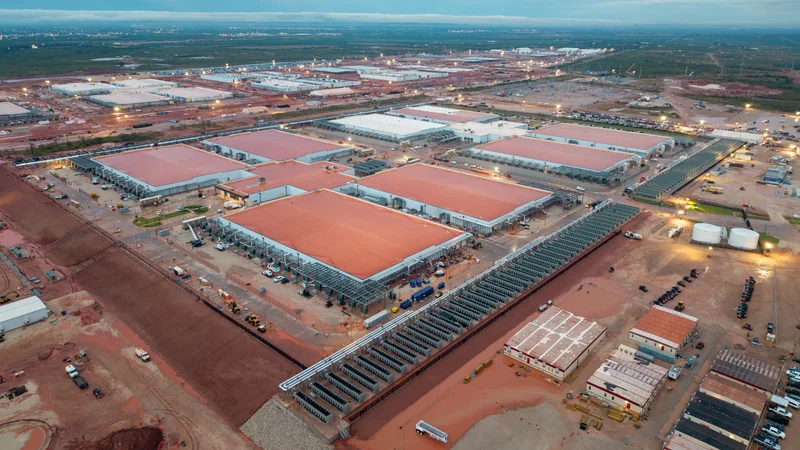
Image: Cnbc
Main Takeaway
Amazon, Meta, Google, and OpenAI are borrowing unprecedented sums to build AI data centers, reshaping America's landscape and corporate balance sheets.
Jump to Key PointsSummary
The scale of Big Tech's borrowing spree
Amazon, Meta, and Google have launched massive borrowing campaigns to fund their AI infrastructure ambitions, marking an unprecedented corporate debt wave tied directly to artificial intelligence expansion. According to Bloomberg, these tech giants are tapping bond markets at record levels to finance data center construction, chip procurement, and power grid investments. The numbers are staggering: OpenAI's Stargate project alone represents $850 billion in planned infrastructure spending across multiple sites, with each facility costing approximately $50 billion to build. This represents nearly half of the $2 trillion global AI infrastructure surge that HSBC now forecasts through 2027. The debt financing marks a fundamental shift from Big Tech's traditional cash-rich operations to highly leveraged infrastructure plays reminiscent of industrial giants from previous eras.
Why data centers now cost $50 billion each
The economics of AI infrastructure have fundamentally changed. Each new data center isn't just a warehouse of servers anymore, they're entire cities dedicated to computation. CNBC reports from Abilene, Texas show Stargate's construction footprint employs 6,000 workers daily, more people than OpenAI's entire payroll. These facilities require their own power substations, cooling systems that rival municipal water treatment plants, and security infrastructure that approaches military-grade. The cost inflation stems from scarce resources: advanced chips from Nvidia, specialized cooling equipment, and the massive electrical infrastructure needed to power AI training runs that consume as much energy as small nations. Supply chain bottlenecks and geopolitical chip restrictions have turned every component into a bidding war, with tech giants willing to pay whatever it takes to secure capacity.
How this changes corporate finance forever
Big Tech's traditional advantage was always its cash generation, companies like Google and Meta historically funded growth from operations. That playbook is dead. Reuters notes these companies are now behaving more like telecom giants in the 1990s or railroad companies in the 1800s, taking on massive debt loads to build infrastructure that may not generate returns for years. The shift has credit rating agencies scrambling to understand business models where capital expenditures exceed annual revenues. Bond investors are essentially funding an arms race with uncertain winners, betting that whoever builds the biggest infrastructure moat will eventually dominate AI services. This creates a new risk profile for tech stocks: instead of asset-light software margins, investors now own highly leveraged industrial companies with massive fixed costs and decade-long payback periods.
The geographic transformation of America
CNBC's on-the-ground reporting reveals how AI infrastructure is literally reshaping the American landscape. West Texas, previously known for oil fields and cattle ranching, is becoming the silicon valley of AI training. The environmental impact is visible: orange-red dust from construction clouds the air, while massive water requirements strain local resources. These aren't isolated incidents, similar transformations are happening across rural America as tech companies seek cheap land, abundant power, and permissive zoning for their data center cities. Small towns are becoming company towns again, this time for AI giants rather than steel mills. The social implications extend beyond economics: local infrastructure, housing markets, and political power structures are all bending to serve the needs of trillion-dollar tech companies building their AI empires.
What happens when the music stops
The borrowing boom creates a dangerous game of musical chairs. Bloomberg's analysis suggests these debt levels assume AI revenue will materialize fast enough to service interest payments, but there's no guarantee the market will develop as projected. If AI adoption slows or competitive dynamics shift, companies could be stuck with hundreds of billions in debt funding infrastructure that becomes obsolete. The risk compounds because everyone's building simultaneously, creating potential oversupply just as demand might peak. Credit markets are already showing signs of strain, with bond spreads widening for the most indebted tech companies. The nightmare scenario: a wave of defaults that could make the telecom meltdown of 2001 look quaint, potentially triggering broader financial contagion across markets that have come to view Big Tech as a safe haven.
What this means for the next decade
This infrastructure build-out will define the next ten years of technology and finance. The companies that successfully deploy their borrowed billions will create moats so deep that competitors may never catch up. But the debt also creates new vulnerabilities: rising interest rates could crush highly leveraged tech giants just as they're most exposed. We're watching the transformation of software companies into infrastructure utilities, with all the regulatory scrutiny and financial complexity that entails. The winners will likely be those who can monetize their AI investments fastest, probably through enterprise services rather than consumer products. The losers risk becoming the next-generation AT&T or WorldCom, saddled with debt from infrastructure that never generated expected returns. Either way, the era of asset-light, cash-rich tech companies is definitively over.
Key Points
Big Tech has shifted from cash-rich operations to taking on massive debt for AI infrastructure, with total planned spending reaching $2 trillion globally
Individual AI data centers now cost $50 billion each, transforming tech companies from asset-light software businesses into highly leveraged industrial giants
OpenAI's Stargate project alone represents $850 billion in infrastructure spending across multiple sites, with the Abilene, Texas facility employing 6,000 workers daily
The geographic transformation is reshaping rural America as small towns become company towns for AI giants, straining local resources and infrastructure
Credit markets show strain as bond spreads widen for highly indebted tech companies, creating potential for telecom-style defaults if AI revenue fails to materialize
Questions Answered
AI infrastructure requires massive upfront capital for data centers, chips, and power systems. The scale is unprecedented — each facility costs $50 billion — forcing companies to borrow instead of funding from cash flow like traditional software businesses.
This is more like 1990s telecom or 1800s railroads than typical tech growth. Companies are taking on industrial-scale debt for physical infrastructure with decade-long payback periods, fundamentally changing their risk profiles.
Companies could face massive debt obligations without sufficient revenue to service them. The simultaneous build-out by all major players creates potential oversupply risk, possibly triggering defaults across the sector.
Rural areas offer cheap land, abundant power, and permissive zoning for massive facilities. The trade-off is environmental impact and strain on local resources, turning small towns into company towns for AI giants.
Source Reliability
100% of sources are highly trusted · Avg reliability: 88
Go deeper with Organic Intel
Simple AI systems for your life, work, and business. Each one includes copyable prompts, guides, and downloadable resources.
Explore Systems