SpaceX Files $55B Texas Terafab Plan, Could Top $119B
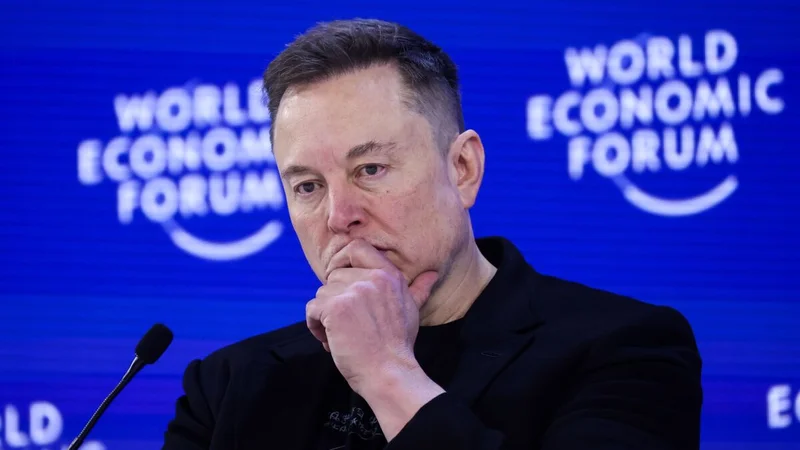
Image: Bloomberg AI
Main Takeaway
SpaceX formally proposes a $55B semiconductor fab in Grimes County, Texas, kicking off Elon Musk's Terafab megaproject that may ultimately exceed $119B.
Jump to Key PointsSummary
The Filing That Rocked Chip Valley
SpaceX submitted a property-tax-abatement application to Grimes County on May 6 that puts hard numbers on Elon Musk’s long-rumored Terafab plan: at least $55 billion to break ground, with a ceiling that could push past $119 billion. The document, first spotted by Bloomberg and later confirmed by county officials, dwarfs the $20–25 billion figure Musk floated in March. A public hearing is already scheduled for June 3 at 9 a.m. Central, giving locals, and competitors, six weeks to weigh in.
The scale is staggering. One county clerk told Tom’s Hardware the application packet alone weighed more than a phone book. Even Texas officials, who have handed out billions in incentives to Samsung and TSMC, sounded slightly dazed. “We’ve never seen a request this large,” the clerk admitted.
Intel Inside (and on the Hook)
Intel’s next-gen 14A process node will be the launch technology, according to Tesla statements cited by Reuters and Semiwiki. The deal appears to mirror the “Intel Foundry Services” template Intel has struck with Amazon and the U.S. Department of Defense: Intel supplies the process libraries and some capital, while the customer (here, a Tesla-SpaceX-xAI consortium) foots the bulk of the bill and owns the output. Yole Group notes the pact gives Intel a badly needed marquee win after losing Apple’s iPhone modem business.
But capacity questions loom. Intel’s 14A won’t reach high-volume production until 2027 at earliest, and Musk’s pitch calls for “millions of wafers per month.” If Intel stumbles, the fallback, Samsung’s 2 nm or TSMC’s N2, would require re-qualifying Tesla’s Dojo architecture and xAI’s Grok clusters, a 12- to 18-month delay.
Why This Matters for Open Source
A captive fab of this magnitude would let Musk keep every stage of the AI stack under one roof: model weights, training data, compiler, and now silicon. That vertical integration could starve the open-hardware RISC-V and Open Compute ecosystems of volume, driving up costs for everyone else. Conversely, if Terafab follows Tesla’s earlier playbook, open-sourcing Dojo design files and offering foundry slots to outside customers, it could become the largest open-source silicon play ever.
For now, the filing only mentions “internal consumption and strategic partners.” Translation: don’t expect a public shuttle service any time soon.
The Impact on Enterprise Adoption
Corporate AI buyers currently live or die by NVIDIA’s allocation list. A second domestic source of high-bandwidth, automotive-grade chips could break that bottleneck, especially for robotics and edge-computer vision workloads that fit Dojo’s quirky architecture. Dell, HPE, and Lenovo have already begun porting frameworks to Dojo; a guaranteed supply line would accelerate those efforts.
Cloud providers face a trickier calculus. AWS and Azure would love an alternative to scarce H100s, but they also worry about betting on a fab whose first loyalty is to Musk’s own models. The safest hedge: diversify now, wait for yield data in 2028.
What Happens Next
June 3 is the first gate. Grimes County commissioners can approve, reject, or punt the abatement request. Local pushback centers on water: a modern 3 nm fab gulps 5–10 million gallons daily, and the county’s aquifer is already stressed by drought.
If approved, dirt moves in Q3 2026. Construction alone will employ 6,000–8,000 workers, according to the filing, and the first wafers could roll off the line in 2029. Total job creation tops 20,000 once the campus is fully built out, roughly the population of the entire county today.
Meanwhile, Intel must prove its 14A can hit Musk’s aggressive power-per-watt targets. Failure means another pivot, and another headline-grabbing filing.
The Broader Chip Chessboard
Terafab’s price tag eclipses even Intel’s own $100 billion Ohio megafab cluster. That raises eyebrows at Samsung and TSMC, who have each committed ~$40 billion to U.S. facilities under the CHIPS Act. If Musk secures federal loans or grants, those rivals could argue the program is tilting the playing field toward a single billionaire’s empire.
Congress may not mind. Having a domestic source for both rockets and the AI chips that guide them checks multiple strategic boxes, especially as export controls tighten around China. One D.C. staffer told Axios, “It’s hard to vote against national security wrapped in jobs.”
Bottom Line
The filing transforms Terafab from Twitter tease into concrete policy question. Counties, Congress, and competitors now have six weeks to decide whether a rocket company should become one of the world’s largest chip makers. Either way, the industry just shifted on its axis.
Key Points
SpaceX files official notice for $55B–$119B Terafab fab in Grimes County, Texas.
Intel 14A process chosen as launch node under strategic foundry partnership.
First public hearing scheduled June 3, 2026; construction could begin Q3 2026.
Facility would supply Tesla, SpaceX, and xAI, reducing reliance on NVIDIA.
Project promises 20,000+ jobs but raises water and subsidy concerns.
Questions Answered
Terafab is Elon Musk’s codename for a vertically integrated semiconductor fab that will produce AI and automotive chips for Tesla, SpaceX, and xAI, using Intel’s 14A process technology.
The initial filing commits at least $55 billion, but the county document lists a possible total program cost of $119 billion once all phases are complete.
If the county approves the incentives on June 3, construction could start late 2026 and first wafers are projected for 2029.
Central Texas offers cheap land, abundant renewable power, existing SpaceX facilities nearby, and a state government generous with incentives. Water supply is the main open question.
No. Terafab will supplement, not replace, NVIDIA GPUs. Dojo and Grok chips serve different workloads, but a captive fab gives Musk leverage in negotiations.
Intel will provide the process technology and some co-investment, but the facility itself will be owned and run by a SpaceX-led consortium.
Source Reliability
47% of sources are trusted · Avg reliability: 76
Go deeper with Organic Intel
Simple AI systems for your life, work, and business. Each one includes copyable prompts, guides, and downloadable resources.
Explore Systems