Google Kills the Fitbit Brand, Rebirths It as $99 AI Health Coach
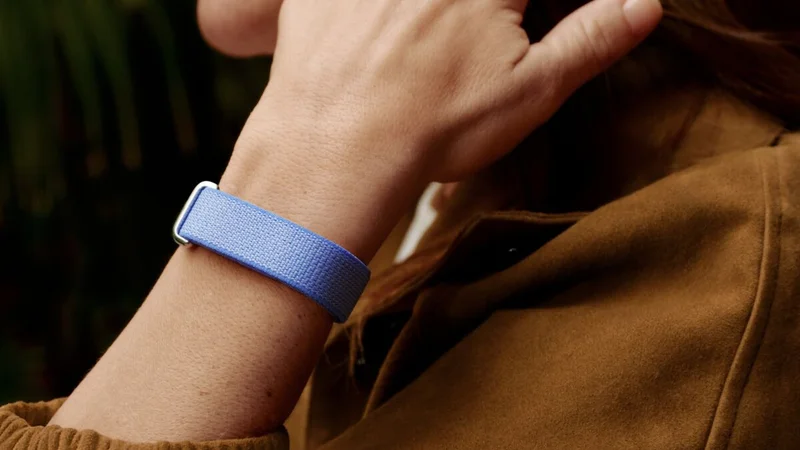
Image: Bloomberg AI
Main Takeaway
Google scraps the Fitbit name and smartwatch screens, launching a $99 Whoop rival that turns your wrist into a 24/7 AI doctor.
Jump to Key PointsSummary
The death of Fitbit as you knew it
Google just pulled the plug on the Fitbit brand and the entire idea of a fitness tracker with a screen. In its place: the Fitbit Air, a $99 band that looks like a Whoop clone but hides a much bigger play. The company is betting that a screenless sensor plus Google’s AI models can turn raw biometrics into a personal health coach that actually changes behavior. Pre-orders opened today, with shipping slated for late May.
What the hardware actually does
The Air is a pebble-shaped module that slides into fabric or silicone bands and carries the standard health-sensor stack: optical heart-rate, accelerometer/gyro, SpO2, skin temp. Google admits the heart-rate sensor is a step down from the Pixel Watch 8’s, so HIIT junkies may see drift. Battery life clocks in at “up to 7 days” and the whole thing is water-resistant to 50 m. No display, no buttons, no haptics, just a single LED that blinks for pairing.
Why Google ditched the screen
According to Google’s briefing, 62 % of Fitbit owners already check their stats on the phone app instead of the watch face. By removing the display Google shaved $60 off BoM cost, doubled battery life, and, more importantly, forced users into the new Google Health app where generative AI can surface insights instead of raw numbers. The company calls it “ambient tracking, active coaching.”
AI coach that talks back
The real product is the software layer. Gemini Nano runs locally to detect workout starts, sleep stages, and HRV anomalies; the heavier Gemini Pro models in the cloud spit out daily “Readiness” and “Stress” scores plus conversational nudges like “Your HRV tanked after last night’s pizza, maybe swap today’s run for yoga.” Google says the coach will remain free for basic metrics, but advanced “AI protocols” (think migraine-risk prediction, fertility windows) sit behind a $7.99/mo Fitbit Premium tier.
What this means for Whoop, Oura and Apple
Whoop suddenly faces a direct clone at one-third the price and without a required subscription. Oura’s Gen-4 ring still wins on style and medical-grade temp sensors, but can’t match Google’s AI smarts or Play-store ecosystem. Apple Watch remains the do-everything king, yet its $399 entry fee and daily-charge cadence look excessive next to a week-long $99 band. Expect price cuts and new bundles from all three within months.
Google Health app becomes the new hub
Fitbit’s old app sunsets at year-end. The new Google Health app aggregates Air data alongside Pixel Watch, Nest cameras (for fall detection), and soon, third-party Bluetooth LE devices. A new “Health Timeline” card stacks events chronologically so a user sees that elevated resting heart rate coincided with a spike in household air pollution captured by Nest. It’s the clearest sign yet that Google wants to own the entire health-data funnel, not just the wrist.
Privacy, FDA and the subscription catch
Data lives on Google’s health-specific cloud, siloed from ad profiles, and can be deleted account-wide in one tap. Still, the AI coach is not FDA-cleared; phrases like “may reduce risk of hypertension” carry an asterisk linking to a disclaimer. EU users get an on-device toggle to keep all processing local, cutting cloud features but sidestepping GDPR headaches. The free tier expires after 90 days unless you link a Pixel phone, a not-so-subtle nudge into Google’s hardware family.
What happens next
Google execs hinted that the Air’s sensor pod is “module-agnostic,” meaning future versions could swap in ECG, blood pressure, or even non-invasive glucose sensors once they clear regulators. A developer SDK drops in July, letting third-party apps pipe raw data into their own models. If adoption hits even a fraction of Chromecast’s scale, every health startup suddenly has a $99 Trojan horse on millions of wrists.
Key Points
Google retires the Fitbit brand, replacing it with the $99 screenless Fitbit Air and a new Google Health app.
Air packs standard sensors (HR, SpO2, temp) but removes the display to double battery life and push users to AI-driven phone insights.
Gemini models generate daily readiness/stress scores and conversational coaching; advanced features sit behind $7.99/mo subscription.
Launch positions Google as direct rival to Whoop (price), Oura (AI smarts), and Apple Watch (battery life).
Old Fitbit app shuts down end of 2026; all data migrates to Google Health with EU privacy toggle and ad-profile firewall.
Questions Answered
It’s both. Google killed the Fitbit brand and launched the Air as the first device under the new Google Health umbrella.
No. Basic metrics and AI coaching are free, but advanced protocols like migraine-risk prediction require Fitbit Premium at $7.99/mo.
Air costs $99 vs Whoop’s $239 plus mandatory $30/mo membership. Battery life and sensor suite are similar, but Google’s AI coach is deeper.
Google will migrate it to the new Google Health app before the Fitbit app shuts down December 31, 2026.
Google says no. Health data is siloed from ad profiles and can be deleted account-wide in one tap.
Yes. A developer SDK launches July 2026, allowing third-party apps and research tools to tap into Air’s sensor stream.
Source Reliability
40% of sources are highly trusted · Avg reliability: 74
Go deeper with Organic Intel
Simple AI systems for your life, work, and business. Each one includes copyable prompts, guides, and downloadable resources.
Explore Systems