SK Hynix Hits $1 Trillion Valuation as AI Memory Chip Boom Reshapes Semiconductor Industry
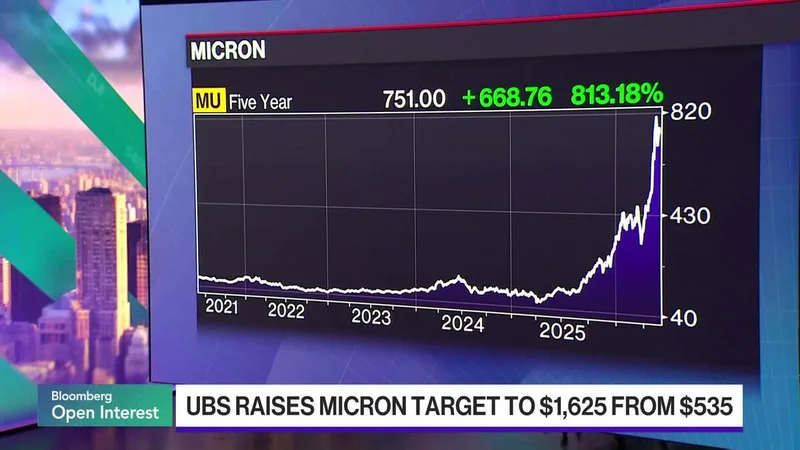
Image: Bloomberg AI
Main Takeaway
SK Hynix surged past $1 trillion market value on May 27, joining Samsung and Micron as AI-driven demand for high-bandwidth memory sends chip stocks soaring.
Jump to Key PointsSummary
How SK Hynix cracked the trillion-dollar ceiling
SK Hynix shares jumped as much as 14.9% on Wednesday, lifting the South Korean chipmaker's market value to a record 1,680 trillion won, or roughly $1 trillion. The milestone makes SK Hynix only the third Asian company to achieve such a valuation, following Samsung Electronics and Taiwan Semiconductor Manufacturing Company, according to News.futunn. The surge propelled South Korea's benchmark Kospi index to its own record high.
The rally caps a staggering run. SK Hynix shares have climbed more than 900% over the past year, according to Bloomberg AI, as investors priced in the company's dominance in high-bandwidth memory, the specialized chips that power Nvidia's AI accelerators. Where memory makers once suffered through brutal boom-and-bust cycles, AI demand has transformed them into some of the market's most sought-after assets.
Why HBM chips became the industry's hottest commodity
High-bandwidth memory sits at the center of this transformation. Unlike conventional memory, HBM stacks multiple layers of DRAM to deliver far greater data throughput, a requirement for training and running large AI models. SK Hynix has emerged as the leading supplier of these chips to Nvidia, whose GPUs have become the backbone of the AI infrastructure buildout, Businessinsider reports. This supplier relationship has given SK Hynix pricing power and visibility that memory makers rarely enjoy.
The technical demands keep tightening. Each generation of AI models requires more memory bandwidth, and HBM's three-dimensional stacking approach is one of the few technologies that can keep pace. Samsung and Micron are racing to catch up, but SK Hynix's early investments in HBM3 and HBM3e production have given it a durable lead. The company is now the primary HBM supplier for Nvidia's most advanced AI accelerators.
Micron's parallel surge and Wall Street's conviction
The trillion-dollar club now includes three memory specialists. Micron Technology also crossed $1 trillion in market value this week, Bloomberg AI reports, after UBS raised its price target on the U.S. chipmaker to a Street-high $1,625, up dramatically from $535. The revised target reflects analyst confidence that the memory "super-cycle" has staying power beyond typical cyclical patterns.
Micron's stock had already surged 124% this year as of early May, lifting its market cap past $700 billion at that time, CNBC noted. The UBS upgrade signals that institutional investors believe current demand levels are structural rather than cyclical, driven by persistent AI infrastructure spending rather than temporary inventory restocking. This reframing matters enormously for how the sector gets valued.
Samsung's earlier milestone and the Korean chip rivalry
Samsung Electronics crossed the $1 trillion threshold just weeks before SK Hynix, becoming the second Asian company to do so after TSMC, according to The Globe and Mail. The two Korean giants now represent a combined $2 trillion-plus in market value tied to memory and semiconductor dominance. Their rivalry has shifted from commodity DRAM competition to a race for HBM supremacy.
Samsung's scale advantages in manufacturing remain formidable, but SK Hynix's focused bet on HBM has paid off disproportionately in the AI era. The Kospi index's record performance reflects how concentrated national economic fortunes have become in these two companies. For South Korea, the memory chip boom delivers both wealth and vulnerability.
What comes next for memory demand and pricing
The open question is whether this cycle proves different from prior memory booms. Analysts at UBS and elsewhere argue that AI-driven demand is more durable because data center operators face continuous pressure to expand compute capacity. Long-term supply agreements with hyperscalers are replacing spot-market exposure, Proactiveinvestors notes, reducing the volatility that historically plagued memory makers.
Yet risks accumulate at these valuations. Any slowdown in AI capital expenditure, breakthrough in alternative memory architectures, or successful challenge from Samsung or Micron could compress SK Hynix's premium. The company now trades at multiples that assume years of uninterrupted dominance. For the moment, though, the market is voting with conviction that memory has become the indispensable fuel for artificial intelligence.
The broader shift in semiconductor economics
This rally marks a structural rebalancing within the chip industry. For decades, logic processors from Intel and later Nvidia captured the lion's share of semiconductor value. Memory was an afterthought, a commodity input with thin margins. The AI era has inverted this hierarchy, at least temporarily. Memory bandwidth, not raw compute, has become the binding constraint on AI system performance.
The geopolitical dimensions are equally significant. South Korea and Taiwan now host three of the world's four most valuable semiconductor companies, with the U.S.-based Micron making it four of four for memory specifically. This concentration creates leverage for these countries in trade negotiations and technology policy, even as it exposes them to regional security risks. The $1 trillion valuations are not merely financial markers but statements about where critical AI infrastructure gets built.
Key Points
SK Hynix market value surpassed $1 trillion on May 27 after shares jumped 14.9%
High-bandwidth memory demand from AI data centers drives unprecedented chip valuations
Micron also crossed $1 trillion as UBS raised price target to Street-high $1,625
Samsung reached trillion-dollar status weeks earlier, making Korea central to AI chips
Memory sector transformed from cyclical commodity to AI infrastructure cornerstone
Questions Answered
High-bandwidth memory stacks multiple DRAM layers to deliver far greater data throughput than conventional memory, which is essential for training and running large AI models on GPUs.
SK Hynix made early investments in HBM3 and HBM3e technology and secured a position as the primary supplier for Nvidia's most advanced AI accelerators.
Analysts argue yes, because AI demand appears more durable and long-term supply agreements with hyperscalers are replacing volatile spot-market exposure.
Potential risks include a slowdown in AI capital expenditure, breakthrough memory technologies, or successful competitive challenges from Samsung or Micron.
South Korea and Taiwan now host most of the world's most valuable semiconductor companies, creating significant leverage in trade and technology policy.
Source Reliability
36% of sources are highly trusted · Avg reliability: 68
Go deeper with Organic Intel
Simple AI systems for your life, work, and business. Each one includes copyable prompts, guides, and downloadable resources.
Explore Systems