SAP Freezes Hiring and Travel to Bankroll CEO's All-In AI Bet
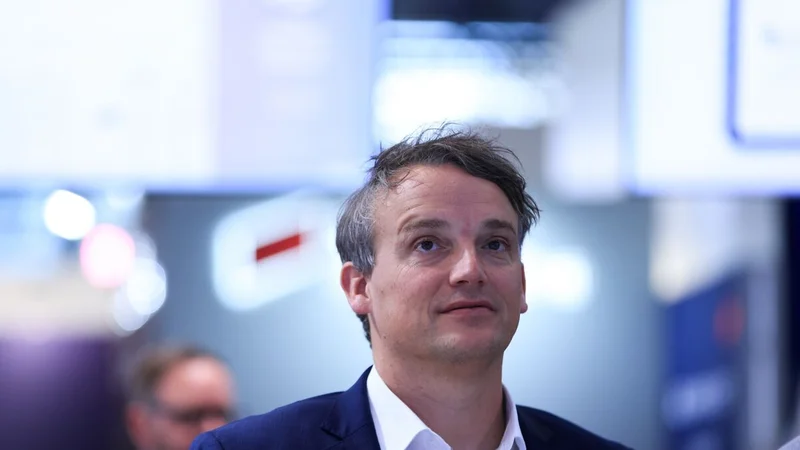
Image: Bloomberg AI
Main Takeaway
SAP restricts hiring and travel to fund what CEO Christian Klein calls an end-to-end AI transformation, the company's second major reshuffle this year.
Jump to Key PointsSummary
Why SAP is tightening its belt
SAP is cutting back on hiring and travel to free up cash for what it describes as a significant AI investment push. The cost-saving measures, reported by Bloomberg, represent a strategic choice to redirect resources rather than expand the budget. For Europe's largest software company, this signals that AI is no longer a side project but the central financial priority.
The move comes just two months after SAP's first leadership reshuffle of 2026, suggesting the company is accelerating its transformation timeline. Restricting hiring in a competitive tech labor market carries real risk, particularly when rivals like Salesforce and Oracle are aggressively recruiting AI talent. SAP appears to be betting that disciplined cost management now will yield faster AI product development later.
The travel restrictions will likely hit SAP's famously relationship-driven enterprise sales culture, where face-to-face client meetings have historically closed major deals.
How leadership got redrawn around AI
SAP's second top-level reorganization this year strips product and engineering oversight from siloed managers and places it directly under CEO Christian Klein and COO operations, according to Bloomberg and The Next Web. This collapses the distance between strategy-setting and product-building, a gap Klein has identified as where momentum dies.
The March reshuffle had already moved sales oversight to free Klein for AI focus. The June changes extend that logic into the actual creation layer. It's a vertical integration play: the same executives who decide what AI SAP should build now directly oversee the teams building it.
Klein has been explicit about the stakes, stating that the AI evolution is moving rapidly and SAP needs to keep pace. For a company whose software underpins the financial and supply chain operations of most large enterprises, transforming end to end is an enormous commitment that touches every product line.
What the competition looks like
SAP is not operating in a vacuum. The enterprise AI race has intensified dramatically, with Microsoft embedding Copilot across its stack, Salesforce pushing Agentforce, and Oracle infusing AI throughout its cloud applications. Each of these competitors has made AI central to their pitch to CFOs and CIOs, the exact audience SAP serves.
The threat is existential in the medium term. SAP's core value proposition has been deep, industry-specific functionality for complex business processes. If competitors can deliver comparable capability through AI-native architectures at lower implementation cost, SAP's moat begins to erode. The company has already faced pressure from newer cloud-native ERP challengers.
By pulling AI oversight to the CEO level and funding it through operational cuts, SAP is treating this as a must-win competitive battle rather than a gradual capability build. The question is whether two reorgs in four months indicates decisive action or organizational whiplash.
What this means for SAP's 162,000 customers
SAP customers should expect AI features to arrive faster but with potential turbulence in execution. Centralizing authority can accelerate decision-making, yet it also concentrates risk. If Klein's direct involvement creates bottlenecks rather than clearing them, product velocity could actually slow.
The hiring freeze is particularly consequential for AI talent acquisition. SAP competes for machine learning engineers and product managers against better-funded American rivals and well-capitalized startups. Restricting headcount growth while simultaneously demanding more AI output puts enormous pressure on existing teams and may drive attrition among the very talent SAP needs to retain.
Customers have heard AI promises from SAP before. The Joule copilot launched with fanfare but has seen measured adoption. This latest push, backed by structural reorganization and real budget reallocation, represents a more serious commitment. Whether it translates to products that justify the disruption remains to be demonstrated.
What happens next for enterprise software
SAP's moves are a bellwether for how legacy enterprise software vendors will fund AI transformation. Not every company has the balance sheet strength to simply hire more while cutting elsewhere. SAP's approach, reallocating existing resources with CEO-level urgency, may become a template for peers facing similar competitive pressure.
Industry observers should watch SAP's Q3 and Q4 earnings calls closely for evidence that AI investment is translating to either new product categories or pricing power on existing ones. If the reorganization succeeds, expect copycat moves across the ERP landscape. If it stumbles, the failure mode, whether talent flight, customer confusion, or product delay, will inform how competitors structure their own AI bets.
The broader signal is clear: AI spending in enterprise software has shifted from experimental budget line to core strategic priority, with organizational restructuring and cost discipline as the funding mechanism. SAP is simply the largest and most visible company making that trade explicit.
Key Points
SAP restricts hiring and travel to redirect funds into AI development
CEO Christian Klein takes direct control of AI product and engineering oversight
This marks SAP's second top-level reorganization in four months
The reshuffle collapses the gap between AI strategy and product execution teams
SAP faces intensifying competition from Microsoft, Salesforce, and Oracle in enterprise AI
Questions Answered
SAP is restricting hiring and travel to save costs and redirect those resources into what it calls a significant AI investment push. The company is treating artificial intelligence as its central strategic and financial priority for 2026.
SAP redistributed product and engineering oversight to its most senior executives, including CEO Christian Klein, in its second top-level reshuffle this year. This brings AI strategy and AI product development under the same executive layer to accelerate execution.
SAP has not announced layoffs or workforce reductions. The company is restricting new hiring and cutting travel costs, which represents a freeze on expansion rather than a shrinkage of existing headcount.
The March reshuffle moved sales oversight to free CEO Christian Klein for AI focus. The June changes extend that same logic into product and engineering, the actual creation layer where AI features are built and shipped.
SAP faces intensifying competition from Microsoft Copilot, Salesforce Agentforce, and Oracle's AI-infused cloud applications, all of which threaten SAP's core enterprise software market with AI-native alternatives.
Source Reliability
50% of sources are highly trusted · Avg reliability: 82
Go deeper with Organic Intel
Simple AI systems for your life, work, and business. Each one includes copyable prompts, guides, and downloadable resources.
Explore Systems