Purpose Unlimited CEO Som Seif Says Self-Centred Incumbents Use Regulation to Block Competition
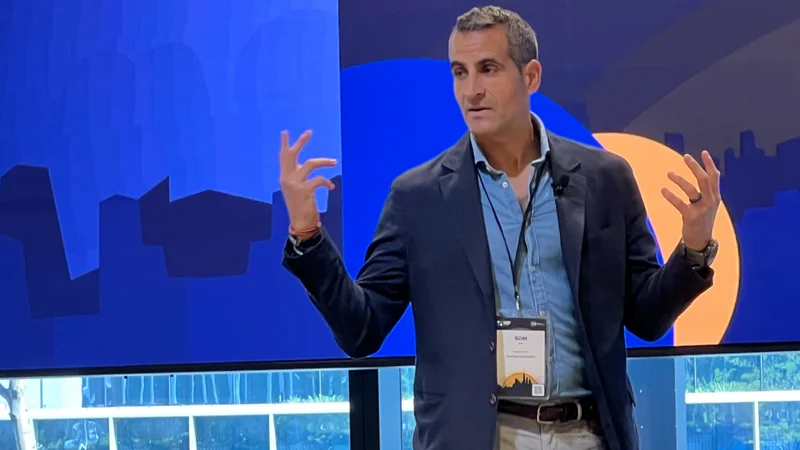
Image: Betakit
Main Takeaway
Purpose Unlimited CEO Som Seif told the Canadian Finance Summit that major financial incumbents exploit regulatory capture to stifle challengers, even as he faces his own OSC proceeding over ESG fund statements.
Jump to Key PointsSummary
What Seif said about the finance industry's competitive rot
Som Seif, the founder and CEO of Purpose Unlimited, delivered a blunt assessment of the Canadian financial services sector during a keynote at the 2026 Canadian Finance Summit. He described the industry as very self-centred, arguing that established players are structurally disincentivized from making products more user-friendly or embracing change. The core problem, according to Seif, is a culture of complacency among executives who control the market.
Seif claimed that nine out of ten executives running the industry today think today is the best day it has ever been, meaning they would love for nothing to change. This mindset creates an environment where innovation stalls and customer needs become secondary to preserving the status quo. Instead of competing on product quality or user experience, incumbents rely on their scale and regulatory relationships to maintain dominance.
How regulatory capture blocks challengers
Seif pointed to regulatory capture as the primary mechanism that enables large incumbents to play that game and make it a headwind against challengers. In his view, the regulated nature of the financial industry, which is ostensibly designed to protect consumers, gets weaponized by established players to raise barriers for new entrants. Disruptive firms have to wake up every day and find a way to win customers while navigating a system tilted toward their competitors.
The complaint is not merely theoretical. Seif framed the regulatory apparatus as a competitive moat that incumbents actively exploit. By influencing rulemaking and enforcement priorities, large banks and asset managers can slow down or block the kind of product innovation that challengers bring to market. This creates a cycle where the industry remains dominated by a handful of players who face little pressure to modernize their offerings.
The OSC proceeding hanging over Seif's critique
Seif's critique of regulatory capture carries extra weight because of his own ongoing battle with the Ontario Securities Commission. In September 2025, the OSC alleged that Seif authorized his firm Purpose to make false statements about the environmental, social, and governance considerations of its investments. The commission is seeking to fine and suspend Seif and Purpose from managing investor funds as punishment.
Seif has vowed to vigorously contest the allegations, and proceedings on the matter have commenced. The timing of his summit remarks places him in a complex position: he is simultaneously arguing that regulation is used to stifle competition while fighting a regulator that accuses him of greenwashing. The tension between his entrepreneurial philosophy and his current legal exposure makes his critique of the system both more pointed and more personal.
Building companies around customer needs
Beyond the regulatory battle, Seif discussed his broader philosophy on building companies during a separate interview with Bloomberg. His journey from engineering to investment banking shaped a conviction that financial products should be built around customer needs, not institutional convenience. That principle drove his early push into ETFs in Canada and the subsequent creation of the first bitcoin ETF, milestones that required navigating precisely the incumbent resistance he now criticizes.
Seif described himself as a serial entrepreneur who prioritizes customer experience above all else when launching new ventures. His track record at Purpose Unlimited reflects an approach that treats user-friendly design and accessibility as competitive advantages in a market where incumbents have little incentive to improve either. The Bloomberg discussion reinforced that his public criticism of the industry is rooted in his own experience of building products that customers actually want.
The broader Canadian fintech landscape
Seif keynote arrived during Toronto Tech Week, an annual showcase for Canada startup ecosystem. His remarks highlighted a persistent tension in Canadian fintech: the country produces strong financial talent and innovative ideas, but scaling those ideas often requires navigating regulators who are closely tied to the incumbent banking system. The self-centred dynamic he described is not unique to his own experience but reflects a structural challenge that multiple founders face.
The Canadian Finance Summit audience heard a message that was both a diagnosis and a call to action. Seif argued that the industry needs to shift its focus from protecting legacy business models to serving customers better. Without that shift, he warned, the competitive environment will continue to favour the large incumbents who benefit from inertia rather than innovation. The speech framed customer-centricity not just as a business strategy but as a survival requirement for challengers.
What happens next for Seif and Purpose
Seif immediate future is tied to the OSC proceedings, which will determine whether he faces fines, suspension, or both. The outcome will test his thesis about regulatory capture in real time. If the commission imposes significant penalties, it could validate his argument that the system protects incumbents by punishing disruptive voices. If he prevails, it would demonstrate that challengers can fight back successfully.
Beyond the legal battle, Seif continues to lead Purpose Unlimited and push for product innovation in the Canadian market. His remarks suggest he will not retreat from his critique of the industry, even as he defends himself against the regulators. The intersection of his entrepreneurial philosophy and his personal legal fight has made him a central figure in the ongoing debate about competition, regulation, and customer focus in Canadian finance.
Key Points
Purpose CEO Som Seif told the Canadian Finance Summit that nine out of ten industry executives prefer nothing to change in finance.
Seif claims regulatory capture gives large incumbents the power to block challengers from competing on product quality.
The OSC is pursuing fines and a suspension against Seif over allegations he authorized false ESG statements about Purpose funds.
Seif built his career on customer-first innovation, including launching Canada first bitcoin ETF and an early ETF push.
The clash between Seif's entrepreneurial philosophy and his OSC proceeding makes him a central figure in Canadian fintech reform debates.
Questions Answered
Som Seif said the Canadian financial services industry is very self-centred and dominated by incumbents who do not want anything to change. He claimed that nine out of ten executives prefer the status quo and that regulatory capture enables large players to block challengers from competing effectively.
The Ontario Securities Commission alleges that Som Seif authorized Purpose to make false statements about the environmental, social, and governance considerations of its investments. The OSC is seeking to fine and suspend Seif from managing investor funds, and he has vowed to vigorously contest the allegations.
Seif defines regulatory capture as the process by which major incumbents use the regulated nature of the financial industry to create headwinds against challengers. He argues that the system, which is supposed to protect consumers, is instead manipulated to block innovation and maintain the dominance of large players.
Som Seif trained as an engineer before moving into investment banking, then became a serial entrepreneur focused on customer-first financial products. He led an early push into ETFs in Canada and created the first bitcoin ETF, all while building Purpose Unlimited as a challenger brand.
Proceedings on the OSC allegations have commenced, and the commission will determine whether to impose fines, suspension, or removal from managing investor funds. The outcome will test Seif's own thesis about whether the regulatory system protects incumbents by punishing challengers.
Source Reliability
50% of sources are highly trusted · Avg reliability: 74
Go deeper with Organic Intel
Simple AI systems for your life, work, and business. Each one includes copyable prompts, guides, and downloadable resources.
Explore Systems