Jensen Huang Takes Trump’s Live Call and Uses the Moment to Showcase Nvidia’s Humanoid Robot
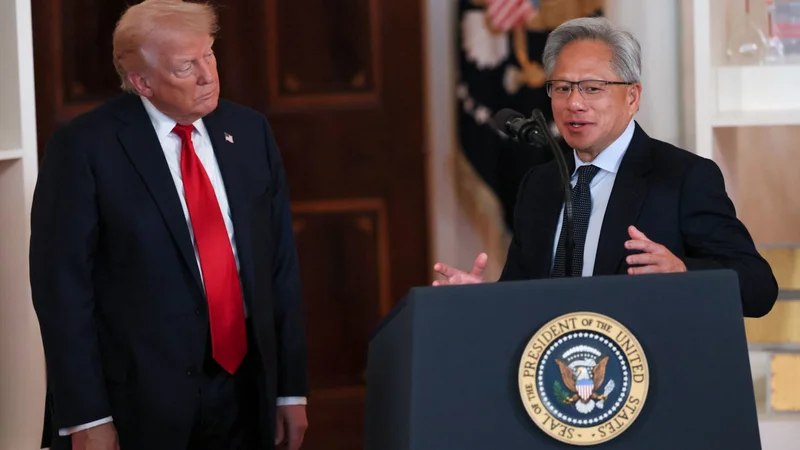
Image: Cnbc
Main Takeaway
Nvidia CEO Jensen Huang put President Donald Trump on speakerphone at a live conference while showing off a humanoid robot and arguing AI will keep advancing.
Jump to Key PointsSummary
A live call becomes the headline
Nvidia CEO Jensen Huang put President Donald Trump on speakerphone during the All-In Summit in Los Angeles on September 14, turning a routine stage appearance into a highly visible exchange about artificial intelligence. Trump had called Huang during the event, and Huang let the audience hear the conversation. The episode marked another public instance of direct contact between the Nvidia chief and the president, following earlier meetings focused on chips, AI policy and export controls.
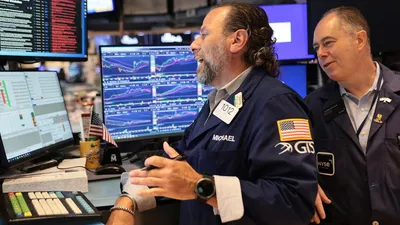
The call also reinforced Huang’s unusual role at the intersection of technology and government. Nvidia supplies the processors behind much of the current AI buildout, while the Trump administration has treated advanced chips as both an economic asset and a national-security concern. CNBC previously reported that Nvidia had passed a $4 trillion market value when Huang met Trump at the White House, giving the encounter an unmistakable business backdrop.
The robot sharing the stage
Huang’s appearance drew attention for another reason: he showed off a humanoid robot while wearing one of his signature leather jackets. TechCrunch focused on the contrast between the live presidential call and the hardware demonstration, while The Verge described Huang using the moment to announce that robots would not take over the world. The robot placed Nvidia’s role in physical AI alongside its better-known position as a supplier of data-center chips.
That pairing mattered because Nvidia’s business increasingly reaches beyond graphics processors. Robots require perception, simulation, training systems and onboard computing, all areas where Nvidia is building a broader platform. Huang’s presentation connected the company’s infrastructure business with a more visible consumer image of AI, even though the event did not establish a new product launch or a specific commercial deployment.
Huang’s message on AI momentum
The conversation centered on maintaining the pace of AI development. Huang told Trump, in remarks covered by The Verge and TechCrunch, that the industry would not allow an AI slowdown. The statement reflected Nvidia’s commercial interest in continued spending on data centers, models and robotics, but it also matched the administration’s emphasis on American leadership in advanced technology.
Earlier encounters between the 2 men involved semiconductor policy and export controls. Huang had met Trump at the White House in July 2025, as Nvidia’s valuation crossed $4 trillion, and discussed issues affecting the company’s access to overseas markets. A separate account said the pair discussed export controls while Huang met lawmakers in Washington. Those policy questions remain central to Nvidia because restrictions can protect U.S. strategic interests while limiting the markets and customers available to chip companies.
Why the political connection matters
Huang’s direct access to Trump gives Nvidia an unusually prominent voice in debates over chips, AI regulation and international trade. The company’s products sit at the center of the U.S. technology strategy, while its customers include major cloud providers and AI developers that depend on Nvidia’s supply. A presidential call on a conference stage turns that relationship into public theater, but the policy stakes are practical: export rules, domestic investment and access to foreign markets affect Nvidia’s growth.
The episode also sits within a wider pattern of technology executives appearing alongside Trump. Reports from India Today and The Fox Daily described a U.S. business delegation to China that included Huang, Elon Musk, Tim Cook and other corporate leaders. Those accounts differ in reliability and timing, and they do not establish a direct connection to the September conference call. They do show how AI hardware, consumer electronics and trade diplomacy have become tightly linked in the public presentation of U.S. technology policy.
What the moment signals for Nvidia
The conference appearance gave Nvidia a compact demonstration of its current identity: chip supplier, AI policy participant and robotics platform company. Huang’s decision to take Trump’s call publicly amplified the company’s political relevance, while the robot gave viewers a tangible image of where Nvidia wants its technology to go next. The combination was designed for an audience that understands markets and technology, but also responds to spectacle.
For Nvidia, the immediate business signal is continued confidence in AI spending and robotics research. The longer-term test is whether that confidence produces durable demand beyond the current data-center boom. Export controls, competition from alternative chips and the cost of building capable robots will shape that outcome. The call made the relationship with the White House visible; Nvidia’s results will show how much of the underlying momentum survives policy and market pressure.
Key Points
Nvidia CEO Jensen Huang put President Donald Trump on speakerphone during a live All-In Summit appearance.
Jensen Huang showed a humanoid robot while presenting Nvidia’s expanding role in physical AI and robotics.
Donald Trump and Jensen Huang have discussed export controls, semiconductors and American AI leadership.
Nvidia’s $4 trillion valuation gave Huang’s White House meeting with Trump major financial and political visibility.
The public exchange linked Nvidia’s chip business with robotics, trade policy and continued AI investment.
Questions Answered
Jensen Huang put Donald Trump on speakerphone after the president called him during the live event. The exchange publicly highlighted their direct relationship and continued discussion of AI leadership.
Jensen Huang showed a humanoid robot during his All-In Summit appearance. The demonstration emphasized Nvidia’s work in robotics, physical AI and computing systems beyond data centers.
Jensen Huang and Donald Trump have discussed semiconductors, export controls and U.S. AI leadership. Those issues affect Nvidia’s access to international markets and the pace of AI investment.
Donald Trump’s relationship with Jensen Huang matters because Nvidia supplies critical AI processors and faces major trade and national-security policy decisions. Direct access to the president gives Nvidia’s leadership a prominent role in those debates.
Nvidia must sustain demand for AI infrastructure while expanding its robotics business and managing export restrictions. Its financial results and policy outcomes will determine whether the momentum extends beyond data-center spending.
Source Reliability
38% of sources are trusted · Avg reliability: 68
Go deeper with Organic Intel
Simple AI systems for your life, work, and business. Each one includes copyable prompts, guides, and downloadable resources.
Explore Systems