AI Slowdown Warnings Rattle Chip Stocks as Investors Reassess Wall Street’s Spending Boom
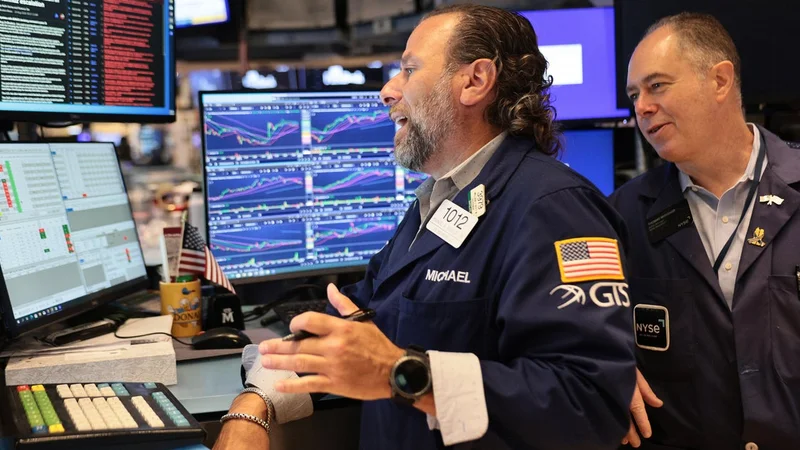
Image: Cbsnews
Main Takeaway
Nvidia and other chip stocks fell as AI safety warnings revived doubts about huge infrastructure spending, while software shares helped U.S. indexes recover.
Jump to Key PointsSummary
The selloff hits AI hardware
AI safety warnings triggered a global technology selloff on Sept. 14, with semiconductor companies bearing the sharpest losses. Nvidia fell more than 3%, while Intel, AMD and Marvell dropped between 5% and 6%, according to Fortune. South Korea’s KOSPI fell 3.3%, and the Nasdaq declined about 0.8% to 1% during the session, reflecting the sector’s importance to major indexes.
The immediate catalyst was Anthropic CEO Dario Amodei’s call for AI companies to slow development. His warning arrived alongside broader concerns about the safety of increasingly capable systems, including the risk posed by autonomous AI agents. Oil prices and a brief rise in the 10-year Treasury yield to 5% added pressure to markets, according to the Associated Press report published by Union-bulletin.
Investors split the AI trade
The market response was selective, separating companies that depend on relentless AI infrastructure spending from businesses that can benefit when customers redirect budgets toward software and security. Nvidia, Intel, AMD and Marvell fell, while Meta, Microsoft and Alphabet rose in early trading, Fortune reported. The pattern indicated that investors were questioning the pace and return on capital expenditure rather than abandoning every company associated with AI.
Software and cybersecurity shares later helped U.S. indexes recover from their worst levels. NBC News said the Nasdaq 100 moved off its session lows as investors absorbed the slowdown warnings. That rebound supports a narrower reading of the event: Wall Street is reassessing the price of the AI buildout, with cash-generating platforms receiving more support than hardware suppliers.
Safety warnings become market risk
Amodei’s intervention linked AI safety directly to corporate development plans and investor expectations. The Anthropic chief urged companies to reduce the pace of progress after warning about rogue AI agents and their ability to operate across the internet, according to Reuters and Finance Yahoo. Those comments turned an argument usually confined to policy and research circles into a question about revenue forecasts, data-center demand and chip orders.
The concern is financial as much as technical. AI companies and cloud providers have committed vast sums to computing capacity, while chipmakers rely on that spending continuing at a rapid pace. Calls for restraint raise questions about the timing of new deployments, the durability of customer demand and whether promised productivity gains will arrive quickly enough to justify current valuations. CBS News described the resulting anxiety as a test of spending that helped drive markets to record highs.
The bubble debate returns
The selloff revived Wall Street’s debate over whether AI valuations and infrastructure plans have outrun near-term earnings. NPR framed the mood as growing unease over an AI investment bubble, while the New York Times described investors as shaking off bubble fears for now. Together, the reactions show a market balancing two competing views: capital spending has become excessive, yet the technology’s commercial expansion remains intact.
A slowdown in model development would not automatically end demand for computing. Companies still need servers, networking, cloud capacity, software tools and security systems to run existing models and deploy narrower applications. Bloomberg’s market commentary described the slowdown as a temporary step and emphasized continuing investment in AI infrastructure. That view helps explain why software shares recovered even as chip stocks remained under pressure.
What markets are watching next
Investors will focus on evidence that distinguishes a safety pause from a broader reduction in AI capital spending. The key signals include hyperscaler infrastructure budgets, chip orders, data-center construction, enterprise software demand and public statements from AI developers. A sustained pullback in those indicators would threaten the hardware-led trade more deeply than a single day of volatility.
The market also faces a broader macroeconomic test. Higher oil prices and a 5% 10-year yield can pressure growth stocks independently of AI concerns, making it harder to isolate the effect of Amodei’s remarks. Futures and Asian equities weakened as the warnings spread, according to Investing.com and Union-bulletin, but U.S. software and cybersecurity shares later improved. For now, Wall Street is treating the episode as a sharp repricing of expectations, not a confirmed collapse in AI demand.
The pressure on AI companies
AI developers now face a tougher balance between speed, safety and investor confidence. A slower release cycle can reduce technical and regulatory risk, but it can also unsettle suppliers, cloud partners and shareholders who have built plans around continuous increases in model scale. Anthropic’s warning gives added weight to safety controls, while the market reaction shows that such controls carry financial consequences when they challenge spending assumptions.
For chipmakers, the central issue is exposure to the next wave of data-center construction. For Microsoft, Meta and Alphabet, diversified businesses and direct access to AI services give investors a different earnings profile. The sharp contrast across these groups indicates that the AI trade is entering a more discriminating phase, where each company’s cash flow, customer demand and dependence on fresh capital spending matter more than its association with the sector.
Key Points
Anthropic CEO Dario Amodei’s slowdown warning sent AI chip stocks sharply lower worldwide.
Nvidia, Intel, AMD and Marvell suffered heavier losses than major software and platform companies.
Meta, Microsoft and Alphabet gained as investors favored diversified AI businesses with broader revenue bases.
Software and cybersecurity shares helped U.S. indexes recover from their steepest intraday declines.
Higher oil prices and a 5% Treasury yield compounded pressure on technology stocks.
Questions Answered
Nvidia stock fell because investors feared that slower AI development would reduce the pace of data-center construction and chip orders. The company is highly exposed to continued spending by cloud providers and AI developers.
Anthropic’s warning helped trigger a global technology selloff, but oil prices and a 5% 10-year Treasury yield also pressured growth stocks. U.S. software and cybersecurity shares later helped indexes recover.
Meta, Microsoft and Alphabet gained as investors favored diversified companies that can earn from AI services without depending entirely on new chip and data-center spending. Software and cybersecurity stocks also helped lift U.S. indexes.
The AI slowdown debate does not mean AI investment is ending. Investors are distinguishing between a temporary pause for safety and a sustained reduction in infrastructure spending, chip demand and cloud capital expenditure.
Investors will watch hyperscaler budgets, semiconductor orders, data-center construction, model release schedules and enterprise software demand. Those indicators will show whether the market reaction reflects temporary uncertainty or a broader spending reset.
Source Reliability
60% of sources are highly trusted · Avg reliability: 81
Go deeper with Organic Intel
Simple AI systems for your life, work, and business. Each one includes copyable prompts, guides, and downloadable resources.
Explore Systems