Nvidia Certifies Samsung, SK Hynix, and Micron for Vera Rubin HBM4 Supply as Production Ramps
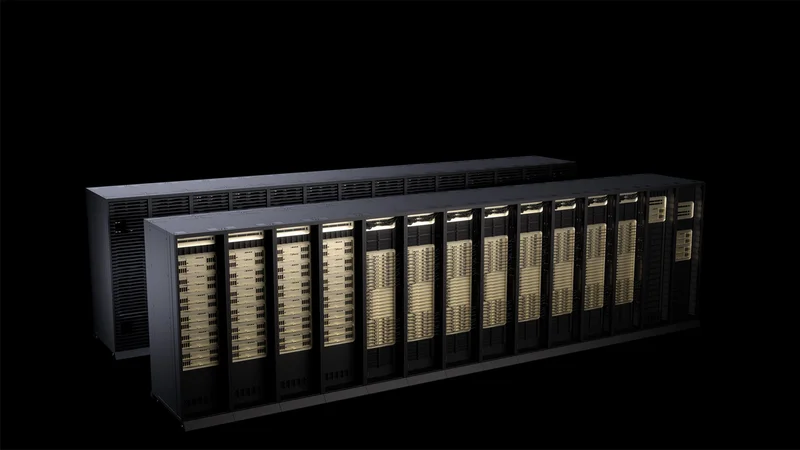
Image: Developer.nvidia
Main Takeaway
Nvidia CEO Jensen Huang certified Samsung, SK Hynix, and Micron to supply HBM4 memory for the Vera Rubin AI platform, with mass production targeted.
Jump to Key PointsSummary
What Nvidia announced about HBM4 suppliers
Nvidia CEO Jensen Huang confirmed the company has certified the three largest memory chipmakers to supply HBM4 high-bandwidth memory for its next-generation Vera Rubin AI accelerators. The certification covers Samsung, SK Hynix, and Micron, the so-called Big Three of the global memory market. Bloomberg reported Huang's announcement on June 5, 2026, marking a critical milestone in Nvidia's supply chain preparation for its most advanced AI platform yet.
The certification ensures multiple qualified suppliers for HBM4, reducing dependency risk as Nvidia scales production. SK Hynix has reportedly secured approximately 70% of initial HBM4 orders for Vera Rubin, according to Semicone, following process upgrades at its Wuxi, China fab. Micron separately announced it has entered high-volume production of HBM4 specifically designed for Vera Rubin. Samsung's position in the split remains less specified in public disclosures.
How Vera Rubin differs from Blackwell
Vera Rubin represents Nvidia's architectural response to the end of Moore's Law for real AI production workloads, according to Nvidia's technical documentation. The platform integrates six chips, co-innovated across memory, compute, and interconnect domains rather than relying primarily on transistor density gains. Nvidia's first Vera Rubin rack is already operational, with the platform delivering 3.6 exaflops of compute capacity.
The shift from Blackwell to Vera Rubin introduces steeper transition challenges for enterprise data centers than the Hopper-to-Blackwell move, Arccompute notes. HBM4 memory supply constraints and cooling architecture changes have complicated the ramp. Supply chain sources told Digitimes that design issues tied to cooling modifications have now largely been resolved, easing market fears and confirming a mass-production plan with ODMs targeting third-quarter 2026.
Why memory supply remains tightly controlled
The Big Three memory manufacturers have implemented stricter customer vetting to prevent hoarding, reflecting persistent supply tightness. Tomshardware reported in January 2026 that Samsung, SK Hynix, and Micron now conduct more stringent due diligence, including end-user identity verification and order quantity validation. An industry employee told Nikkei Asia that relationships matter in a crunch, signaling preferential allocation during shortages.
This policing mechanism becomes more consequential as HBM4 represents the most advanced and scarce memory tier. Nvidia's multi-source strategy, certifying all three suppliers simultaneously, provides flexibility but doesn't eliminate competition for allocation. The memory makers' own capacity constraints and yield challenges for advanced packaging limit how quickly supply can expand.
What policy risks shadow the rollout
The Vera Rubin supply chain developments unfolded against renewed US policy uncertainty regarding China access to advanced AI chips. Bloomberg reported that Trump administration officials worry a loophole allowed Chinese firms to purchase Nvidia Blackwell chips, sparking internal debate over China tech policy effectiveness. The concern surfaced as Washington moved to tighten export rules.
This policy tension creates dual risk for Nvidia and its suppliers. Restrictions on China-bound sales could shift demand patterns, while any evidence of circumvention might trigger stricter enforcement. SK Hynix's Wuxi fab upgrade, central to its HBM4 supply position, operates within this geopolitical context. Heygotrade noted the mix of policy risk and memory supply dynamics as defining market themes.
What enterprise buyers should expect
Enterprise data center operators face a compressed preparation window for Vera Rubin adoption. The platform's architectural complexity, cooling requirements, and memory intensity demand infrastructure planning that should begin before mass availability. Arccompute's analysis suggests the transition will prove more disruptive than prior Nvidia generations.
Procurement teams should anticipate allocation prioritization based on existing supplier relationships, given the anti-hoarding measures and supply constraints. The 3Q26 production ramp target provides a planning anchor, though actual volume availability may remain uneven into 2027. Organizations with Blackwell deployments should evaluate upgrade economics against Vera Rubin's performance gains, particularly for training-scale workloads where the 3.6 exaflops capacity proves most differentiated.
How this reshapes the AI chip supply chain
Nvidia's HBM4 certification locks in a supply structure that reinforces existing semiconductor dependencies while adding new complexity. TSMC remains the sole advanced foundry for Nvidia's compute dies, while memory supply now splits across three qualified but capacity-constrained vendors. Kraneshares previously identified TSMC and SK Hynix as foundational to Nvidia's rise, a framework that extends to Vera Rubin with Micron and Samsung joining at the memory layer.
The co-innovation model, Nvidia's approach of rebuilding across six chips rather than optimizing silicon alone, deepens integration with fewer suppliers at each tier. This concentrates risk even as it optimizes performance. For the broader AI infrastructure market, Vera Rubin's supply chain configuration will likely influence how rivals such as AMD and custom silicon programs from Google, Amazon, and Microsoft structure their own memory partnerships and qualification timelines.
Key Points
Nvidia certified Samsung, SK Hynix, and Micron for Vera Rubin HBM4 supply on June 5, 2026
SK Hynix secured approximately 70% of initial HBM4 orders per supply chain reports
Vera Rubin delivers 3.6 exaflops through six co-innovated chips beyond Moore's Law scaling
Mass production targets third quarter 2026 after cooling design issues were resolved
Big Three memory makers enforce stricter anti-hoarding customer vetting procedures
Questions Answered
Samsung, SK Hynix, and Micron are the three certified HBM4 suppliers for Nvidia's Vera Rubin platform. Nvidia CEO Jensen Huang announced the certifications on June 5, 2026. SK Hynix has reportedly secured the largest share of initial orders at approximately 70%.
Nvidia targets mass production for Vera Rubin in the third quarter of 2026. Digitimes reported that design issues related to cooling architecture changes have largely been resolved, and Nvidia has confirmed mass-production plans with ODMs. The first Vera Rubin rack is already operational.
Vera Rubin uses a co-innovation approach across six chips rather than relying primarily on transistor density gains. Nvidia's technical documentation describes this as a response to Moore's Law limitations for real AI production workloads. The platform integrates compute, memory, and interconnect advances together.
Memory supply constraints persist, with the Big Three manufacturers implementing stricter customer vetting to prevent hoarding. HBM4 represents the most advanced and scarce memory tier, and allocation remains competitive despite Nvidia's multi-source certification strategy.
Trump administration officials worry that policy loopholes allowed Chinese firms to purchase Nvidia Blackwell chips, creating uncertainty as Washington considers tighter export rules. SK Hynix's Wuxi fab in China, important for its HBM4 supply position, operates within this geopolitical context.
Source Reliability
36% of sources are highly trusted · Avg reliability: 63
Go deeper with Organic Intel
Simple AI systems for your life, work, and business. Each one includes copyable prompts, guides, and downloadable resources.
Explore Systems