NV Energy to Cut Power for 49,000 Lake Tahoe Residents by 2027 to Feed AI Data Center Demand
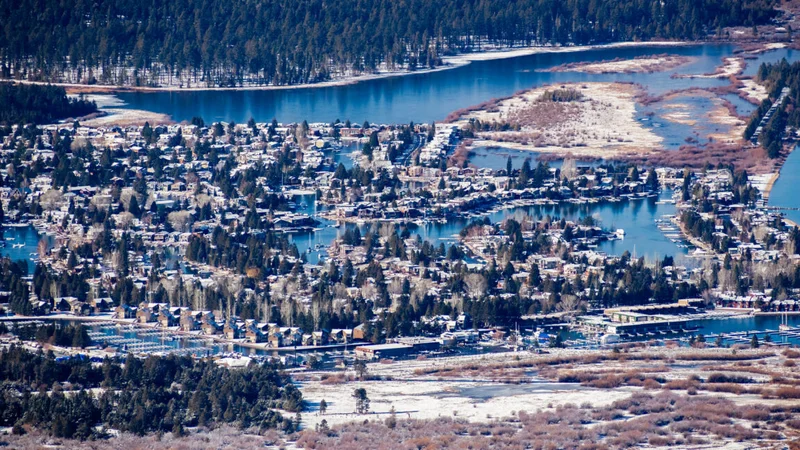
Image: Ars Technica AI
Main Takeaway
Nevada utility NV Energy will end its decades-old wholesale agreement supplying 75% of Lake Tahoe's electricity, redirecting power to AI data centers.
Jump to Key PointsSummary
Why Lake Tahoe is losing its power
NV Energy, the Nevada utility that has supplied roughly 75% of Lake Tahoe's electricity for decades, informed California-based Liberty Utilities that it will terminate its wholesale power agreement by May 2027. The decision directly affects 49,000 residents across Placer, El Dorado, Nevada, Sierra, Plumas, Mono, and Alpine counties, according to reporting by Fortune that multiple outlets subsequently confirmed. Liberty Utilities currently generates about 25% of its power from its own solar facilities in Nevada, leaving it with a massive gap to fill once NV Energy's supply disappears. The timing leaves the region, which hosts 25 to 28 million annual visitors to its ski resorts and lakeside casinos, scrambling for alternatives with less than a year to act.
The arrangement's collapse stems from surging electricity demand in Northern Nevada, where data centers for Google, Apple, and Microsoft are expanding at the Tahoe-Reno Industrial Center. NV Energy has explicitly tied the redirection to serving these facilities, though both utilities characterize the wind-down as long-planned rather than sudden. South Lake Tahoe Mayor Cody Bass acknowledged the move has sparked what he called "a great deal of concern" among residents and businesses worried about disruptions. The geographic quirk, a California community dependent on a Nevada utility, has left residents particularly exposed to cross-border energy politics they have little influence over.
How AI demand is reshaping rural energy markets
Northern Nevada has emerged as one of the fastest-growing data center markets in the United States, driven by tax incentives, available land, and proximity to California's tech economy. The facilities at the Tahoe-Reno Industrial Center represent billions in investment from hyperscale operators, each campus consuming electricity equivalent to tens of thousands of homes. NV Energy's decision to prioritize this demand over a decades-old wholesale customer reflects cold arithmetic, the data centers offer long-term contracts at scale that a seasonal tourist town cannot match. Tom's Hardware noted the situation combines "high demand plus a regulatory limbo" that leaves residential customers at a structural disadvantage.
This is not an isolated case. Communities across the American West have watched utility rates climb as data center load outpaces grid expansion, but Lake Tahoe represents a more extreme outcome, actual disconnection rather than mere price pressure. The tech industry's historical insulation from energy consequences, noted by TechCrunch, is cracking even in places like Silicon Valley's vacationland. For rural Californians in particular, the crisis signals that geographic remoteness no longer protects against market forces reshaped by AI infrastructure buildout. Liberty Utilities' customers now face the same supply competition that industrial users have long experienced, but without the negotiating power or political clout to resist.
What replacement options actually exist
Liberty Utilities faces the practical challenge of sourcing 75% of its power from new suppliers within months, a timeline that energy experts describe as extraordinarily tight for infrastructure of this scale. The company has pointed to its existing solar generation and suggested additional renewable procurement, though specific contracts remain undisclosed. California's regulatory environment complicates matters, the state's ambitious clean energy mandates constrain what sources Liberty can tap, while its interconnection queues for new projects stretch years long. Independent analysts have suggested the utility may need to rely on short-term spot market purchases, which would likely mean higher and more volatile prices for ratepayers already facing California's steep electricity costs.
For individual property owners, the crisis has accelerated interest in distributed generation, rooftop solar, and battery storage. Just Plug Solar, a resilient energy vendor, explicitly framed the situation as a wake-up call for rural California property owners to consider self-supply. However, the Lake Tahoe region's heavy snowfall, forest fire risks, and high installation costs make residential solar less of a quick fix than a partial solution for wealthier homeowners. Commercial customers, particularly the ski resorts that drive the local economy, may have more options through on-site generation or direct power purchase agreements, but coordination across dozens of dispersed facilities presents its own logistical hurdles. The uncomfortable reality is that no combination of existing alternatives fully replicates the lost capacity within the available timeframe.
Where regulators and politicians stand
The regulatory response has been notably slow given the May 2027 deadline. The California Energy Commission has acknowledged awareness of the situation, according to Fortune's reporting, but has not yet announced specific interventions. Liberty Utilities operates under California Public Utilities Commission jurisdiction, which could theoretically compel emergency procurement or cost-sharing arrangements, though such actions would likely face legal challenges. The cross-border nature of the dispute, NV Energy is a Nevada utility serving Nevada data centers while cutting off California residents, creates jurisdictional complexity that neither state's regulators have clearly addressed.
Political pressure may build as the deadline approaches. Lake Tahoe's economy depends on reliable power for winter ski operations and summer tourism, seasonal industries that cannot tolerate uncertainty about electricity supply. Local officials have begun raising alarms, but their leverage over a Nevada utility is limited. Some observers have drawn parallels to earlier resource extraction dynamics, where rural communities bore costs for urban or industrial benefit, though in this case the "extraction" is of electrical capacity rather than physical materials. Whether California or federal regulators will intervene to delay the cutoff or subsidize replacement power remains an open question, and one that Liberty's customers are watching with increasing anxiety.
What this signals for other communities near data centers
The Lake Tahoe case establishes a precedent that energy analysts have warned about for years, data center demand can and will displace existing customers when grid constraints tighten. Futurism characterized the situation as no longer just raising utility prices for nearby civilians but "rerouting their utilities entirely," a shift from incremental pressure to existential threat. Communities in Arizona, Texas, Virginia, and other data center hotspots are now watching to see whether NV Energy's move becomes a template. The economics are straightforward, data centers offer utilities guaranteed load growth and favorable rate structures that residential and small commercial customers cannot match, creating powerful incentives to reallocate capacity during supply crunches.
For policymakers, the crisis exposes gaps in how interconnection agreements and wholesale contracts account for community impact. The decades-old arrangement between NV Energy and Liberty Utilities apparently lacked provisions for gradual transition or stranded cost protection, leaving one party exposed when market conditions changed. Future wholesale agreements may face pressure to include longer notice periods, termination fees, or mandatory replacement power provisions. For the broader AI industry, the Lake Tahoe situation represents a reputational risk that could fuel local opposition to data center projects elsewhere. Google, Apple, and Microsoft, all named as expanding in the Tahoe-Reno Industrial Center, have not publicly commented on the displacement, but their silence may become harder to maintain as media attention intensifies.
Key Points
NV Energy will cut 75% of Lake Tahoe's electricity supply by May 2027 to redirect power to AI data centers in Northern Nevada
49,000 residents across seven California counties face urgent need to find replacement power sources
Google, Apple, and Microsoft are expanding data center operations at the Tahoe-Reno Industrial Center driving demand
Liberty Utilities has less than a year to replace capacity with limited regulatory or political intervention yet announced
The case establishes precedent for data center demand displacing residential communities rather than just raising prices
Questions Answered
NV Energy is terminating a decades-old wholesale agreement with Liberty Utilities to redirect electricity capacity to data centers in Northern Nevada, particularly at the Tahoe-Reno Industrial Center where major tech companies are expanding AI infrastructure. Both utilities describe the wind-down as long-planned, though the timing aligns with surging data center demand.
Liberty Utilities currently obtains about 75% of its electricity from NV Energy under a full-requirements wholesale agreement. The remaining 25% comes from Liberty's own solar facilities in Nevada, leaving a substantial gap to fill when the agreement ends.
Options include additional renewable procurement, short-term spot market purchases, and encouraging distributed generation like rooftop solar and battery storage. However, California's clean energy constraints, long interconnection queues, and the tight timeline make complete replacement difficult. No single alternative fully replicates the lost capacity within the available timeframe.
According to multiple sources, Google, Apple, and Microsoft are building or expanding facilities at the Tahoe-Reno Industrial Center in Northern Nevada. These hyperscale data centers are driving the electricity demand that NV Energy is prioritizing over its Lake Tahoe wholesale customer.
Regulatory response has been limited so far. The California Energy Commission has acknowledged awareness of the situation, and the California Public Utilities Commission has jurisdiction over Liberty Utilities, but no specific interventions have been announced. The cross-border nature of the dispute complicates regulatory action.
Source Reliability
38% of sources are trusted · Avg reliability: 65
Go deeper with Organic Intel
Simple AI systems for your life, work, and business. Each one includes copyable prompts, guides, and downloadable resources.
Explore Systems