China and US Align on Hormuz Reopening as Trump Threatens Iran and Oil Markets Face 'Non-Linear' Price Spike Risk

Image: Bloomberg AI
Main Takeaway
Beijing and Washington find rare common ground calling for the Strait of Hormuz to reopen, but Trump's military threats against Iran and a parallel global debt selloff intensify fears oil could hit $130-$140 a barrel within weeks.
Jump to Key PointsSummary
Why Hormuz matters for global energy markets
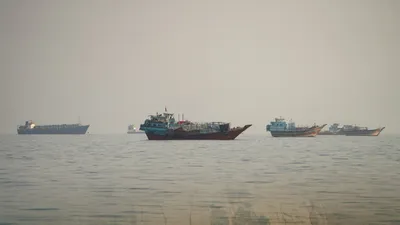
The Strait of Hormuz handles roughly one-fifth of global oil shipments, making it the world's most critical maritime chokepoint. When the strait closes or becomes contested, energy prices spike within hours and supply chains seize up across Asia, Europe, and North America. The current crisis has already triggered gold fluctuations and roiled futures markets, according to Bloomberg Markets coverage on May 14. Any prolonged closure would hit China especially hard, given that it imports over 70% of its crude oil and relies heavily on Middle Eastern suppliers whose tankers must pass through this narrow waterway.
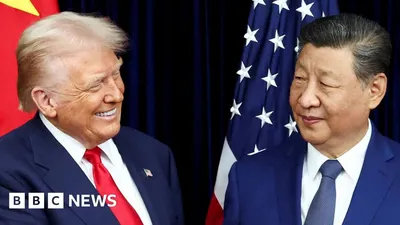
The economic stakes extend far beyond oil. LNG carriers, container ships, and bulk chemical tankers all transit the strait, meaning a sustained closure would cascade into fertilizer shortages, manufacturing delays, and food price inflation. Markets have priced in some risk, but traders remain jittery about the difference between a managed crisis and an uncontrolled escalation. The speed with which both Beijing and Washington moved to align on reopening suggests both capitals recognize the economic abyss a prolonged closure would open. That alignment, however fragile, signals the threshold of mutual interest that still exists even amid the most strained bilateral relations in decades.
Physical crude markets have firmed in recent days, a reminder of the wider supply tightness squeezing the global oil industry. Analysts at Capital Economics warn oil prices could top $130-$140 a barrel next month if the strait remains closed and inventory depletion rates hold steady. That kind of non-linear price spike would trigger panic buying, the kind that feeds on itself and breaks normal market mechanisms. The difference between a contained crisis and a full-blown supply crunch might be measured in weeks, not months.
Trump's military threat raises the temperature
The diplomatic calculus shifted on May 17 when President Trump told Axios that "the clock is ticking" for Iran and warned if the regime doesn't make a better deal "they are going to get hit much harder." The explicit threat of escalated military action introduces a new variable into a crisis that had been framed primarily around economic and diplomatic pressure. Trump's comments came as markets were already jittery, with the oil crisis bleeding into a broader global debt selloff that Fortune reported on the same day.
The debt market contagion matters because it tightens financial conditions precisely when the global economy can least afford it. Rising yields on sovereign debt increase borrowing costs for energy-importing nations, amplify currency volatility, and can force central banks into reactive rather than preventive policy stances. The confluence of a physical supply disruption (Hormuz) with a financial market disruption (debt selloff) creates feedback loops that neither Beijing nor Washington can easily control.
Trump's threat also complicates China's positioning as would-be mediator. Beijing had been cultivating a role as the rational interlocutor, the major power with lines to both Tehran and Riyadh that could broker a face-saving resolution. Washington's turn toward harder rhetoric doesn't eliminate that possibility, but it narrows the window and raises the cost of Iranian intransigence. Tehran now faces not just economic isolation but the prospect of kinetic strikes, a scenario that could provoke asymmetric retaliation against shipping or regional energy infrastructure.
How China positioned itself as mediator
China's diplomatic machinery has been unusually active since the crisis began. Foreign Ministry spokespeople have called for "all parties to exercise restraint" while back-channeling with Iranian officials through trade and infrastructure partnerships built under the Belt and Road Initiative. The strategy is classic Beijing: maintain rhetorical neutrality, deepen economic leverage, and position China as the indispensable broker when great powers need an off-ramp.
The approach carries risks. China's own energy security is directly threatened by Hormuz closure, so the mediator role isn't purely altruistic. But Beijing has calculated, probably correctly, that appearing to solve a crisis the West created burnishes its global standing without requiring military commitment. The question now is whether Tehran still has room to maneuver, or whether Trump's warning has foreclosed the compromise space China was trying to construct.
Saudi Arabia and the UAE have been notably quiet, watching to see which great power's approach yields results. Their silence is itself a form of positioning. If Washington's threats produce a quick Iranian concession, Gulf capitals will tilt further toward the US security umbrella. If Trump's rhetoric instead prolongs the crisis, Beijing's patient diplomacy looks more attractive by comparison. The Gulf states have no interest in picking sides prematurely, but they have even less interest in $140 oil crashing their diversification plans.
What markets are pricing and missing
Futures curves have steepened, but the move looks modest compared to the tail risks in play. Part of the restraint comes from strategic petroleum reserves, both official and commercial, that can buffer short disruptions. Another part comes from the shale industry's ability to ramp production, though that takes months not days. The debt selloff complicates this picture because it tightens credit conditions for US producers just when higher prices would normally trigger drilling investment.
The non-linear price spike scenario, the one Capital Economics flagged, depends on inventory depletion meeting panic psychology. We're not there yet. Storage levels remain adequate, and the physical market hasn't experienced the kind of scramble for cargoes that characterized the 1979 or 1991 crises. But the debt market stress is an underappreciated accelerant. If sovereign borrowing costs spike in tandem with oil prices, import-dependent emerging markets face a double squeeze that could trigger currency crises, import compression, and demand destruction in unpredictable sequence.
Traders are watching satellite imagery of tanker traffic, diplomatic cables, and now Trump's Twitter feed with equal intensity. The information asymmetry is extreme, which breeds volatility. A single verified report of military mobilization, or conversely of back-channel talks, could swing prices $10 in either direction. That environment rewards speed over analysis, which is precisely why the non-linear scenarios keep analysts up at night.
The narrow path to de-escalation
For the crisis to resolve without the $130-$140 scenario, several things need to happen in rough sequence. First, some channel, probably Chinese or Omani, needs to deliver a credible Iranian signal of willingness to negotiate. Second, Washington needs to calibrate its threats with enough specificity to compel but not so much as to corner. Third, the Gulf states need to provide economic sweeteners, sanctions relief, or security guarantees that give Tehran political cover to retreat.
None of this is likely, but all of it is possible. The alternative, a prolonged closure with military overtones, would test the resilience of a global economy already wobbling from trade fragmentation and financial tightening. China and America's rare alignment on Hormuz reopening remains the most hopeful signal, but it is not, by itself, sufficient. It needs operational follow-through, and it needs it before Trump's clock runs out.
Key Points
China and the US both want the Strait of Hormuz reopened, with Beijing positioning itself as mediator between Tehran and Western powers
Trump threatened Iran on May 17, warning 'the clock is ticking' and they face harder strikes without a better deal
The oil crisis has bled into a global debt selloff, tightening financial conditions for energy-importing nations
Analysts warn oil could spike to $130-$140/barrel within weeks if Hormuz stays closed and inventory depletion accelerates
China's mediator role is complicated by Trump's military threats, which narrow Tehran's room to compromise
Questions Answered
Capital Economics analysts project $130-$140 a barrel within a month if the strait remains closed and inventory depletion continues at current rates. This would trigger panic buying and non-linear price spikes that break normal market mechanisms.
Iran's leadership, facing domestic pressure and deeply suspicious of foreign influence, rejected external timelines. Beijing's economic leverage as Iran's largest oil customer wasn't sufficient to override Tehran's strategic calculations.
Both countries face severe economic and political consequences from a prolonged closure. China imports over 70% of its crude oil; the US faces voter backlash from gasoline price spikes. Their shared vulnerability temporarily overrides broader rivalry.
Source Reliability
40% of sources are trusted · Avg reliability: 76
Go deeper with Organic Intel
Simple AI systems for your life, work, and business. Each one includes copyable prompts, guides, and downloadable resources.
Explore Systems