More Than 100 Protesters Breach Microsoft Data Center Site in Amsterdam Amid Wider AI Backlash
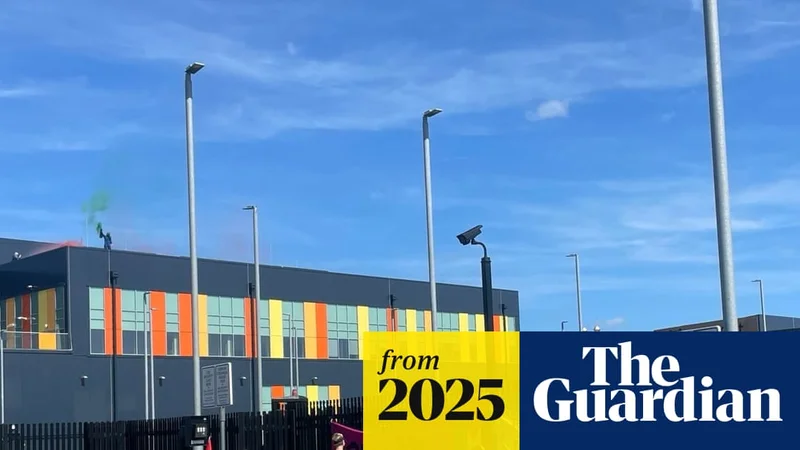
Image: Theguardian
Main Takeaway
More than 100 protesters entered Microsoft’s Amsterdam data center construction site, citing the project’s energy, water, climate and security costs.
Jump to Key PointsSummary
Protesters breach the construction site
More than 100 protesters entered a Microsoft data center construction site near Sloterdijk in Amsterdam on Friday, November 6, disrupting work and prompting police arrests. Activists climbed fences, reached a crane and unfurled banners as part of a demonstration against the planned facility, which includes 3 data center towers rising about 85 meters.
Police in riot gear intervened as demonstrators occupied parts of the site. Images showed flares and protesters gathered around construction areas, while local reporting described dozens of arrests or detentions. The action was organized with involvement from Geef Tegengas, a Dutch campaign group opposing large data center developments.
Why the Amsterdam project faces opposition
Campaigners say the Microsoft project would impose heavy demands on electricity, water, land and local infrastructure. The facility was approved by provincial officials in January, but opponents argue that its resource consumption conflicts with climate targets and places pressure on housing, jobs and public services.
The dispute reflects a broader argument over the physical cost of AI infrastructure. Data centers provide the computing capacity behind cloud services and generative AI, but their expansion requires large power connections, cooling systems and long-term industrial construction. Cybernews reported that activists also raised concerns about security and the use of data centers in military and intelligence operations.
A coordinated European campaign
The Amsterdam breach formed part of a wider campaign against new data center construction across Europe. The Stop Dirty Data Centers coalition planned actions in 16 countries, framing the protests as opposition to rapid expansion for AI before governments resolve questions about energy use, water demand, emissions and local consent.
The demonstrations show that resistance to AI infrastructure has moved beyond planning hearings and conference protests. Activists have targeted construction sites, corporate events and operating facilities, while technology companies and European officials continue to present data centers as necessary for digital services and AI growth. The campaign is turning local permitting fights into a cross-border political issue.
Acid-filled balloons raise stakes
A separate action at the Microsoft project involved paint-filled balloons containing an acidic mixture, according to accounts citing Extinction Rebellion. The group claimed responsibility for the vandalism, which targeted concrete and steel at the construction site. The tactic added a property-damage element to a protest movement that has otherwise centered on marches, banners and public meetings.
The reported chemical attack drew attention because of its potential safety and legal consequences. It also highlighted divisions within the wider opposition movement over tactics. Extinction Rebellion has previously used disruptive climate actions, while other groups have focused on halting permits and pressing authorities for environmental review.
Microsoft faces a broader trust fight
The Amsterdam demonstrations connect environmental objections with questions about Microsoft’s role in military and intelligence data systems. Earlier protests at a Microsoft facility in the Netherlands followed reports that Israeli military data was stored on the company’s servers, including intercepted Palestinian phone records. Friday’s action therefore carried both anti-AI infrastructure and pro-Palestinian concerns, even though the construction-site protest centered on the new data center project.
That overlap broadens the political challenge for Microsoft. The company faces scrutiny over where it builds computing capacity, how facilities affect local resources and how cloud infrastructure is used by governments. Reporting from Viory and The Guardian linked Dutch protests to Israeli intelligence concerns, while coverage of the new site emphasized electricity, water and climate objections.
What happens next
The immediate consequences are likely to focus on arrests, construction-site security and the legal response to trespass or property damage. The project also faces continued political pressure because provincial approval has already placed the debate inside the formal planning system rather than leaving it solely to street protests.
For Microsoft and other cloud operators, the Amsterdam action reinforces the need to explain power sourcing, water management, emissions, employment and public oversight before construction begins. For campaigners, the arrests and international coordination provide a visible test of whether disruption can slow data center expansion. The next phase will unfold through court proceedings, local policy debates and further demonstrations across Europe.
Key Points
Microsoft faces a major Amsterdam construction-site breach involving more than 100 anti-AI infrastructure protesters.
Activists cite electricity, water, climate, housing, employment and security costs tied to data center expansion.
The Stop Dirty Data Centers coalition coordinated planned demonstrations across 16 countries.
Police arrested protesters after activists climbed fences and a crane at the Sloterdijk site.
Extinction Rebellion claimed responsibility for acid-filled balloon vandalism targeting the Microsoft project.
Questions Answered
Microsoft protesters entered the Amsterdam site to oppose the project’s electricity, water, climate and local infrastructure demands. The action was linked to Geef Tegengas and a broader campaign against rapid AI data center expansion.
More than 100 protesters entered Microsoft’s Amsterdam construction site, according to multiple accounts. Police intervened after activists climbed fences and a crane, with arrests reported.
Extinction Rebellion claimed responsibility for throwing balloons containing an acidic mixture at Microsoft’s Amsterdam data center project. Reports described the balloons as carrying paint and chemicals aimed at construction materials.
Yes, the Microsoft Amsterdam protest formed part of a campaign planned across 16 countries. Activists are challenging data centers over power use, water consumption, climate goals, security and local decision-making.
Microsoft’s Amsterdam project faces continued police, legal and political scrutiny after the site breach. The dispute will likely continue through arrests, construction security measures, local policy debates and further demonstrations.
Source Reliability
42% of sources are trusted · Avg reliability: 75
Go deeper with Organic Intel
Simple AI systems for your life, work, and business. Each one includes copyable prompts, guides, and downloadable resources.
Explore Systems