Netflix Tests AI Discover Tab to Turn Viewer Moods Into Themed Recommendations
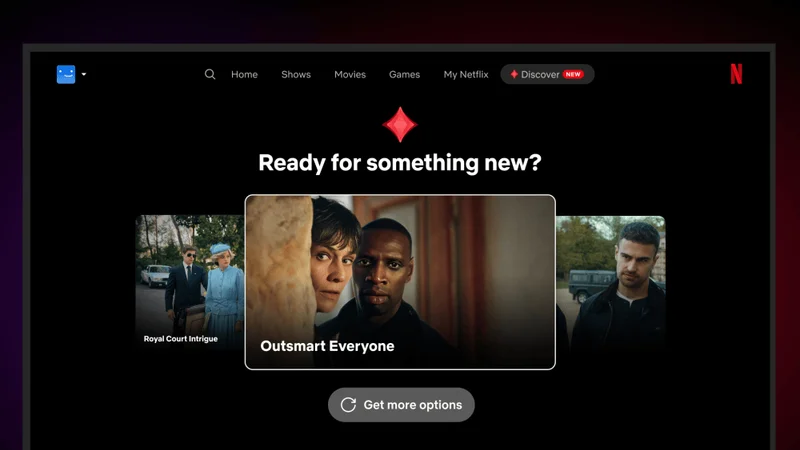
Image: Variety
Main Takeaway
Netflix is testing AI Discover, a TV app tab that lets a limited group of U.S. subscribers choose mood-based themes for personalized viewing suggestions.
Jump to Key PointsSummary
Netflix gives mood-based discovery a test
Netflix is testing AI Discover, a new TV app tab that lets a limited group of U.S. members find shows and films through mood-based themes. The feature is designed to give viewers a clearer starting point than browsing rows of titles, with options such as “Something Light” and “Scare Me.” Netflix introduced the test on Nov. 3, 2026, describing it as an early discovery experience rather than a finished product.
The first experiment asks members what they feel like watching, then presents recommendations built around that input. Subscribers can refine the results with additional feedback, according to descriptions of the test. The approach puts conversational intent alongside Netflix’s established personalization system, which already shapes much of what members see on the service.
A new front door for Netflix recommendations
AI Discover gives Netflix’s recommendation engine an explicit prompt: the viewer’s current mood. That matters because conventional rows and category menus often require users to browse before they know what they want. The new tab instead starts with themes and lets viewers steer the search toward a particular emotional or viewing experience.
The feature remains limited to a small U.S. test group, and Netflix has not described a broad release schedule. Its initial scope is practical: help members locate something to watch without extended scrolling. Engadget framed the move as part of Netflix’s effort to reduce aimless browsing, while Variety connected the launch to the company’s push to encourage discovery and engagement on the service.
How the experiment fits Netflix’s AI system
AI Discover builds on a recommendation infrastructure that has long influenced Netflix viewing. Industry explainers commonly attribute roughly 75% to 80% of viewing activity to recommendations, while Netflix has used machine learning to tailor title ordering, artwork and search results. The new tab adds a direct expression of intent to that behavioral data.
That combination gives Netflix two signals at once: what a member has watched and what the member says they want now. The distinction is useful for moments when viewing habits do not capture the occasion, such as wanting a light comedy after watching dramas or choosing a frightening film for a specific night. Netflix’s broader TV redesign, announced in 2025, also emphasized faster search and more responsive recommendations, placing AI Discover within a longer product effort rather than treating it as an isolated feature.
The tradeoff between guidance and control
AI Discover’s value will depend on whether its themes feel specific enough to help and flexible enough to reflect individual taste. Preset prompts such as “Something Light” offer an easy entry point, while feedback tools give members a way to push recommendations toward a better fit. The system still has to translate broad moods into a useful set of recognizable titles.
Netflix also has to preserve trust around personalization. Recommendation systems decide which titles receive attention, and a mood-driven interface gives the company another way to shape that decision. The public test provides a way to measure whether direct prompts improve discovery, increase viewing and reduce browsing time. Coverage from Yahoo emphasized Netflix’s interest in learning what subscribers want in more detailed terms, a goal that makes user feedback central to the experiment.
What happens after the U.S. test
Netflix’s next step is to evaluate whether AI Discover produces better viewing outcomes than existing navigation tools. The company has announced the first experience and the limited rollout, but the test does not establish when the tab will reach all members or whether more advanced AI interactions will follow. Netflix describes the tab as a place for early discovery experiments, leaving room for additional formats.
The rollout also arrives as streaming services compete for attention after users open an app. Netflix’s advantage is a large catalog paired with years of viewing data, but the interface still has to make a decision feel quick and personal. AI Discover turns that problem into a focused product test: give viewers a mood, produce a themed set of choices, then learn whether the path gets them watching faster.
Key Points
Netflix is testing AI Discover, a TV app tab that recommends titles through mood-based themes.
AI Discover initially reaches a limited group of U.S. subscribers on Netflix’s TV app.
Preset themes include options such as “Something Light” and “Scare Me” for faster browsing.
Members can refine AI Discover results with feedback about the recommendations they receive.
The experiment adds direct mood input to Netflix’s established behavioral recommendation system.
Questions Answered
Netflix AI Discover is an experimental TV app tab for finding shows and movies through mood-based recommendations. A limited group of U.S. subscribers can choose themes and refine the results with feedback.
Netflix AI Discover uses a viewer’s stated mood or selected theme to generate a personalized set of titles. The feature adds direct intent to Netflix’s existing recommendation signals, including viewing behavior.
Netflix AI Discover is currently available to a small group of U.S. members. Netflix has not announced when the feature will become available to all subscribers or expand globally.
Netflix AI Discover initially includes themes such as “Something Light” and “Scare Me.” The company describes the tab as an experimental space, so its themes and discovery tools can change during testing.
Netflix is testing AI Discover to help subscribers find something to watch with less browsing. The company is measuring whether mood-based prompts improve discovery and encourage viewing.
Source Reliability
31% of sources are trusted · Avg reliability: 62
Go deeper with Organic Intel
Simple AI systems for your life, work, and business. Each one includes copyable prompts, guides, and downloadable resources.
Explore Systems